Monday, September 21, 2026

Broccoli: How to Choose, Wash, Store, Freeze, and Know When to Toss It

Broccoli is at its best when the florets are tight, the stalks are firm, and the whole head still feels fresh and crisp. Because broccoli loses quality quickly after harvest, a few simple habits—keeping it cold, waiting to wash it until use, and freezing extras correctly—can make a noticeable difference.

How to choose fresh broccoli

Look for compact heads with firm stalks and tightly closed florets. Fresh broccoli is usually dark green to bluish-green, though color varies somewhat by variety. Avoid heads with obvious decay, large damaged areas, very dry or browning cut ends, or widespread yellow florets.

Yellowing is often a sign that broccoli is getting older or has been exposed to warmer temperatures or ethylene. A little yellowing is mainly a quality issue, but extensive yellowing usually means the broccoli is past its best.
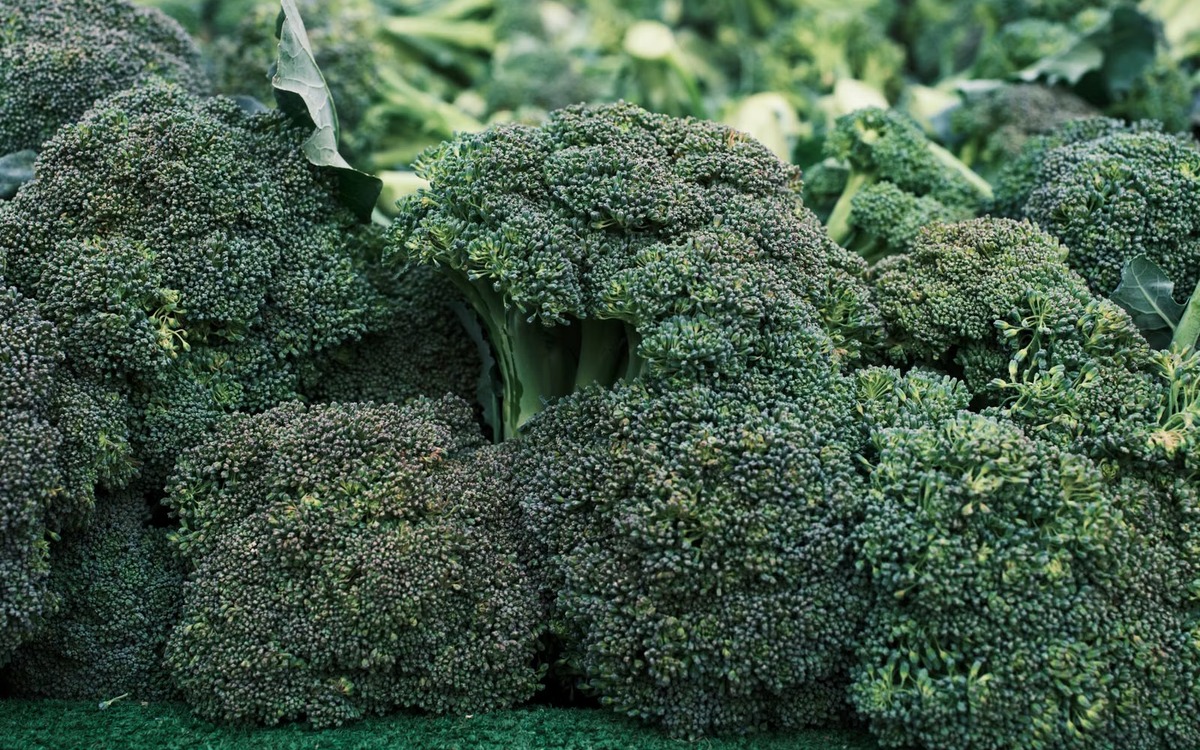
Fresh green broccoli heads displayed at a produce market

Should you wash broccoli before storing it?

For the best refrigerator quality, wait to wash broccoli until shortly before you plan to use it. Colorado State University Extension recommends storing broccoli unwashed because extra surface moisture can make it deteriorate faster.

When you are ready to prepare it, rinse broccoli thoroughly under cool running water. The FDA does not recommend using soap, detergent, or commercial produce wash on fruits and vegetables. Dry the broccoli if you are not cooking it immediately.
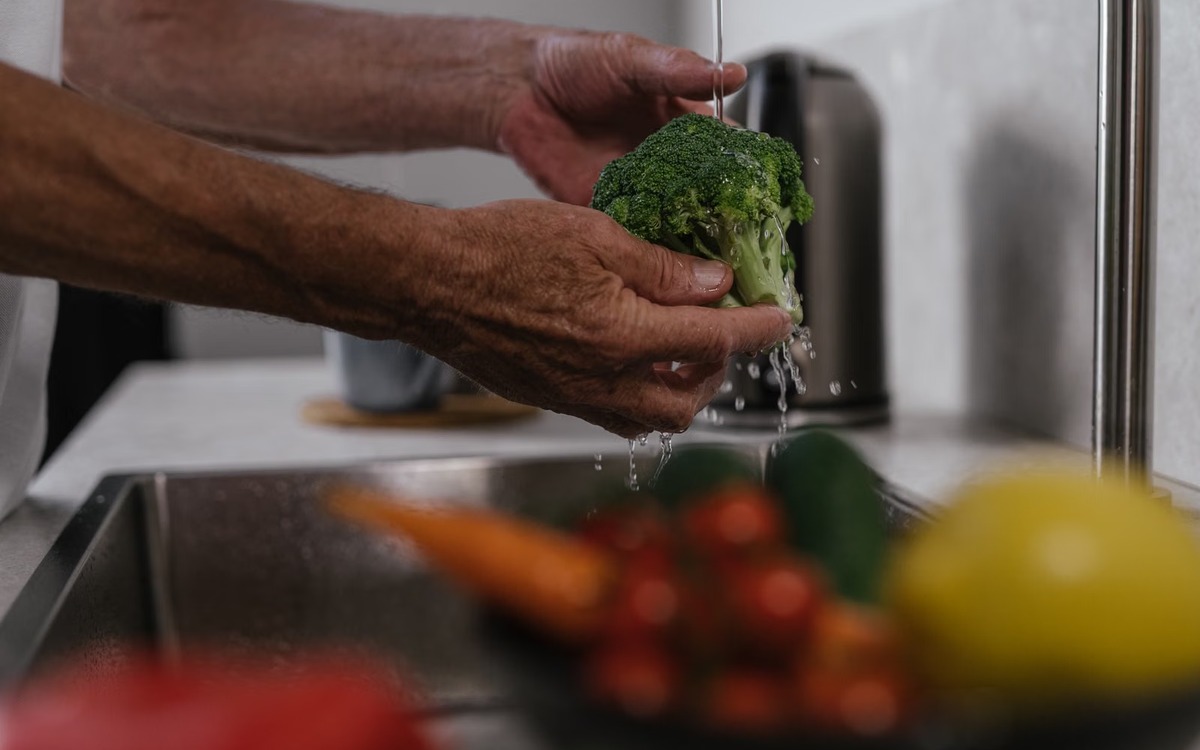
Hands washing fresh broccoli under running water in a kitchen sink

How to store broccoli in the refrigerator

Refrigerate broccoli promptly. At home, a loose or perforated produce bag works well because it limits moisture loss without trapping too much condensation. Colorado State University Extension recommends using fresh broccoli within about 3 to 5 days for best quality.

Cold storage matters. UC Davis notes that low temperature slows yellowing, water loss, and decay. Keep your refrigerator at 40°F (4°C) or below, following general FDA guidance for perishable produce.
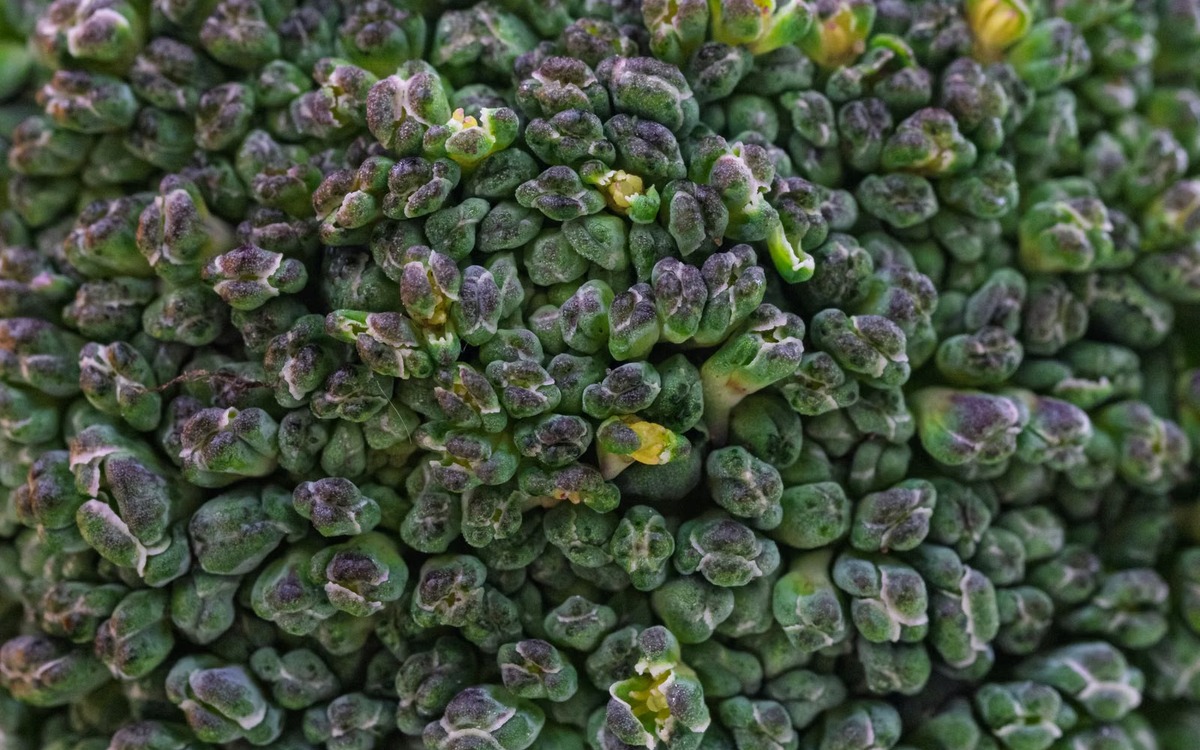
Close-up of compact fresh green broccoli florets

Keep broccoli away from strong ethylene producers

Broccoli is extremely sensitive to ethylene. UC Davis reports that ethylene exposure accelerates floret yellowing, so it is better not to store broccoli right beside strong ethylene-producing produce such as apples and pears. Cold storage is still the most important factor for slowing quality loss.

How to freeze broccoli

Freezing is a practical way to save extra broccoli for cooked dishes. Trim away leaves and woody portions, cut the head into convenient pieces, and keep florets no more than about 1½ inches across.

The National Center for Home Food Preservation recommends blanching broccoli for 3 minutes in boiling water or 5 minutes with steam. Cool it promptly after blanching, drain well, package it in freezer-safe containers or bags, and freeze. Blanching helps preserve color, texture, and quality during frozen storage.
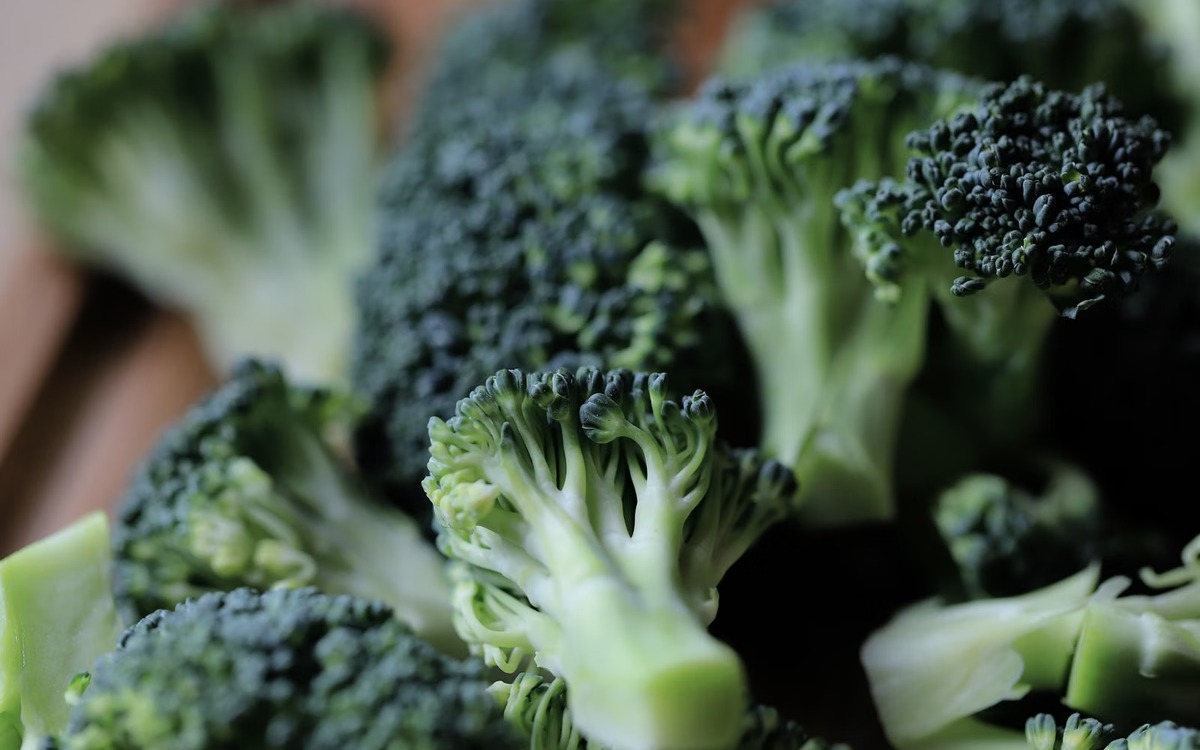
Fresh broccoli florets cut on a wooden board and ready for blanching and freezing

When should you throw broccoli away?

Discard broccoli that looks rotten, has visible mold, feels extensively slimy or mushy, develops widespread decay, or has a strong unpleasant odor. The FDA recommends throwing away produce that looks rotten.

Do not confuse ordinary aging with an automatic safety problem. Slight yellowing or a somewhat softer stalk can mean declining quality rather than spoilage. Use the whole condition of the broccoli—appearance, texture, and smell—to decide whether it is still usable.

Quick takeaways

  • Choose firm stalks and compact, tightly closed green florets.
  • Store broccoli unwashed and refrigerated.
  • Use fresh broccoli within about 3 to 5 days for best household quality.
  • Rinse under cool running water before use; do not wash produce with soap.
  • Keep broccoli away from strong ethylene-producing fruit.
  • Blanch for 3 minutes in boiling water or steam for 5 minutes before freezing.
  • Discard broccoli that is rotten, moldy, extensively slimy, or strongly off-smelling.

Sources

U.S. Food and Drug Administration: Selecting and Serving Produce Safely

UC Davis Postharvest Research and Extension Center: Broccoli

Colorado State University Extension: How to Use Broccoli

National Center for Home Food Preservation: Freezing Broccoli
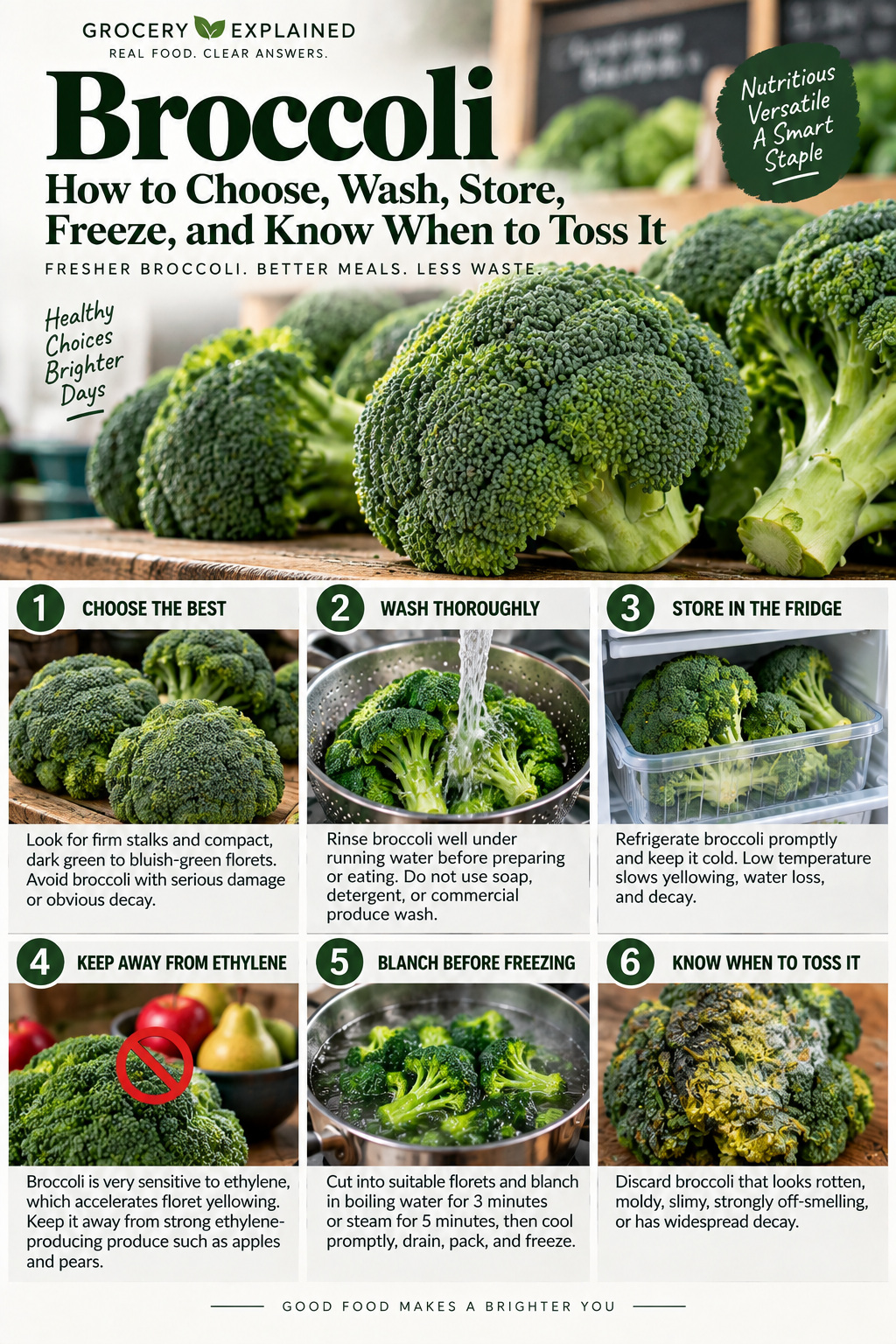
Photographic Grocery Explained guide to choosing, washing, storing, freezing, and discarding broccoli
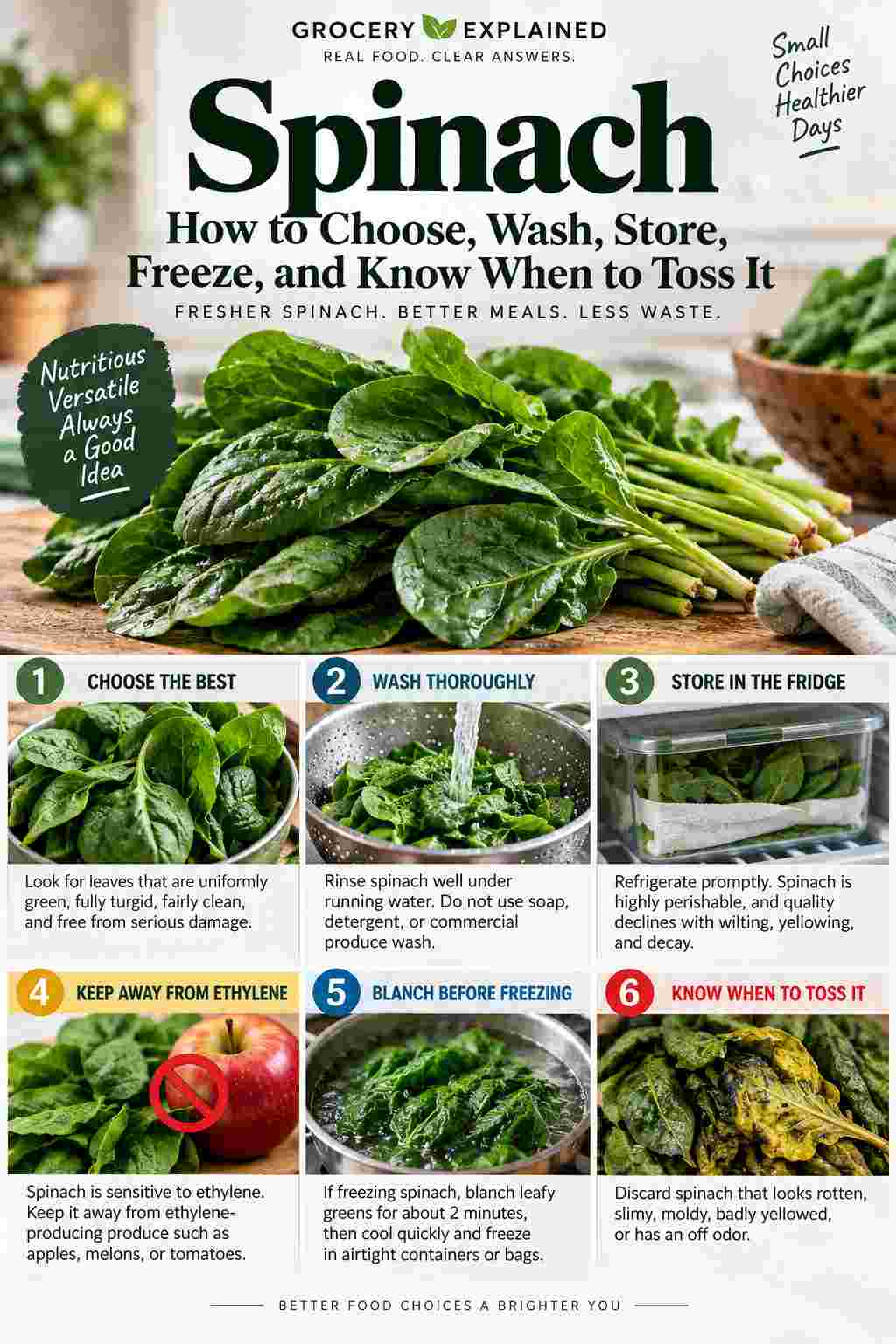
Spinach: How to Choose, Wash, Store, Freeze, and Know When to Toss It

Spinach is one of the most perishable greens in the produce aisle. It stays usable longest when you start with crisp leaves, keep it cold and dry, wash it at the right time, and remove spoiled leaves before decay spreads.

How to choose fresh spinach

Choose leaves that are uniformly green, fully turgid, fairly clean, and free from serious damage. Avoid spinach that is already yellowing, limp, slimy, or badly bruised. For bagged spinach, choose packages that are cold and intact, and follow the printed use-by date.

Fresh green spinach leaves displayed at a produce market

Should you wash spinach before storing it?

For best quality, wait to wash fresh spinach until you are ready to use it. Extra surface moisture can speed deterioration in storage. When it is time to eat or cook the spinach, rinse the leaves thoroughly under cool running water and dry them well with a clean towel or salad spinner.

The FDA does not recommend washing produce with soap, detergent, or commercial produce wash. Plain running water is the standard recommendation.

Fresh spinach leaves with water droplets in a kitchen colander

How to store spinach in the refrigerator

Keep fresh spinach refrigerated promptly. At home, store loose leaves in the refrigerator crisper in a breathable or loosely closed bag or container. If you use a container, a clean paper towel can help absorb excess moisture while keeping the leaves from sitting in water.

Utah State University Extension recommends using loose fresh spinach within about 3 to 5 days for best quality, while bagged spinach may last longer when kept refrigerated and used by the date on the package.

Fresh spinach stored dry and cold in a refrigerator container

Keep spinach away from ethylene-producing produce

Spinach is highly sensitive to ethylene. UC Davis notes that exposure can accelerate yellowing, so it is better not to store spinach right beside strong ethylene producers such as apples, melons, and tomatoes.

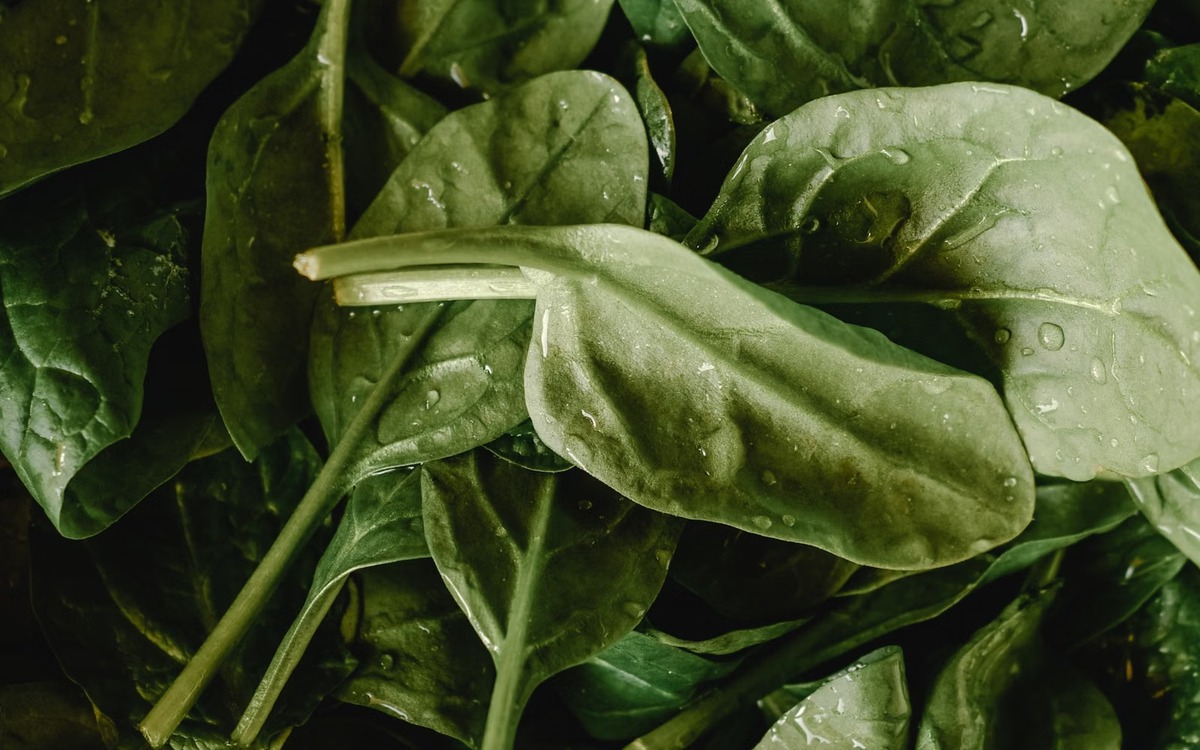
Close-up of crisp fresh green spinach leaves

How to freeze spinach

Spinach freezes well for cooked dishes such as soups, casseroles, sauces, and quiche. For the best frozen quality, wash the leaves, blanch them briefly, cool them quickly, drain well, and pack them for freezing. The National Center for Home Food Preservation lists a two-minute blanch for most leafy greens, while Colorado State University recommends roughly two to three minutes for spinach.

Frozen spinach will not have the crisp texture of fresh leaves after thawing, so it is better suited to cooked recipes than salads.

When should you throw spinach away?

Discard spinach that is rotten, slimy, moldy, strongly off-smelling, or heavily yellowed and watery. The FDA advises throwing away produce that looks rotten. A few bruised or wilted leaves can be removed if the remaining spinach is still sound, but widespread decay is a reason to toss the package.

Quick takeaways

  • Choose green, crisp, turgid leaves without serious damage.
  • Wait to wash spinach until you are ready to use it.
  • Rinse under cool running water and do not use soap.
  • Store spinach cold and dry in the refrigerator.
  • Keep it away from ethylene-producing produce.
  • Blanch spinach before freezing it for cooked dishes.
  • Discard spinach that is slimy, moldy, rotten, or foul-smelling.

Sources

Guidance used for this article comes from the U.S. Food and Drug Administration, UC Davis Postharvest Research and Extension Center, Utah State University Extension, Colorado State University Extension, and the National Center for Home Food Preservation.

Photographic Grocery Explained guide to choosing, washing, storing, freezing, and discarding spinach

Friday, September 18, 2026

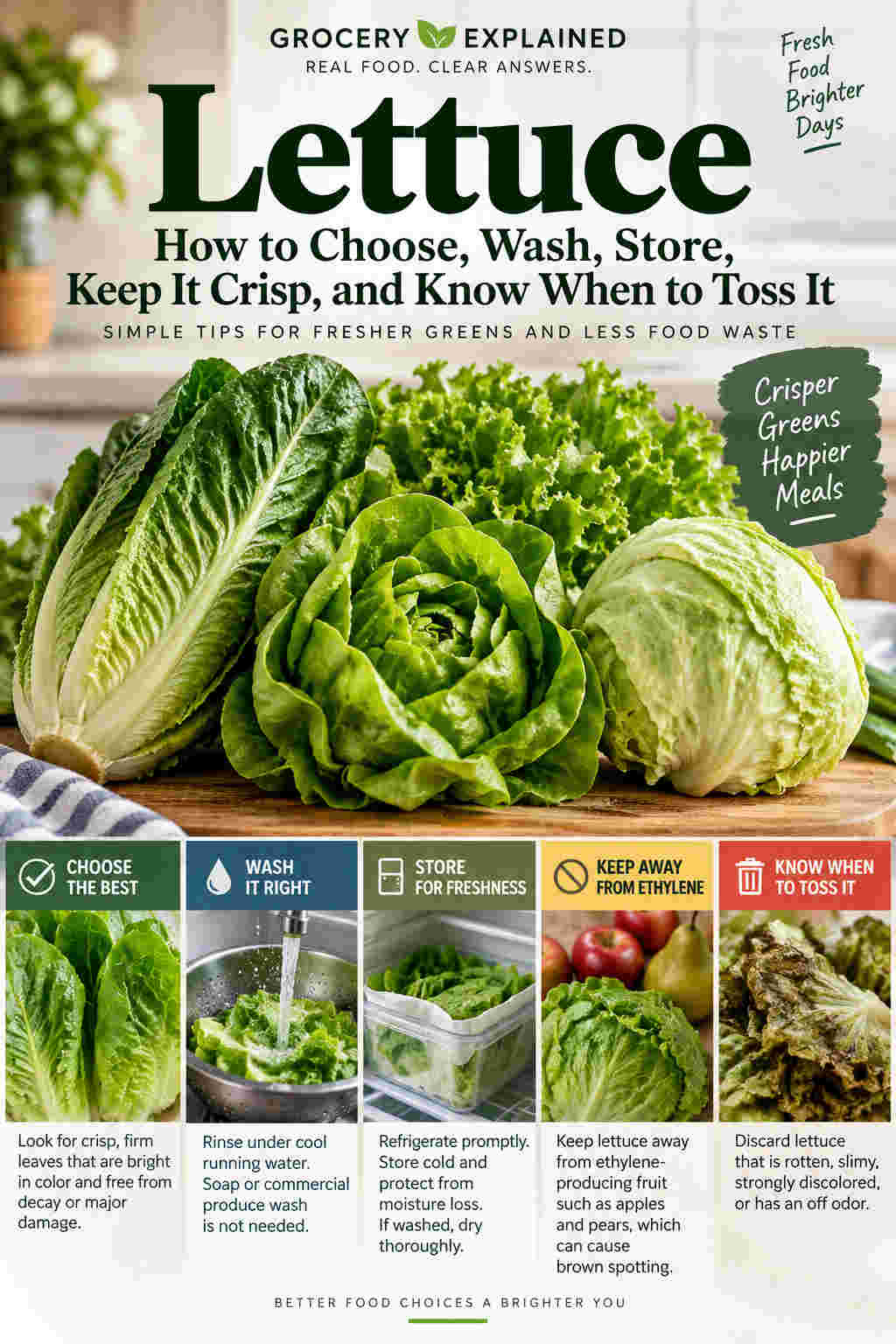
Lettuce: How to Choose, Wash, Store, Keep It Crisp, and Know When to Toss It

Fresh lettuce can go from crisp to limp surprisingly fast, but most of the difference comes down to how fresh it was when you bought it, how cold you keep it, and how much moisture surrounds the leaves. This guide covers the practical basics for choosing, washing, storing, and using lettuce while it is still at its best.

How to choose fresh lettuce

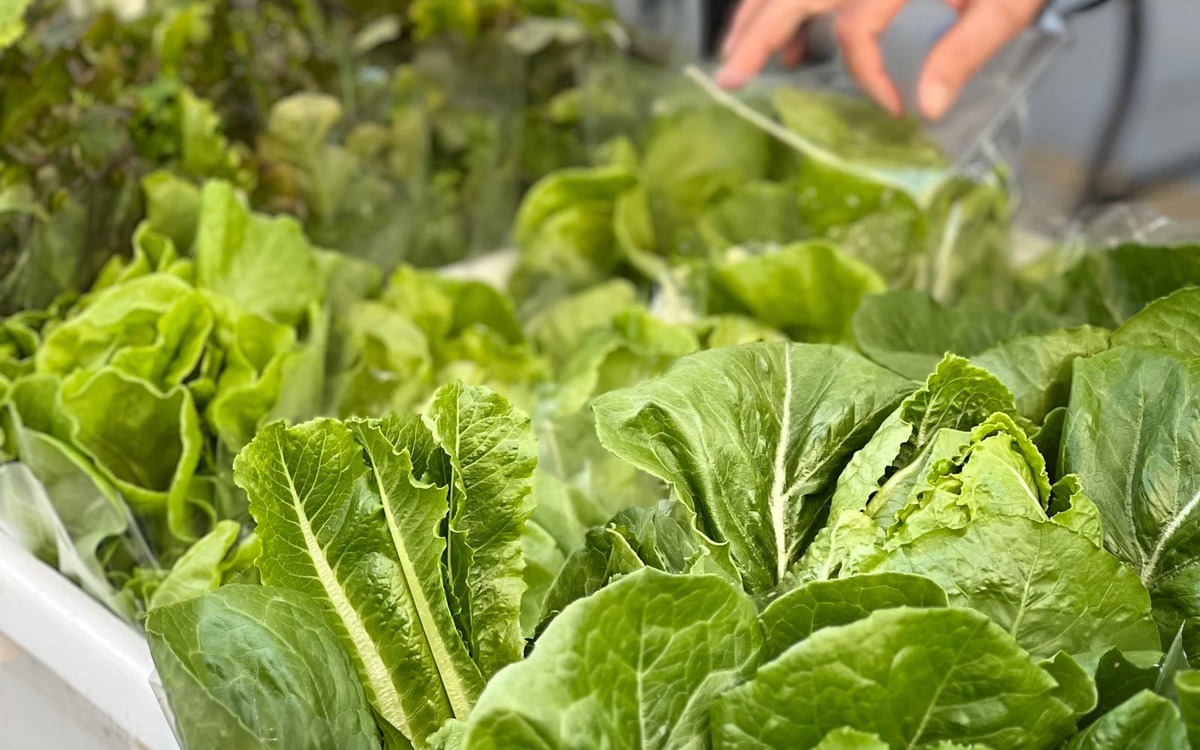
Look for leaves that are crisp, turgid, and bright for the variety. Avoid heads or loose leaves with obvious decay, heavy bruising, large slimy areas, or extensive mechanical damage. For romaine and loose-leaf types, UC Davis notes that good-quality leaves should be crisp and free from decay and damage.

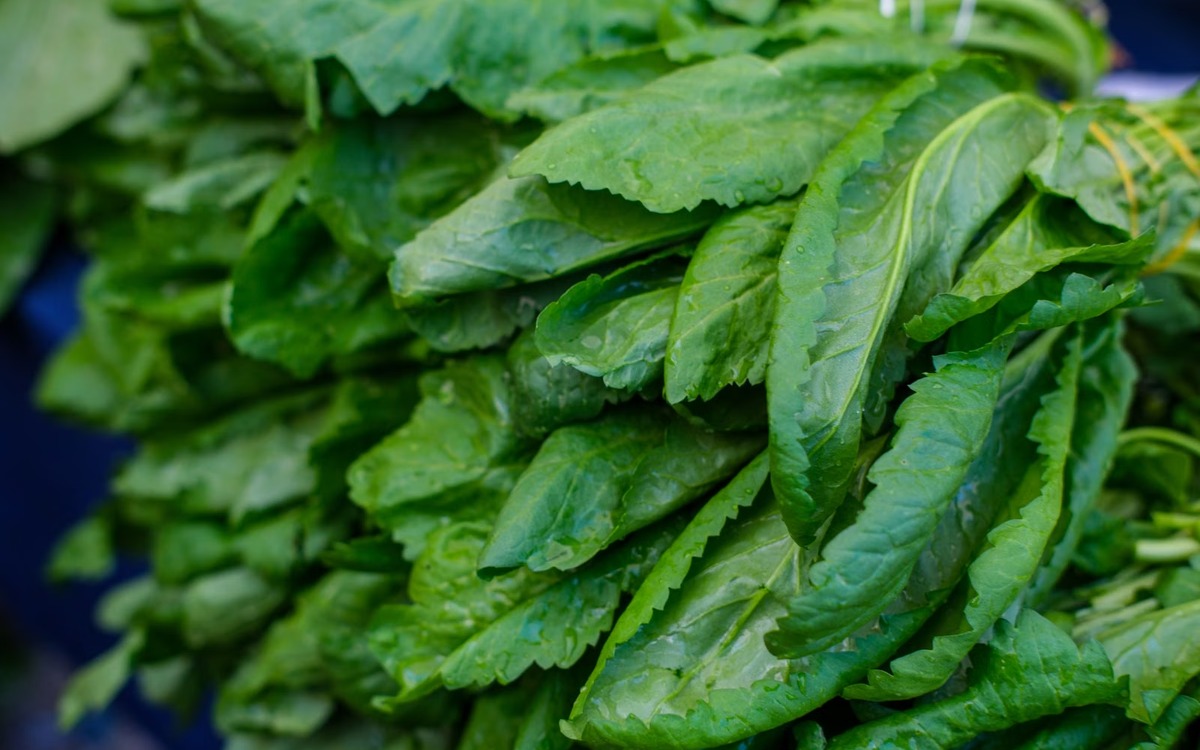
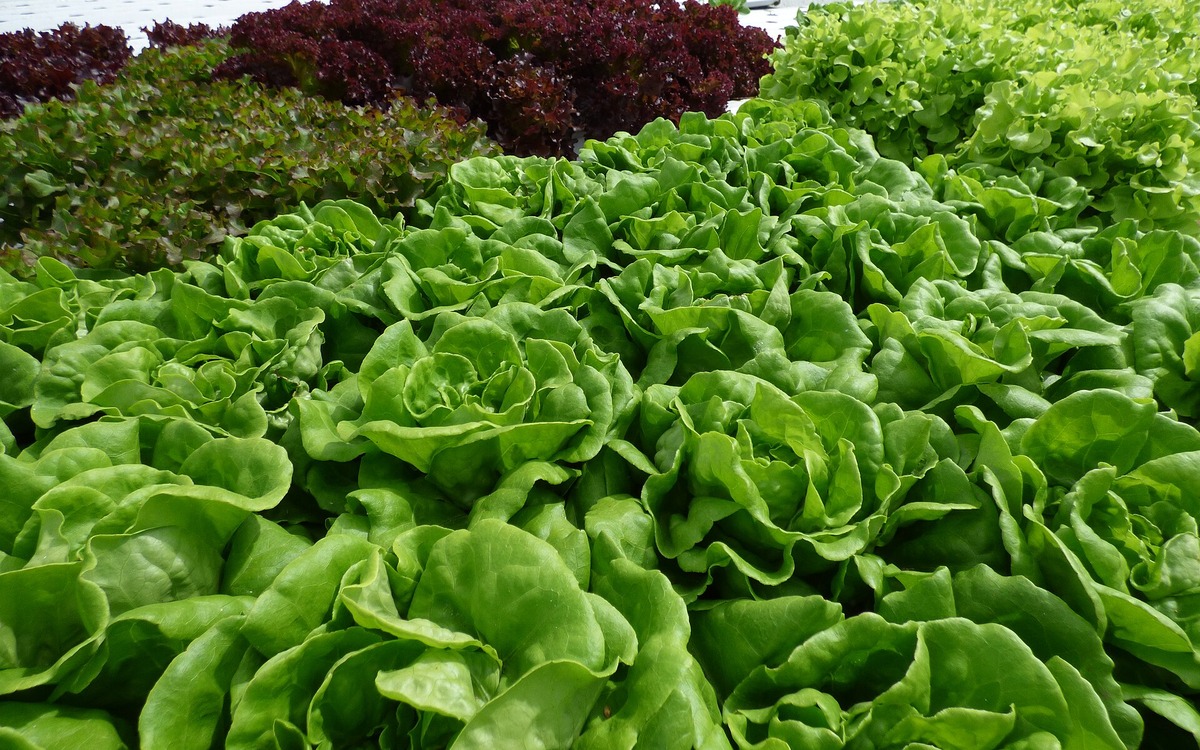
Fresh romaine and leaf lettuces displayed at a farmers market

Should you wash lettuce before storing it?

For whole heads and unwashed loose lettuce, the simplest routine is usually to keep it dry until you are ready to use it. Colorado State University Extension recommends not cleaning fresh greens before storage. If you do wash lettuce ahead of time, dry it very thoroughly because excess surface moisture can speed deterioration.

When you are ready to eat lettuce, separate the leaves as needed and rinse them thoroughly under cool running water. The FDA advises washing produce under running water and says not to use soap, detergent, or commercial produce wash. Dry the leaves with a clean towel or salad spinner.

Hands rinsing fresh lettuce under cool running water in a kitchen

How to store lettuce in the refrigerator

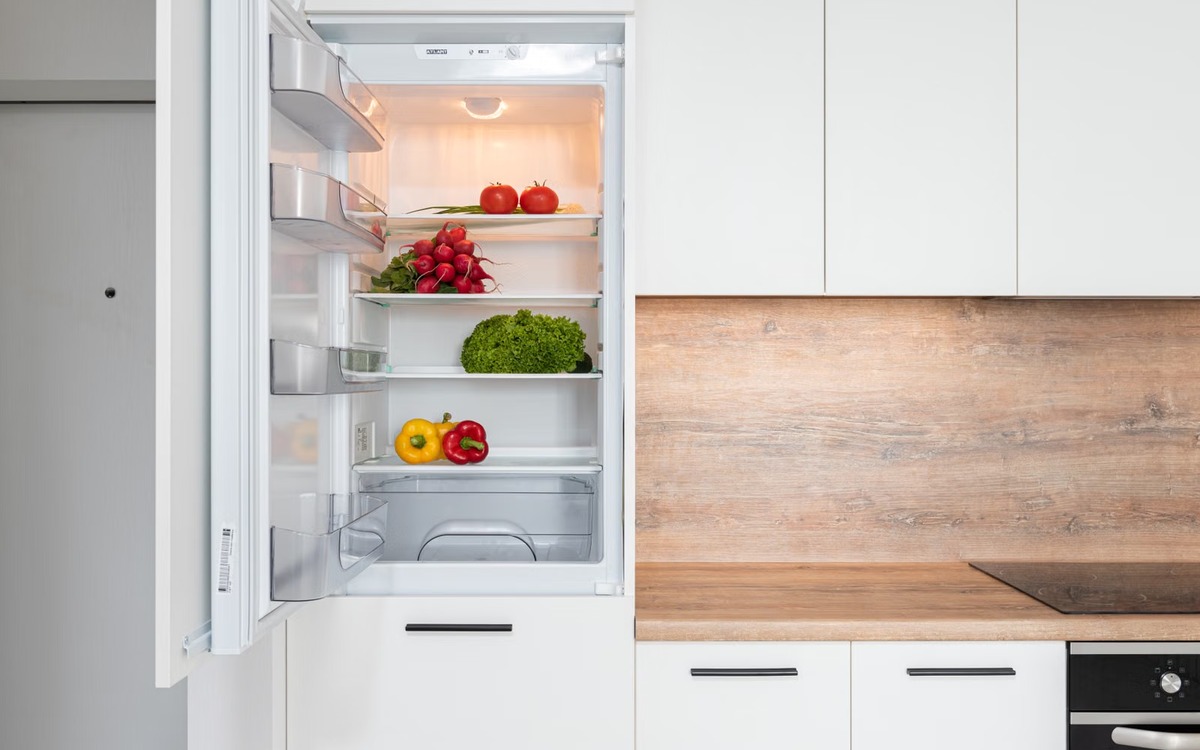
Lettuce is a refrigerated food. The FDA recommends keeping perishable produce such as lettuce in a clean refrigerator at 40°F (4°C) or below. At home, store lettuce in the produce drawer or in a container or bag that helps limit moisture loss without trapping excess water against the leaves.

A practical setup is a container lined with clean paper towels, as suggested by Colorado State University Extension. The goal is to protect the leaves from drying out while also preventing standing moisture. For typical household storage, plan to use lettuce within about a week for best quality; actual life varies with variety, freshness at purchase, and refrigerator conditions.

Fresh lettuce and vegetables stored inside a clean refrigerator

Keep lettuce away from ethylene-producing fruit

Lettuce is sensitive to ethylene. UC Davis reports that exposure can cause russet spotting, especially on the midribs. Apples and pears are examples of ethylene-producing fruits, so keeping lettuce away from them in the refrigerator can help preserve its appearance.

How to keep lettuce crisp

Lettuce loses crispness as it loses water. Cold temperatures and high humidity slow that process, while a loose barrier such as a bag or covered container reduces moisture loss. At home, a crisper drawer or a roomy container is usually more useful than leaving an uncovered head on a refrigerator shelf.

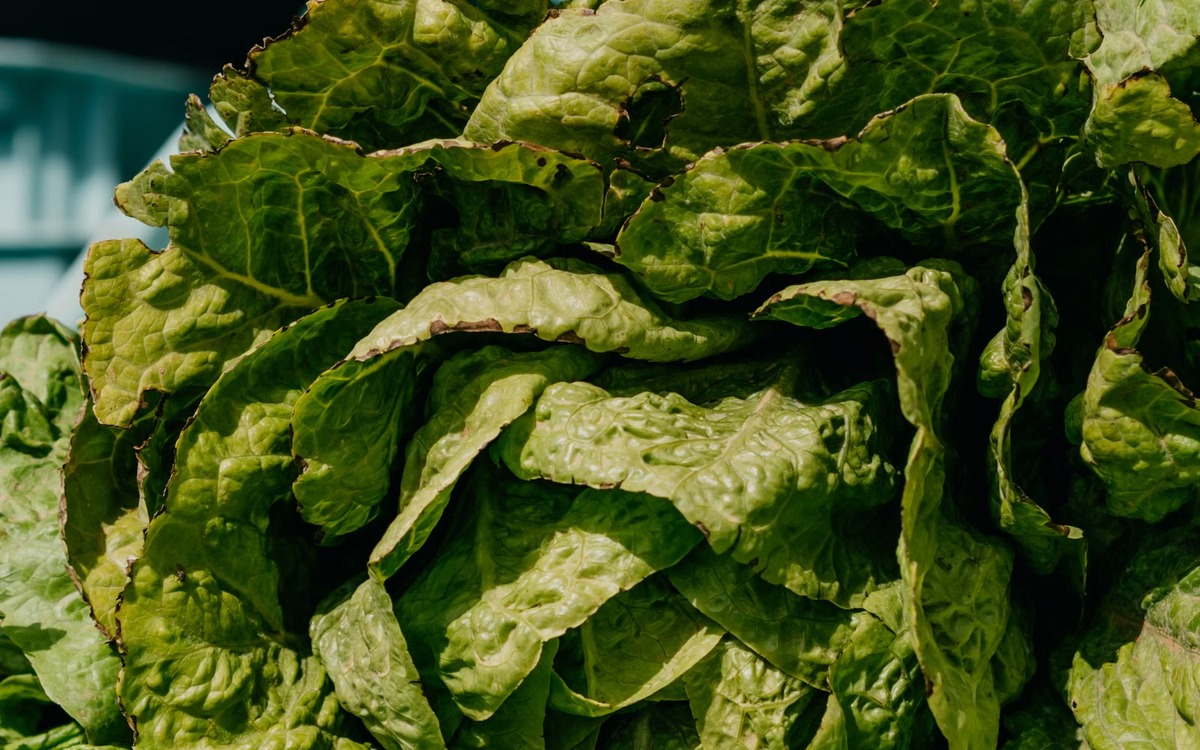
If leaves are already badly wilted, slimy, rotten, or strongly off-smelling, storage tricks will not restore them. Remove damaged leaves promptly and discard lettuce that clearly shows decay.

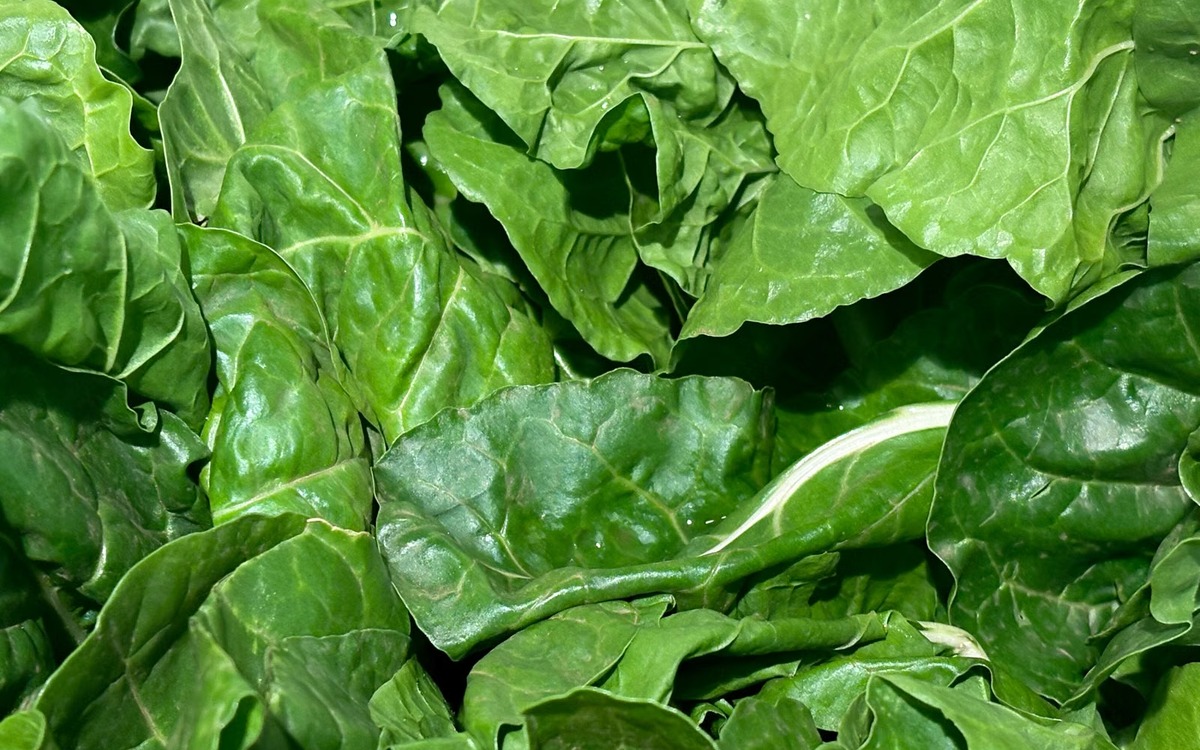
Close-up of fresh crisp green lettuce leaves

Can you freeze lettuce?

Freezing is not a good way to preserve lettuce for salads. The high water content means the leaves lose their crisp texture after freezing and thawing. Colorado State University Extension specifically notes that tender lettuce greens do not freeze well. If you want crisp lettuce, refrigeration is the better storage method.

When should you throw lettuce away?

Discard lettuce that looks rotten or has extensive slime, mold, severe darkening, or an unpleasant odor. The FDA advises throwing away produce that looks rotten. A few dry or bruised outer leaves can simply be removed if the rest of the head remains sound, but widespread decay is a reason to toss it.

Quick takeaways

  • Choose crisp, turgid leaves without obvious decay or major damage.
  • Keep lettuce refrigerated at 40°F (4°C) or below.
  • Wash under cool running water just before use, and do not use soap.
  • Dry washed lettuce thoroughly and protect it from moisture loss.
  • Store it away from ethylene-producing fruit such as apples and pears.
  • Use refrigerated lettuce within about a week for best household quality.
  • Do not expect frozen lettuce to stay crisp for salads.

Sources

Food-safety guidance: U.S. Food and Drug Administration. Storage and quality guidance: UC Davis Postharvest Research and Extension Center, Colorado State University Extension, and Utah State University Extension.

Photographic Grocery Explained guide to choosing, washing, storing, keeping lettuce crisp, and knowing when to discard it

Zucchini: How to Choose, Wash, Store, Freeze, and Know When to Toss It

A practical guide to buying tender zucchini, keeping it fresh in the refrigerator, washing it at the right time, freezing extras, and spotting spoilage.

Zucchini is one of those vegetables that can look perfectly sturdy at the store and then lose quality surprisingly fast at home. Its thin skin and high water content make it convenient to cook, but they also make it prone to bruising, shriveling, chilling injury, and decay if it sits too long.

The basic strategy is simple: buy firm, glossy zucchini; keep it dry and cold for short-term storage; wash it just before preparation; and freeze extra zucchini with the right blanching step instead of waiting for it to soften in the refrigerator.

How to choose good zucchini

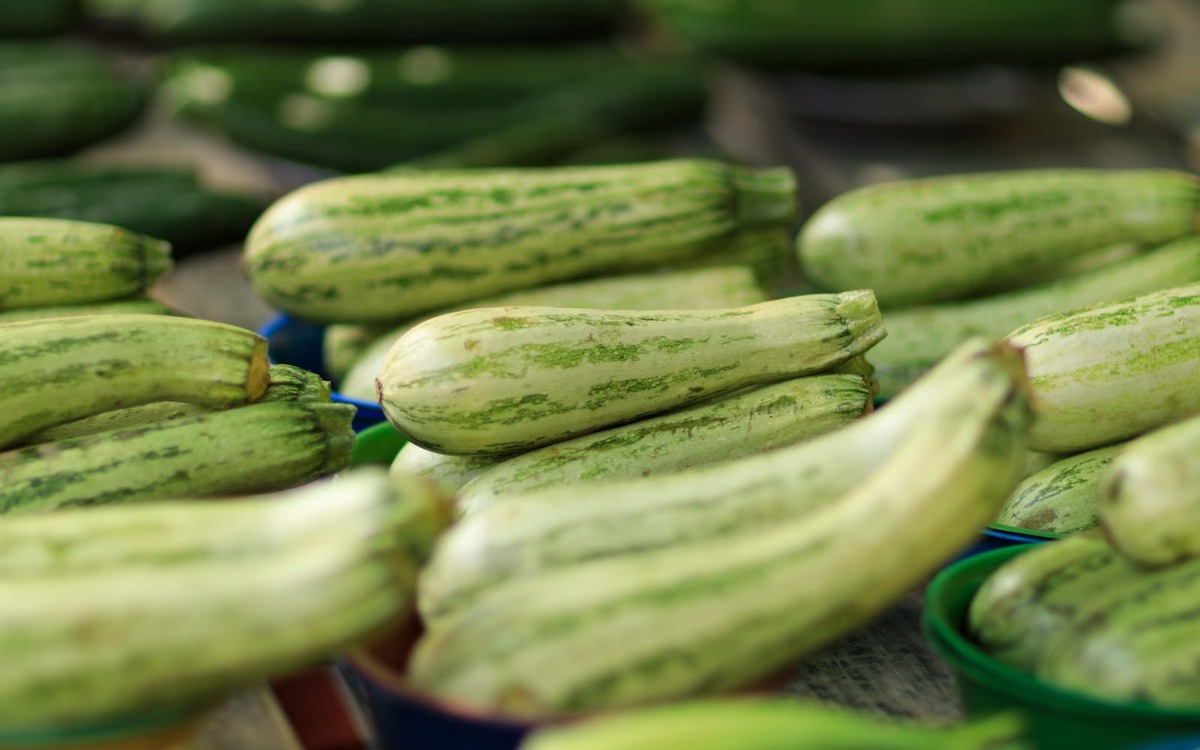
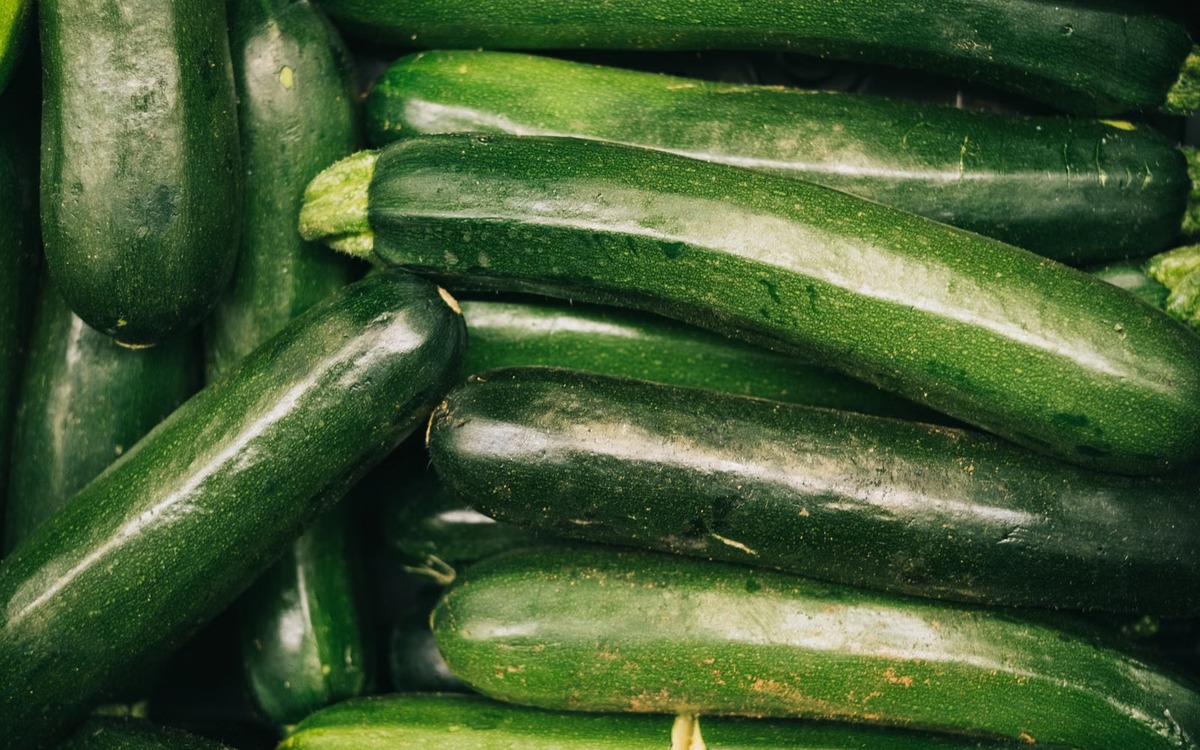
Look for zucchini that feels firm for its size and has glossy, tender-looking skin. The stem end should be intact, and the surface should be free of cuts, deep bruises, pitting, yellowing, or visible decay. UC Davis lists overall firmness, glossy skin, a tender rind, and freedom from physical damage and decay among the main quality indicators for summer squash.

Smaller to medium zucchini are often the easiest choice for everyday cooking because very mature squash can develop tougher skin, larger seeds, and more fibrous flesh. A huge zucchini is not automatically unsafe, but it may be less tender than a younger one.

Fresh green zucchini displayed at a produce market
Choose firm, glossy zucchini without deep bruises, yellowing, or visible decay.

Wash zucchini just before you use it

For storage, keeping zucchini dry is useful because extra surface moisture can encourage spoilage. Utah State University recommends storing zucchini unwashed and washing it just before preparation.

When you are ready to cook or cut it, rinse the zucchini thoroughly under cool running water and gently rub the surface. The FDA recommends washing produce under running water and does not recommend soap, detergent, or commercial produce wash. Dry the zucchini with a clean towel or paper towel after rinsing.

How to store zucchini in the refrigerator

For normal home storage, place dry, unwashed zucchini in a perforated produce bag or another container that limits moisture loss without trapping heavy condensation, then keep it in the refrigerator crisper drawer. Utah State University lists about one week as an expected upper shelf-life range, while noting that best quality is usually earlier.

There is an important temperature nuance: commercial postharvest guidance puts the ideal range for summer squash around 41–50°F (5–10°C). Standard home refrigerators are often colder than that. UC Davis notes that extended storage below about 41°F can cause chilling injury, including surface pitting, discoloration, and faster decay after the squash warms up again. In practice, store zucchini in the crisper rather than against the very cold back wall and plan to use it promptly rather than treating it as a long-storage vegetable.

Fresh zucchini stored in a refrigerator crisper drawer
Keep dry, unwashed zucchini in the crisper and use it while it is still firm and glossy.

Keep whole zucchini whole until you need it

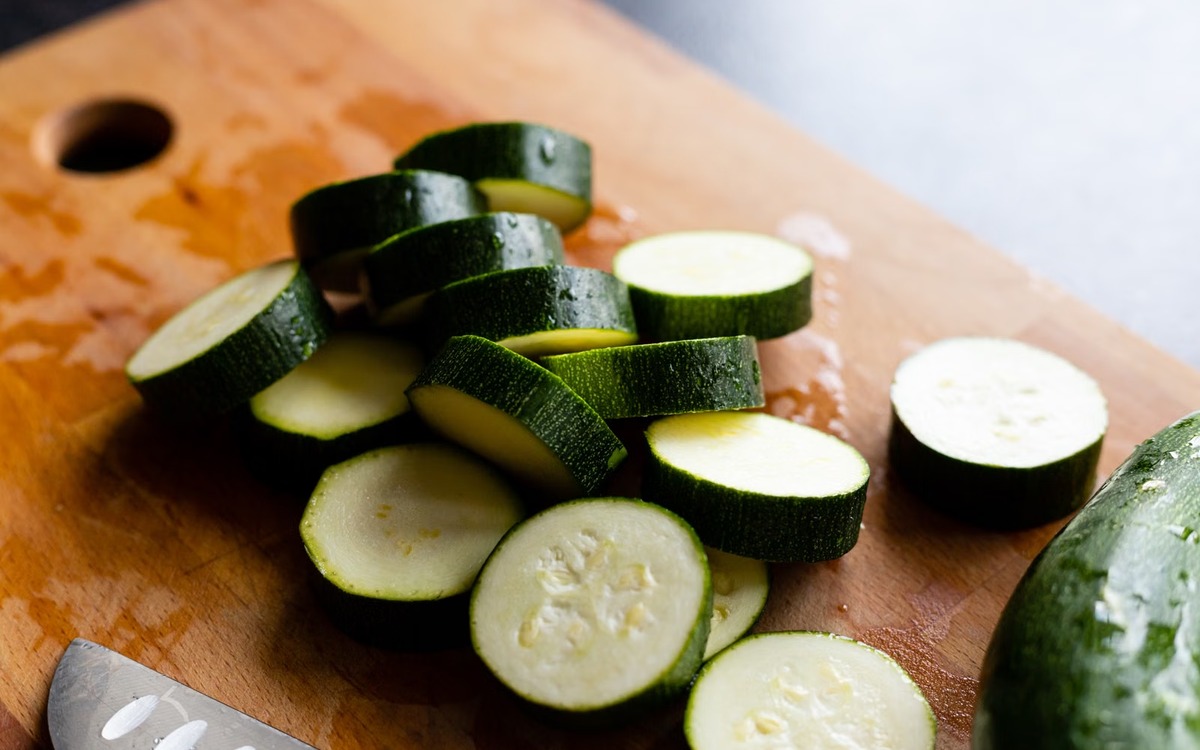
Whole zucchini generally holds quality better than cut zucchini. Once you slice or grate it, more moist surface area is exposed and texture declines faster. If you only need half, refrigerate the cut portion promptly in a clean covered container and use it soon.

Before slicing, inspect the squash. Small superficial marks can often be trimmed away, but widespread softness, leaking liquid, mold, or a rotten smell are signs that the zucchini should not be used.

Fresh zucchini sliced on a wooden cutting board
Cut only what you need; exposed zucchini loses texture faster than a whole squash.

How to freeze zucchini

Freezing is a good option when you have more zucchini than you can use while it is fresh, but the preparation matters. The National Center for Home Food Preservation recommends choosing young squash with tender skin, washing it, cutting it into 1/2-inch slices, and water-blanching the slices for 3 minutes before cooling, draining, packaging, and freezing.

Blanching slows enzyme activity that would otherwise damage color, flavor, and texture during frozen storage. After blanching, cool the zucchini promptly, drain it well, package it in freezer-safe containers or bags, label it, and freeze it. Thawed zucchini will be softer than fresh zucchini, which makes it better suited to soups, casseroles, sauces, sautés, and baked dishes than to raw salads.

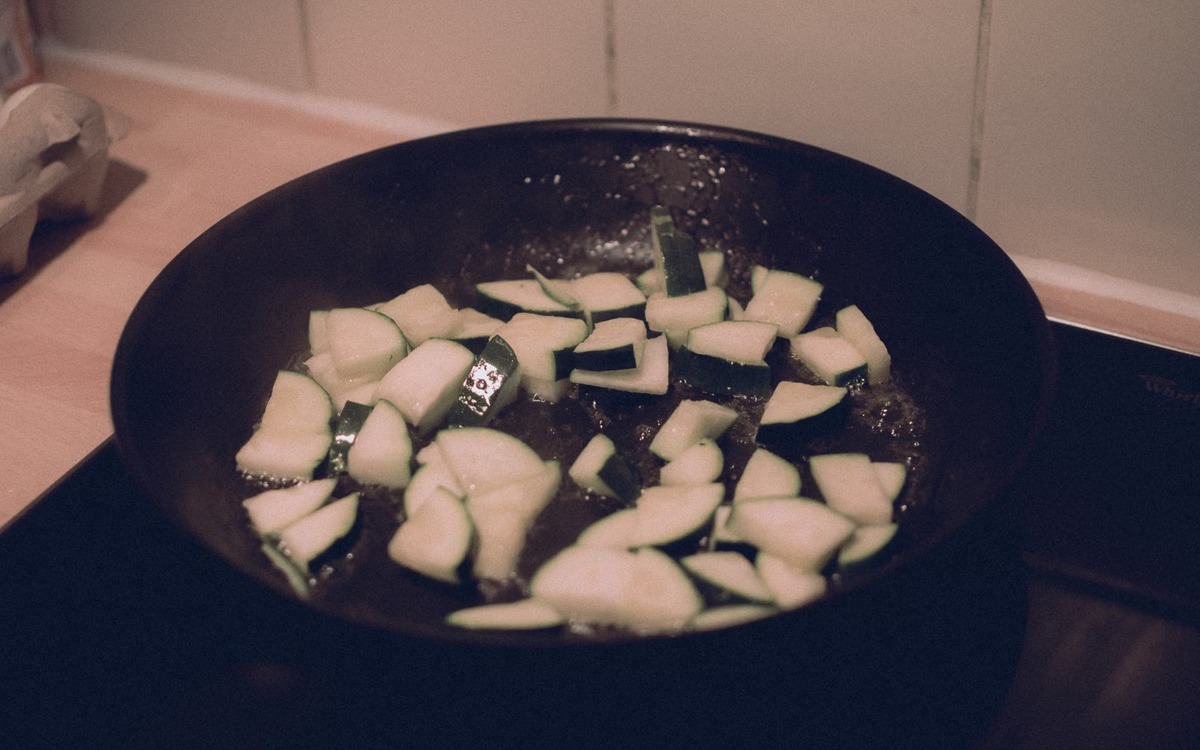
Sliced zucchini cooking in a skillet
Frozen zucchini softens after thawing, so cooked dishes are usually the best destination.

How to tell when zucchini has gone bad

Discard zucchini that is visibly rotten, moldy, slimy, leaking, or extensively soft. The FDA advises throwing away produce that looks rotten. Deep pitting, large water-soaked areas, strong discoloration, or an unpleasant fermented or rotten odor are also good reasons not to use it.

A slightly dull surface or a small dry scar does not automatically mean the whole squash is spoiled. Judge the zucchini as a whole: firmness, smell, visible decay, and the condition of the flesh after cutting are more useful than one cosmetic mark.

Simple zucchini storage routine

  • Buy firm, glossy zucchini with minimal damage.
  • Store it dry and unwashed in the refrigerator crisper.
  • Wash under running water just before preparation; do not use soap.
  • Use fresh zucchini promptly rather than storing it for long periods.
  • For freezing, slice and blanch for 3 minutes, then cool, drain, pack, and freeze.
  • Discard zucchini that is rotten, moldy, slimy, leaking, or extensively soft.

Handled this way, zucchini stays useful for quick weeknight meals without turning into a forgotten soft squash at the back of the refrigerator.

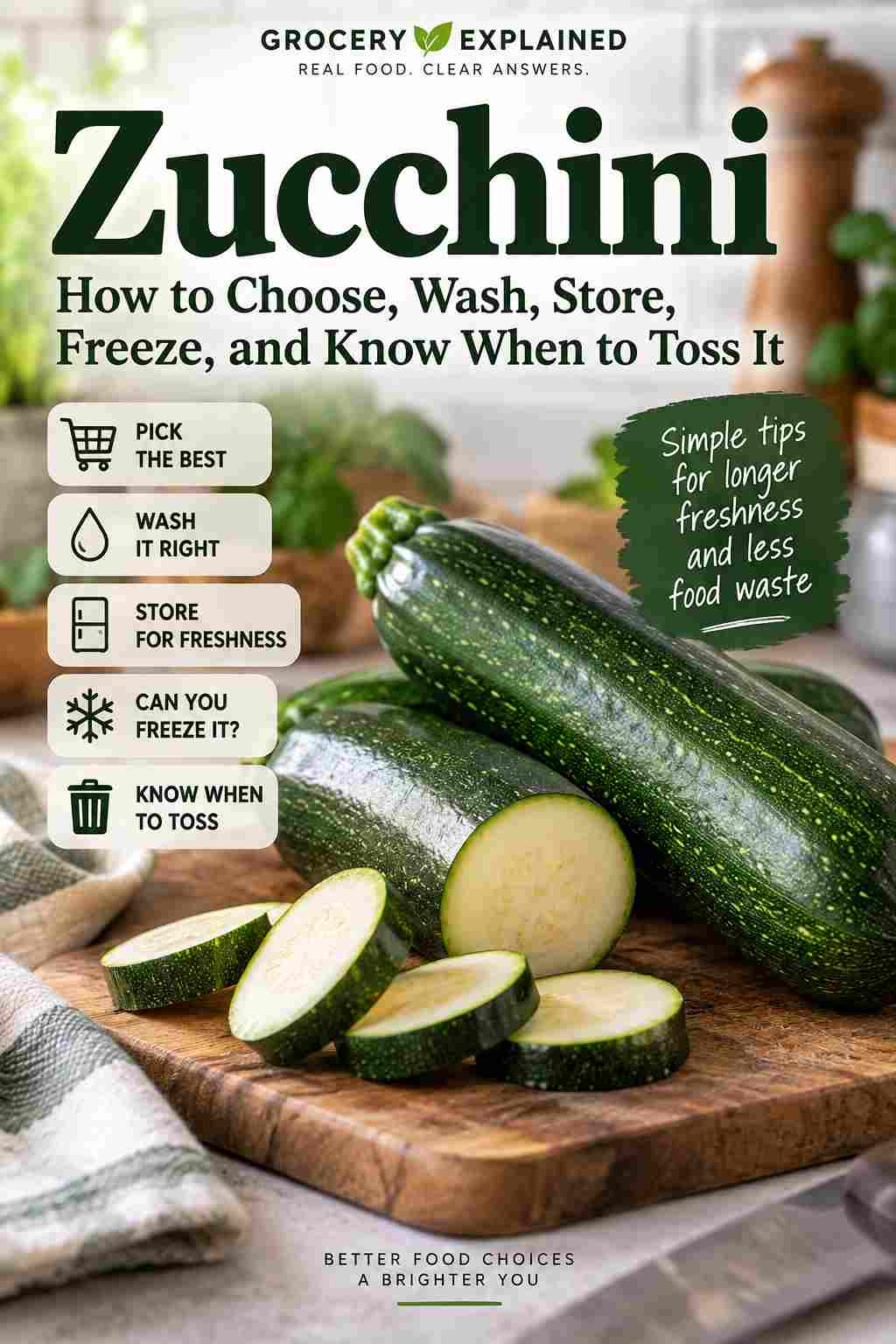
Photographic Grocery Explained guide to choosing, washing, storing, freezing, and checking zucchini for spoilage
A visual summary of how to choose, wash, store, freeze, and safely discard zucchini.

Wednesday, September 16, 2026

Cucumbers: How to Choose, Wash, Store, and Keep Them Crisp

A practical guide to buying better cucumbers, washing them safely, storing them for better texture, and spotting the point when they should be tossed.

Cucumbers seem simple, but they are unusually sensitive to storage conditions. They lose water quickly, can develop chilling injury when kept too cold for too long, and yellow faster around ethylene-producing produce. The goal at home is not perfect commercial storage; it is to keep them cool, humid, undamaged, and away from the foods that speed deterioration.

How to choose cucumbers that will last

Look for cucumbers that feel firm and heavy for their size, with bright, even color and no soft spots, major bruising, shriveling, or yellowing. Colorado State University Extension recommends firm cucumbers without soft spots or discoloration, and UC Davis lists firmness, decay, yellowing, and physical damage among the key quality factors.

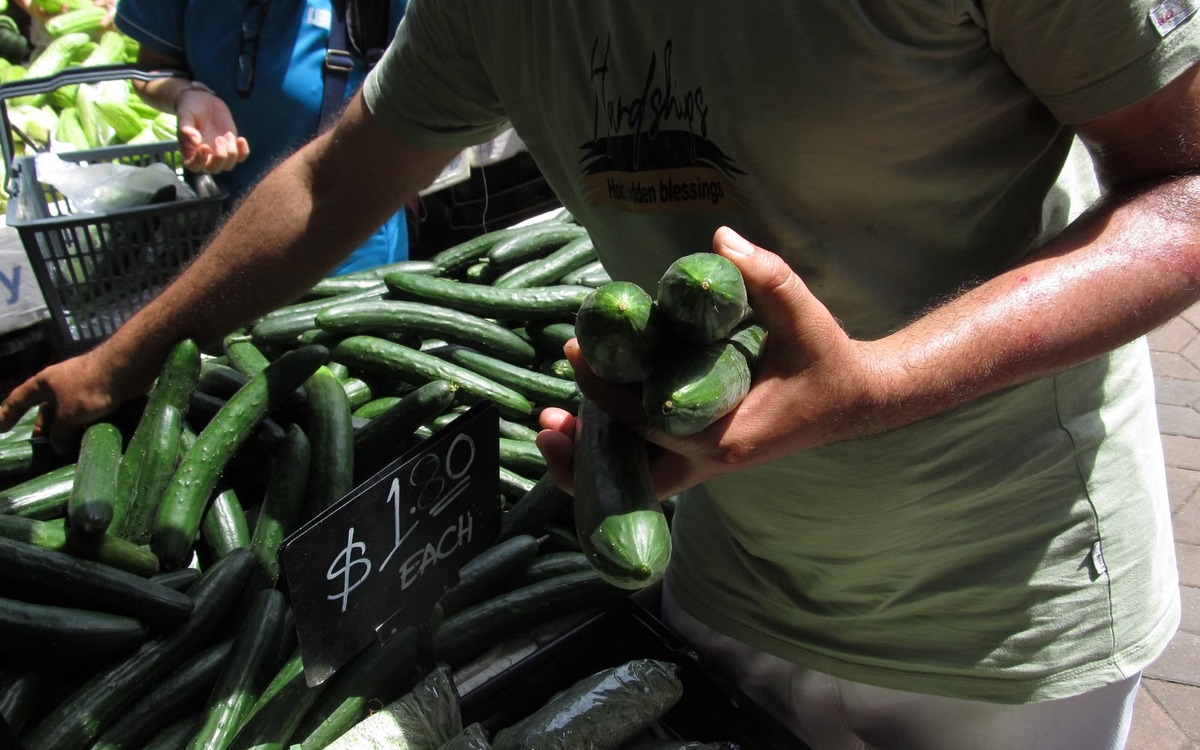
Fresh green cucumbers being selected at a market stall
Start with firm, evenly colored cucumbers without soft or damaged areas.

Wash them right before cutting or eating

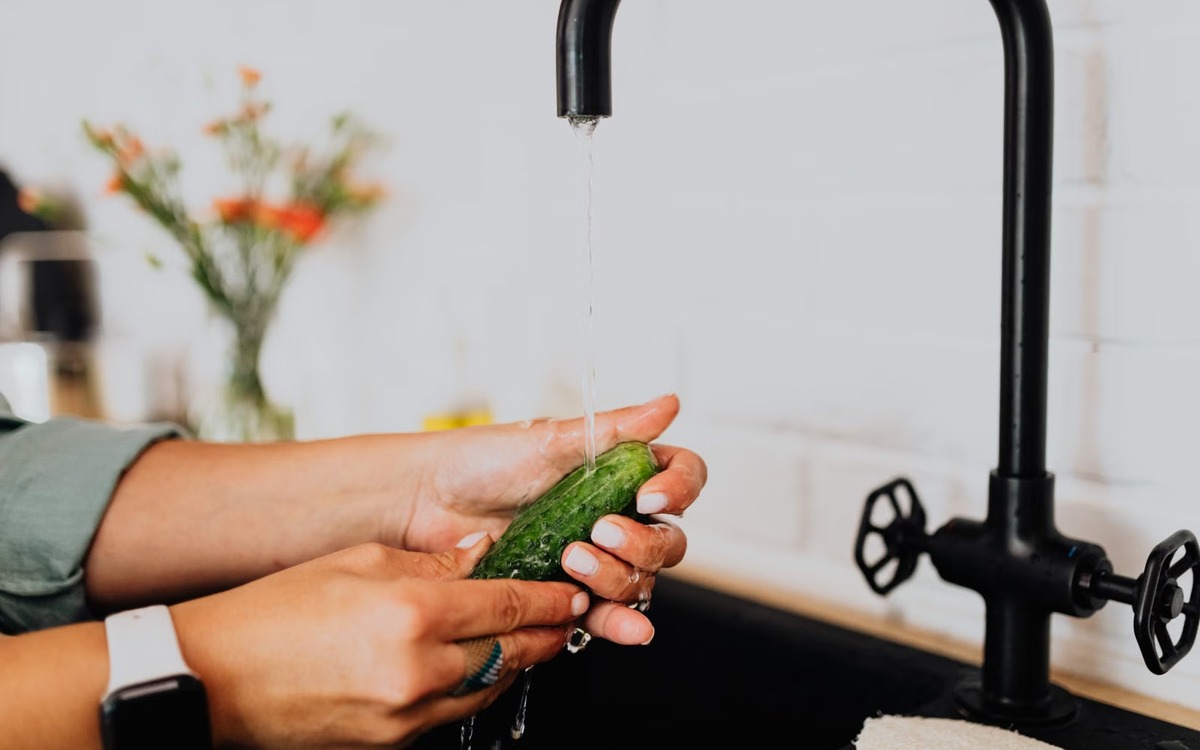
Rinse cucumbers thoroughly under clean running water before preparing or eating them. Because cucumbers are firm produce, the FDA recommends scrubbing the surface with a clean produce brush. Do not wash produce with soap, detergent, bleach, or commercial produce wash. Dry the cucumber with a clean towel or paper towel after rinsing.

A fresh cucumber being washed under running water in a kitchen sink
Use running water and a clean produce brush; soap is not needed.

How to store cucumbers at home

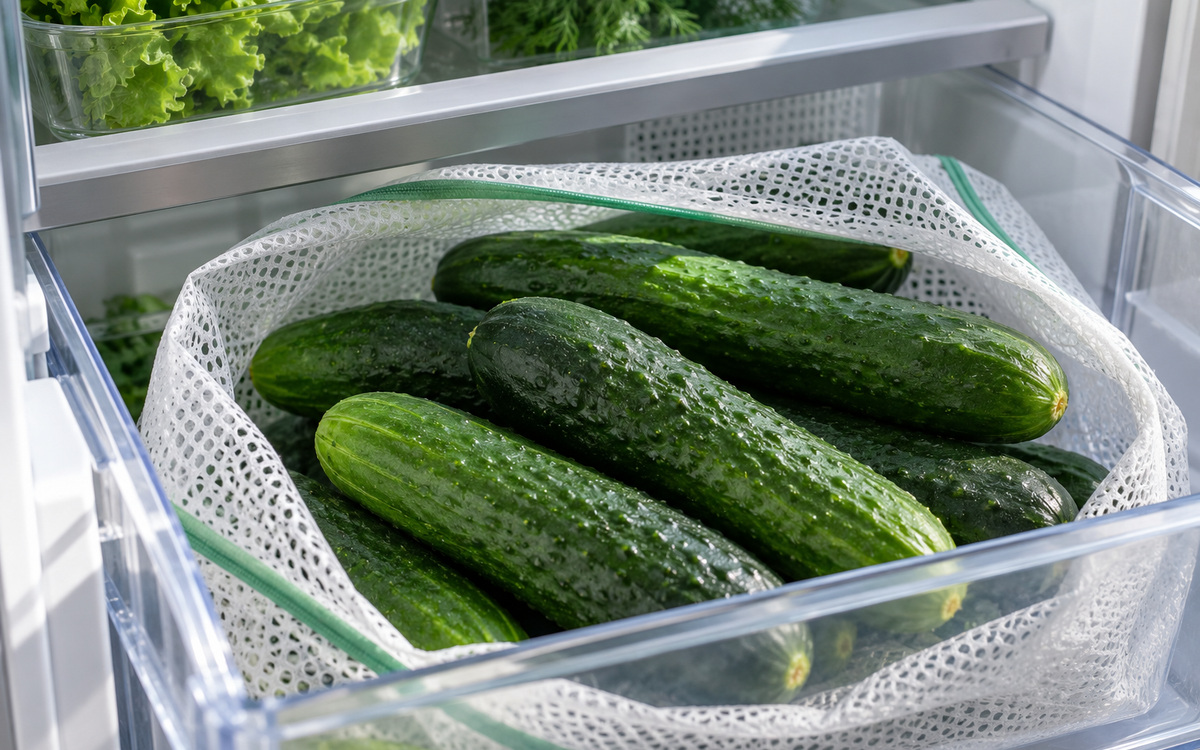
The ideal storage temperature for cucumbers is warmer than a typical refrigerator: UC Davis lists about 50–55°F (10–12.5°C), while University of Minnesota Extension notes that these ideal cool, humid conditions are hard to reproduce in most homes. In practice, a refrigerator crisper is a reasonable short-term option. A perforated or breathable bag helps limit moisture loss without trapping too much condensation.

Do not expect indefinite refrigerator storage. University of Minnesota Extension gives about one week as a practical home-storage expectation, while UC Davis notes that chilling injury can develop when cucumbers are held below about 50°F for several days. If your refrigerator runs very cold, use cucumbers sooner rather than trying to stretch their storage time.

Whole cucumbers stored in a breathable mesh bag inside a refrigerator crisper drawer
A breathable bag in the crisper is a practical short-term home-storage setup.

Keep cucumbers away from apples and tomatoes

Cucumbers are sensitive to ethylene. UC Davis reports that low levels of ethylene can accelerate yellowing and decay, and University of Minnesota Extension specifically advises not storing cucumbers with apples or tomatoes. If your crisper contains those foods, separate them rather than packing everything tightly together.

Once you cut a cucumber

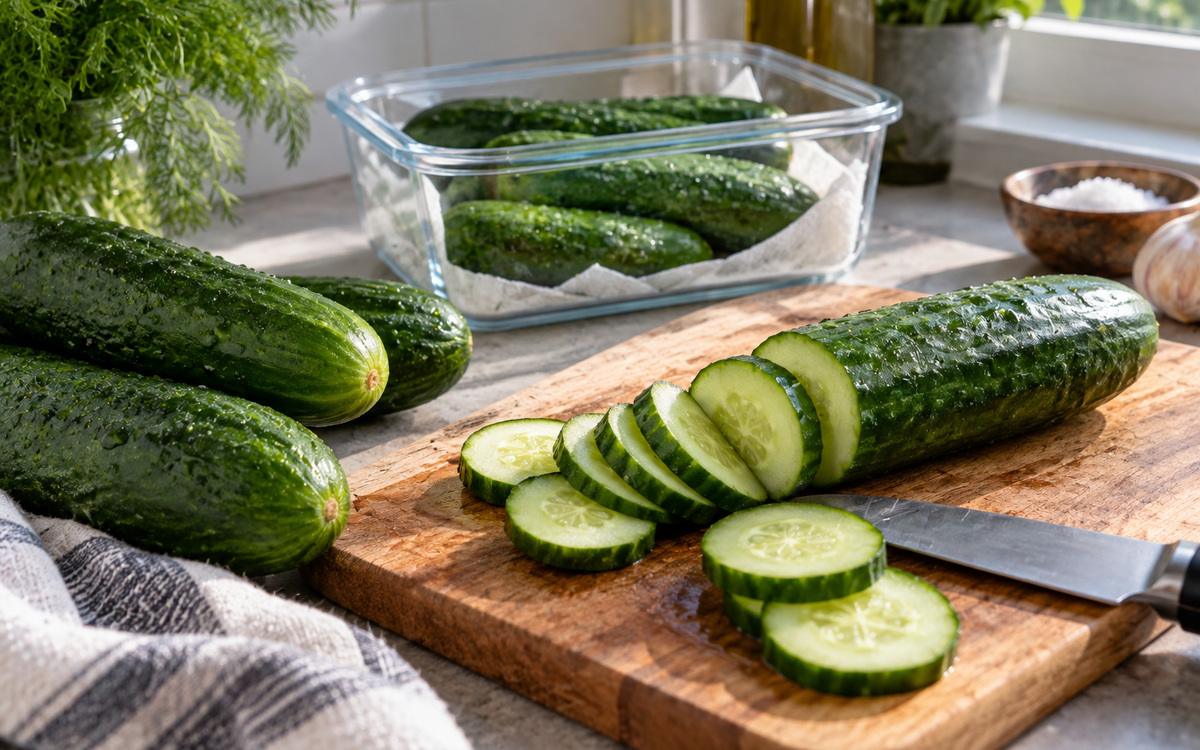
Cut produce should be kept cold. University of Minnesota Extension recommends holding cut produce at 41°F (5°C) or below, and FDA guidance says pre-cut produce should be refrigerated. Cover the cut cucumber or place the pieces in a clean covered container, return them to the refrigerator promptly, and use them while they still look and smell fresh.

Fresh cucumber being sliced on a wooden cutting board in a bright kitchen
Refrigerate cut cucumber promptly in a clean covered container.

When to toss cucumbers

Discard cucumbers that are clearly rotten, moldy, slimy, leaking, badly damaged, or very soft. FDA guidance says to throw away produce that looks rotten and to cut away damaged or bruised areas before preparation. If spoilage is widespread or the cucumber has broken down substantially, it is better to discard it than try to salvage it.

Simple takeaways

  • Choose firm cucumbers with bright, even color and no soft spots.
  • Wash under running water and scrub with a clean produce brush; do not use soap.
  • Use a breathable or perforated bag for short-term cool storage.
  • Keep cucumbers away from apples and tomatoes because ethylene speeds yellowing and decay.
  • Refrigerate cut cucumber promptly and discard produce that is clearly spoiled.
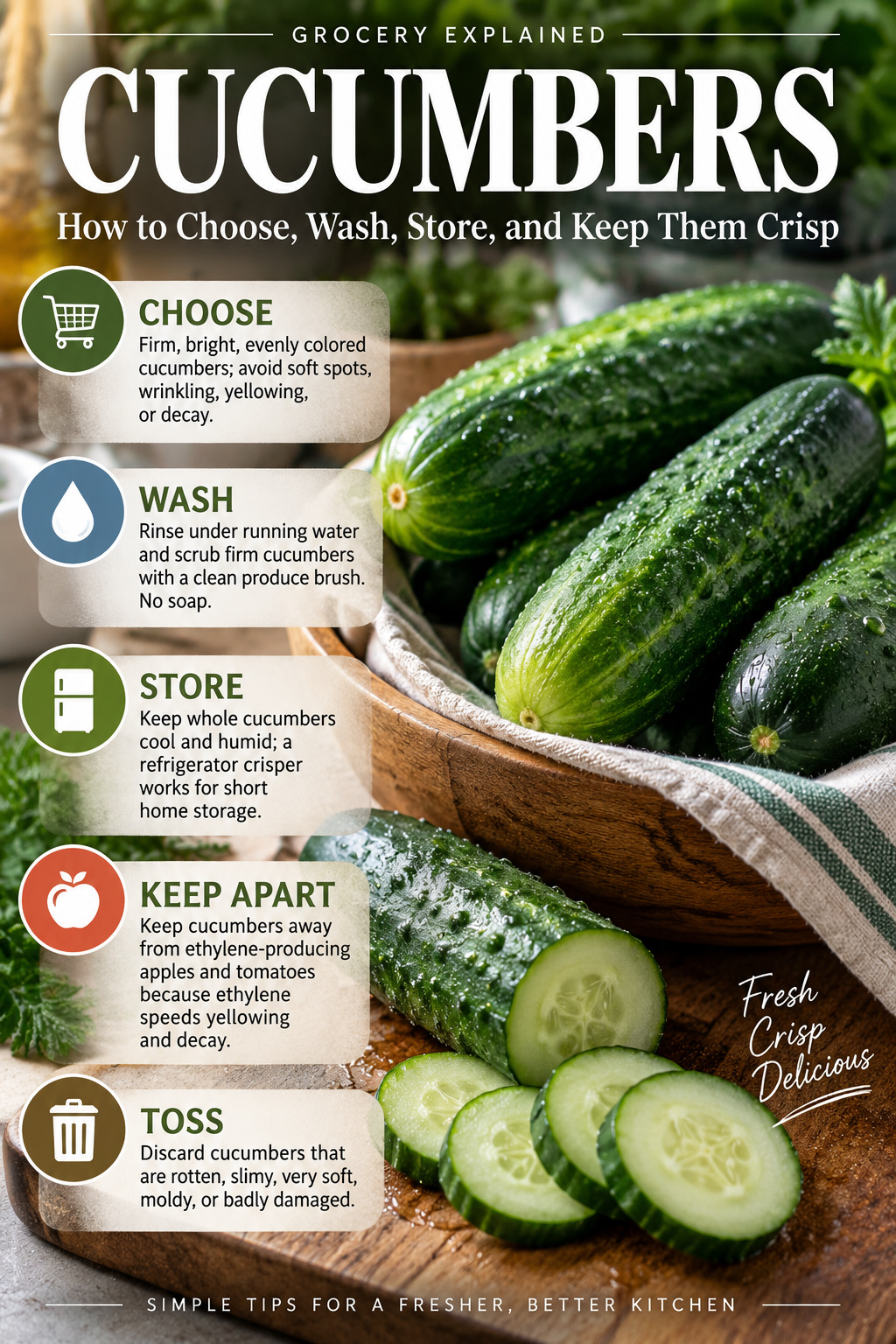
Photographic Grocery Explained guide to choosing, washing, storing, and keeping cucumbers crisp
A visual guide to choosing, washing, storing, separating, and discarding cucumbers.

Grapes: How to Choose, Wash, Store, Freeze, and Know When to Toss Them

Grapes are easy to buy and easy to waste if they go into the refrigerator damp, damaged, or already starting to mold. The best routine is simple: choose firm fruit with healthy-looking stems, keep the bunches cold and dry, wash only what you are about to eat, and freeze extras while they are still sound.

Choose grapes that are firm, plump, and well attached

Good table grapes should look plump and feel firm rather than soft or wrinkled. UC Davis lists berry firmness and the absence of decay, cracked berries, stem browning, shriveling, sunburn, and insect damage among the important quality markers for table grapes.

Stems are useful clues too. Utah State University Extension advises looking for firm, plump grapes with good color and green stems. Brown, dry stems and lots of loose berries are signs that the bunch has been sitting longer or is overripe.

A pale, dusty-looking film on the skin is not automatically a problem. Many grapes naturally carry a waxy bloom. What matters more is whether the berries are intact, firm, dry, and free from mold, leaking juice, or widespread shriveling.

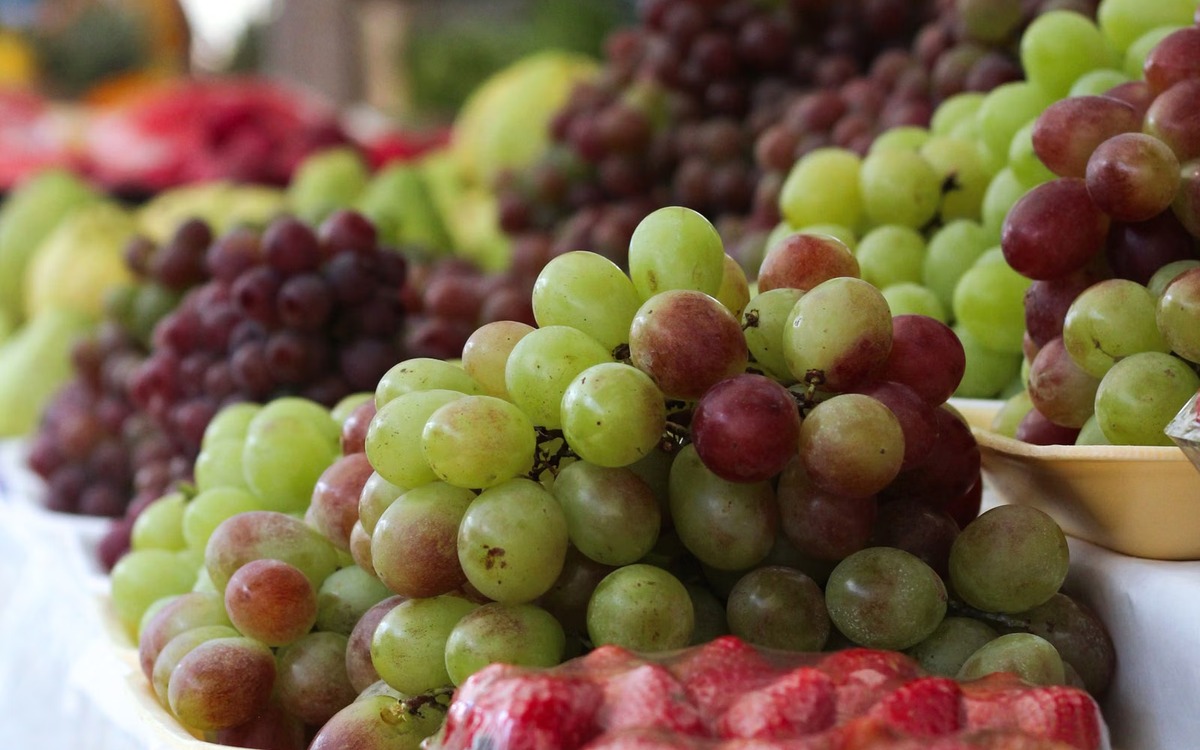
Fresh red and green grapes displayed at a market for shoppers to choose from

Refrigerate grapes promptly and keep them dry

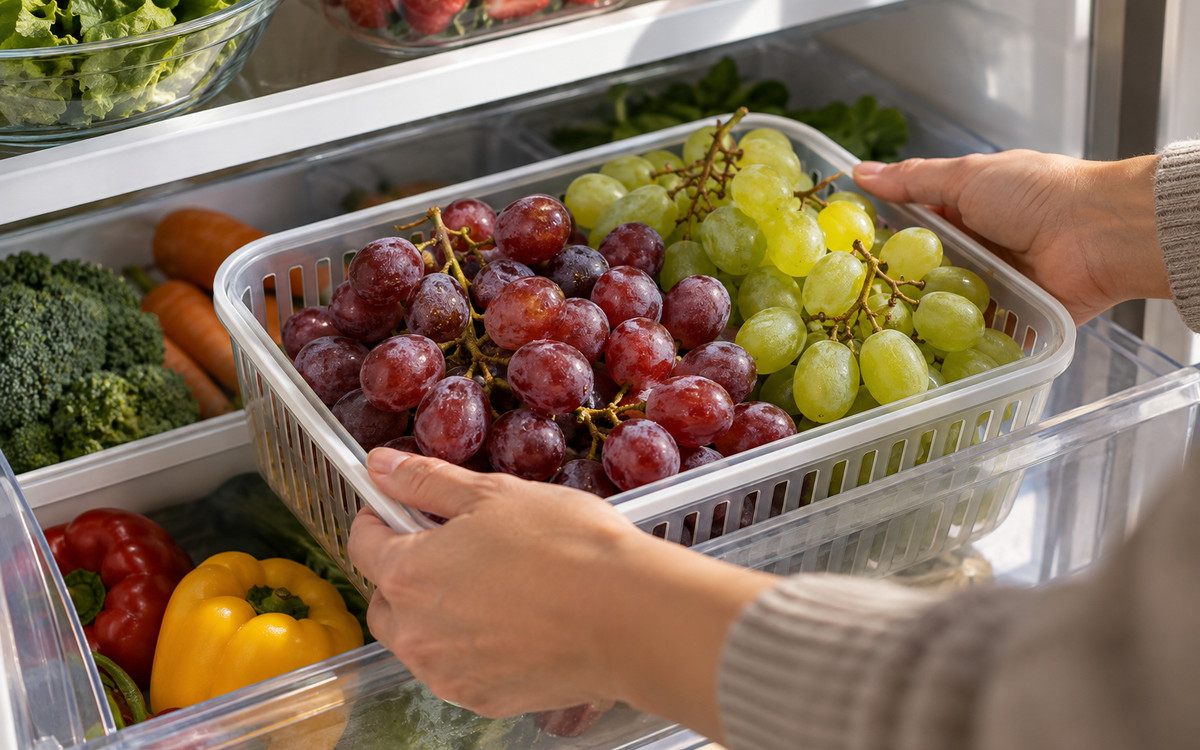
Grapes are a refrigerated fruit. Utah State University Extension recommends storing fresh grapes in the refrigerator in a perforated plastic bag, while UC Davis notes that low temperature is one of the most important controls for maintaining grape quality after harvest.

At home, that means putting grapes into the refrigerator soon after shopping instead of leaving them on the counter for days. A ventilated produce container or the original perforated bag works well because it keeps the fruit cold without trapping as much surface moisture.

Before storing, remove any crushed, leaking, or moldy berries. Colorado State University Extension specifically advises discarding spoiled or moldy grapes before storage because spoilage organisms can spread to nearby fruit.

Red and green grapes being placed in a ventilated container inside a refrigerator

Wait to wash grapes until you are ready to eat them

For best keeping quality, store grapes unwashed and rinse them just before serving. Utah State University Extension says to wash grape clusters just before use under a gentle spray of water, then drain and pat them dry. Penn State Extension also recommends waiting to wash grapes until you are ready to eat them to reduce conditions that favor mold.

When it is time to eat them, rinse the grapes under cool running water and gently rub the berries with clean hands. The FDA advises washing produce under running water and does not recommend soap, detergent, or commercial produce washes.

Do not soak grapes for long periods. After rinsing, drain them well or dry them with a clean towel if you are not serving them immediately.

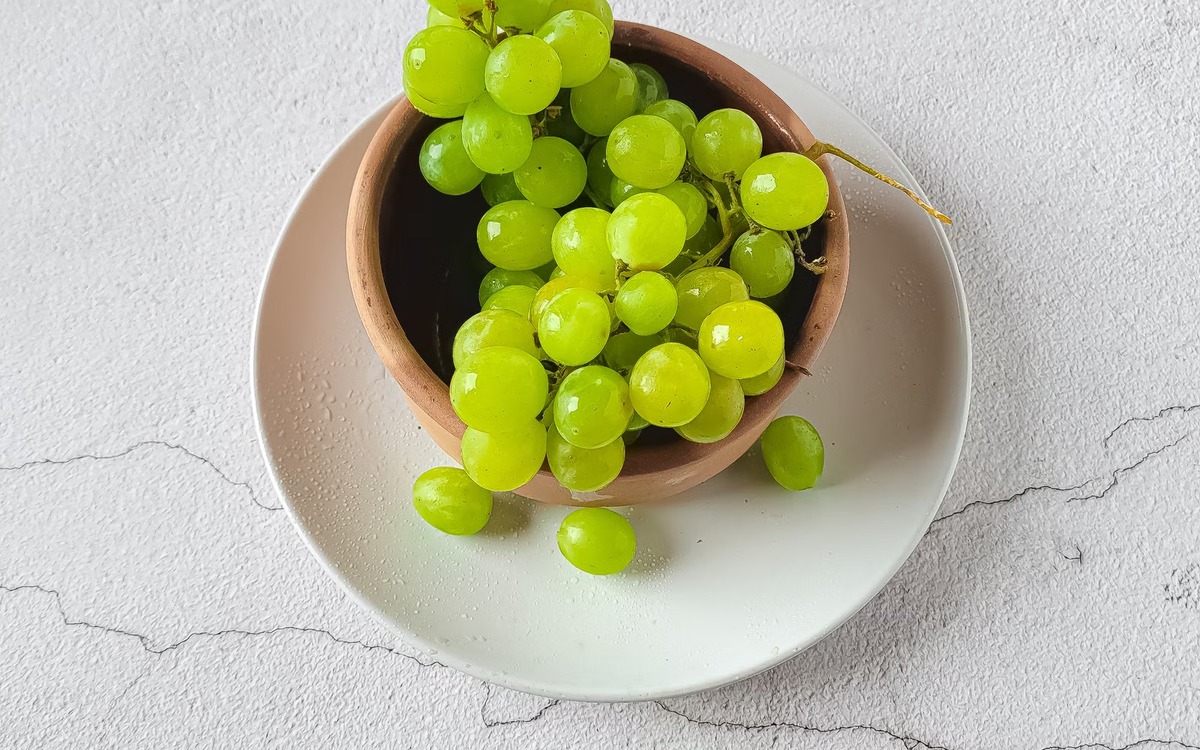
Fresh green grapes in a bowl ready to rinse and serve

Freeze sound, ripe grapes before they decline

Freezing is a practical way to save a bunch you will not finish in time. The National Center for Home Food Preservation recommends choosing fully ripe, firm, sweet grapes, then sorting, stemming, and washing them before freezing. Seedless grapes can be left whole.

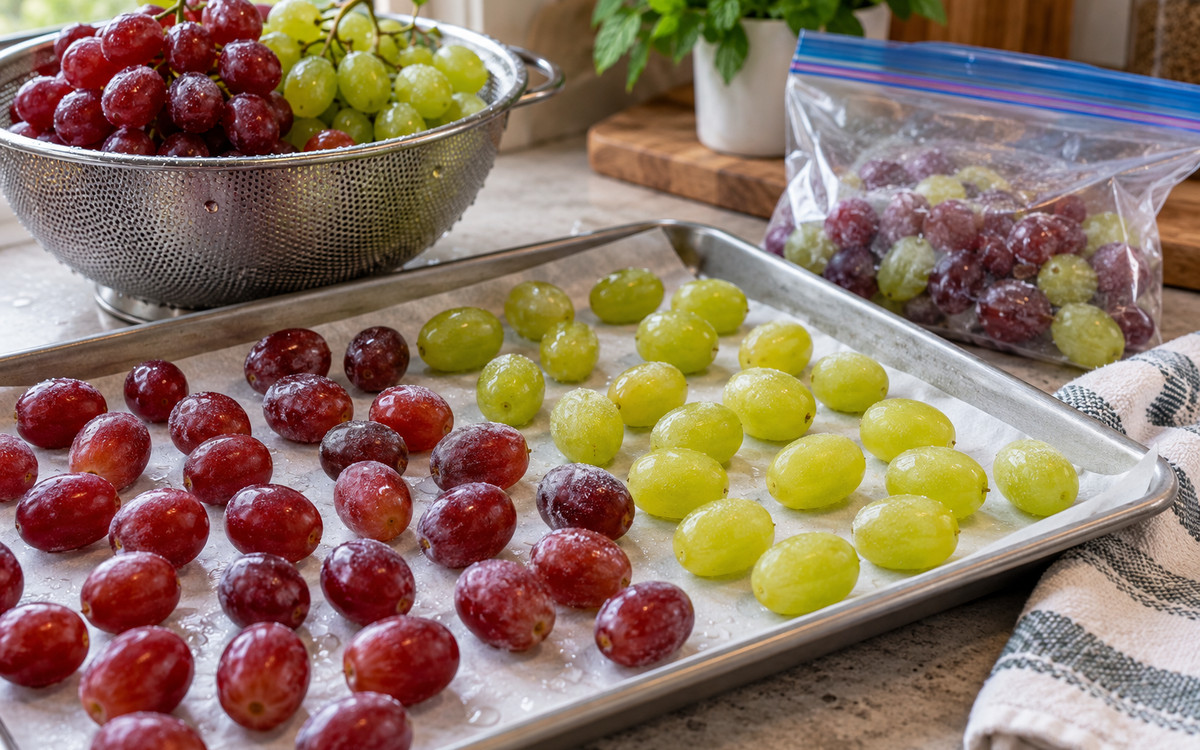
For an easy snack-style method, wash and stem the grapes, dry them thoroughly, spread them in a single layer on a tray, and freeze until firm before transferring them to a freezer container or bag. Colorado State University Extension lists tray packing as an appropriate method for whole grapes.

Frozen grapes work especially well as a cold snack or in smoothies. Their texture changes after freezing and thawing, so they are not a perfect substitute for fresh grapes in every dish.

Washed red and green grapes arranged on a tray before freezing

Do not try to rescue moldy grapes

If a grape is moldy, discard it. USDA Food Safety and Inspection Service guidance says mold can spread quickly in fruits and vegetables, and soft fruits can be contaminated below the visible surface.

If you find a moldy grape inside a container, remove the moldy fruit and any pieces directly touching it. Inspect the rest carefully. Grapes that are overly mushy, leaking, fermented-smelling, or showing additional mold should also be discarded.

Normal moisture on freshly washed grapes is different from leaking juice caused by breakdown. Likewise, a few loose berries are not automatically unsafe, but a bunch with widespread softening, shriveling, mold, or off odors has reached the point where keeping it is not worth the risk.

A simple grape routine

  1. Buy firm, plump bunches with fresh-looking stems and no visible mold.
  2. Refrigerate them soon after shopping in a ventilated or perforated container.
  3. Keep grapes unwashed until you are ready to eat them.
  4. Rinse under cool running water; do not use soap or produce detergent.
  5. Dry well if you are preparing grapes for storage or freezing.
  6. Freeze firm, ripe extras before quality drops too far.
  7. Discard moldy, leaking, overly mushy, or clearly spoiled grapes.

Bottom line

The best answer to how to store grapes is to keep them cold, dry, and unwashed until you need them. Start with good-quality fruit, remove damaged berries, rinse only before eating, and freeze extras while they are still firm and sound. That routine gives you a better chance of finishing the bunch before mold or shriveling takes over.

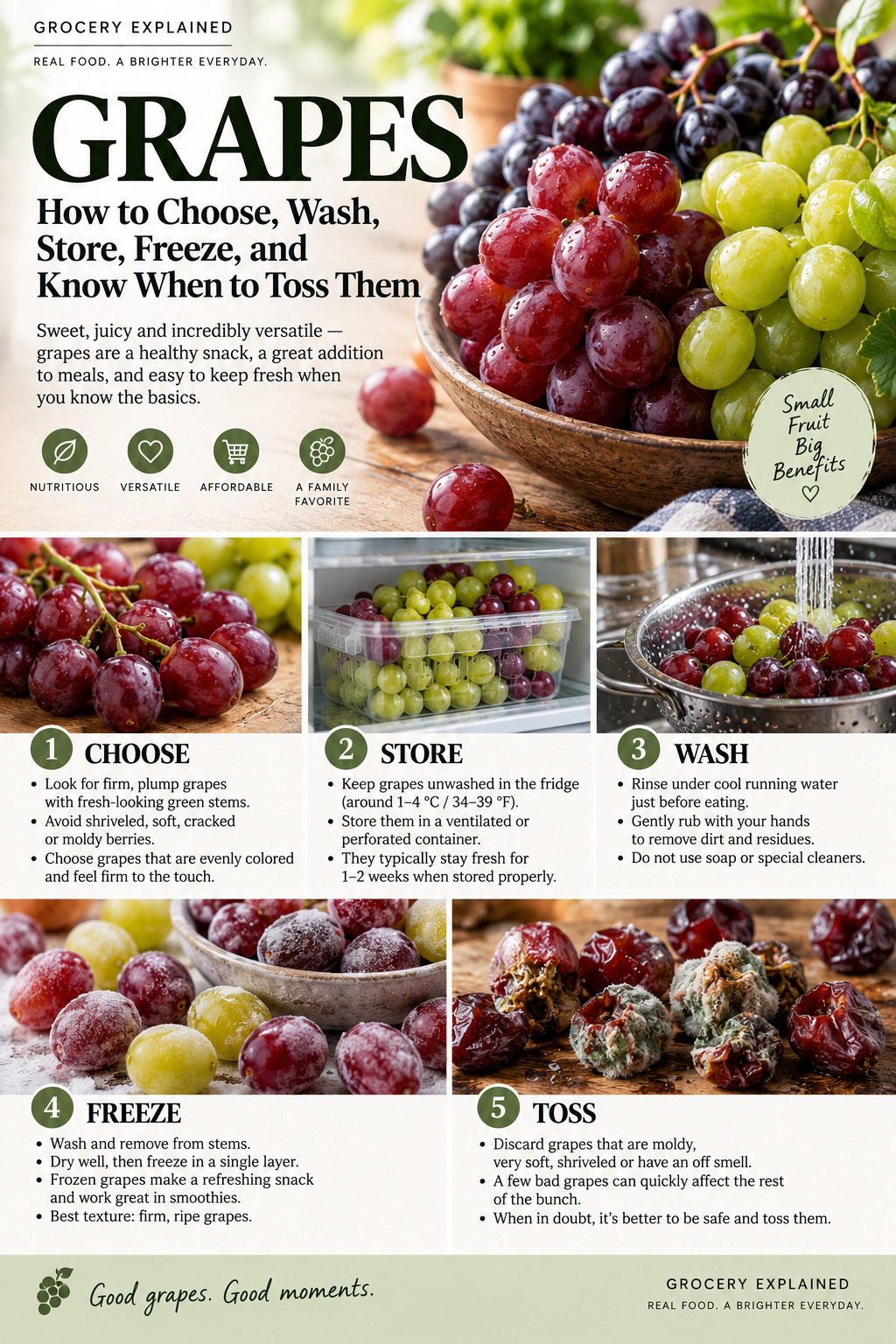
Photographic Grocery Explained guide to choosing, storing, washing, freezing, and checking grapes for spoilage

Tuesday, September 15, 2026

Tomatoes: How to Choose, Ripen, Store, Refrigerate, Freeze, and Know When to Toss Them

Tomatoes are simple to buy but surprisingly easy to store badly. A tomato that still needs to ripen does best in different conditions from one that is already fully ripe, and a cut tomato has different food-safety needs again. The practical goal is to keep good texture and flavor for as long as possible without turning storage into a complicated project.

The basic routine is straightforward: buy firm tomatoes without major damage, let underripe tomatoes finish ripening away from direct sun, use ripe tomatoes soon, refrigerate ripe or cut tomatoes when you need to slow deterioration, and freeze extra ripe tomatoes for cooked dishes rather than expecting them to stay salad-firm after thawing.

Choose tomatoes by firmness, color, and what you plan to cook

For most everyday uses, look for tomatoes that are well formed for their type, free of deep cracks and bruises, and firm enough to hold their shape. The University of California, Davis Postharvest Research and Extension Center describes good-quality tomatoes as smooth, well formed, evenly colored for the variety, and not soft enough to deform easily from overripeness.

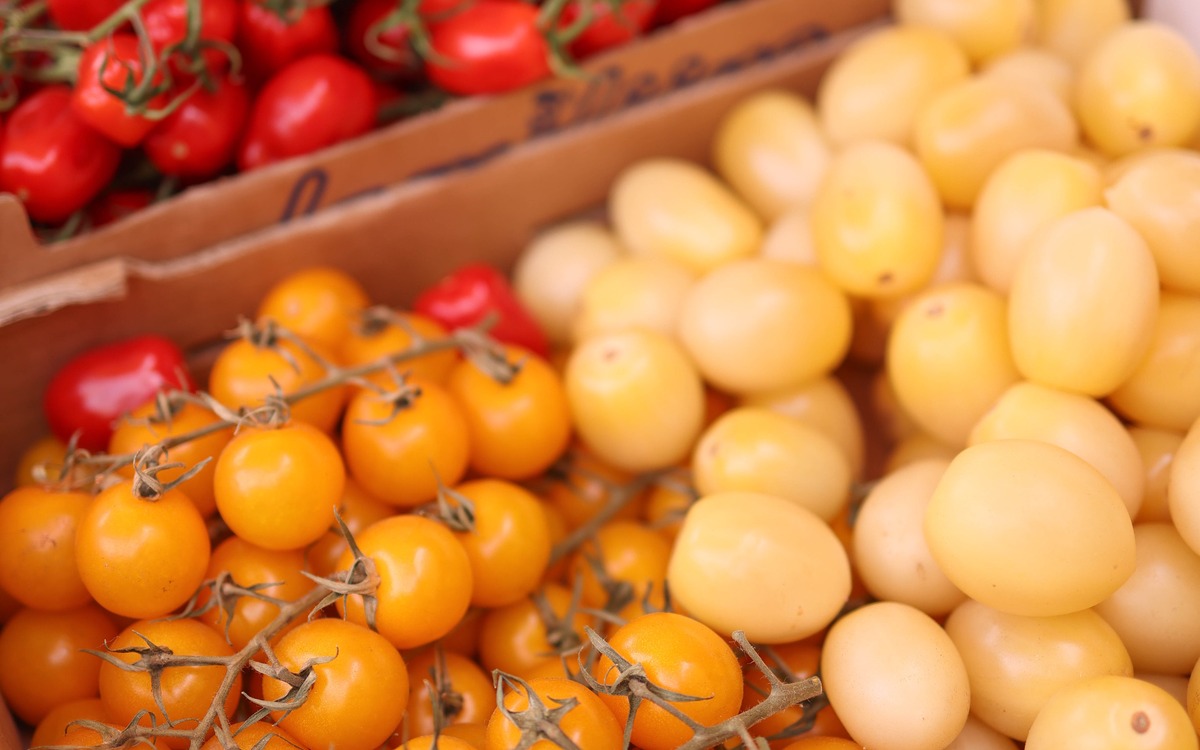
Color alone is not a perfect ripeness test because tomato varieties can be red, orange, yellow, purple, striped, or green when ripe. Use color together with firmness. A tomato for tonight's salad can be fully colored and gently yielding. If you need several days before using it, a slightly firmer, less-developed tomato gives you more time.

Skip tomatoes with leaking cracks, extensive bruising, obvious mold, or areas that look rotten. FDA produce guidance recommends choosing produce that is not badly bruised or damaged when possible and discarding produce that looks rotten.

Colorful ripe tomatoes displayed at a market for shoppers to choose from

Let underripe tomatoes finish ripening at room temperature

Tomatoes continue to ripen after harvest. UC Davis notes that mature-green tomatoes respond to ethylene and that standard ripening happens best at moderate room-like temperatures rather than in very cold storage. Utah State University Extension likewise recommends keeping unripe tomatoes in a warm place away from direct sunlight and notes that refrigerator temperatures slow or stop normal ripening.

For home storage, place underripe tomatoes in a single layer or otherwise avoid crushing them. Keep them out of hot direct sun; a windowsill that becomes very warm can soften fruit faster than it colors evenly. Check them daily so you can move fully ripe tomatoes into your cooking plan before they become overripe.

You do not need to wrap every tomato individually. Good air circulation and gentle handling matter more. If one tomato develops a wet leak or mold, remove it promptly and check the fruit touching it.

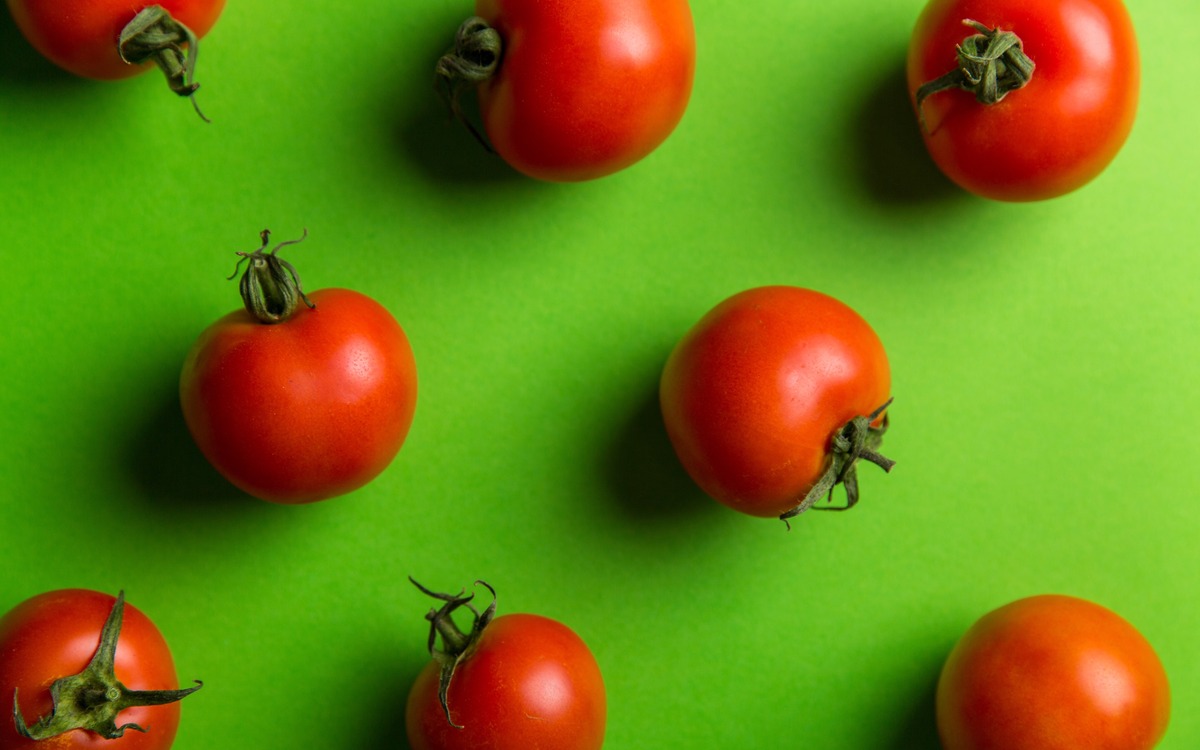
Ripe red tomatoes arranged together as they finish ripening for kitchen use

Room temperature or refrigerator? Use ripeness as the decision point

Cold storage can slow deterioration, but tomatoes are also sensitive to chilling. UC Davis lists warmer storage ranges for mature-green and ripening tomatoes and warns about chilling injury from temperatures that are too low for too long. University of Minnesota Extension similarly advises that red tomatoes lose color, firmness, and flavor when stored below 40°F for extended periods.

That does not mean a household refrigerator is never useful. Utah State University Extension recommends letting tomatoes ripen first and refrigerating only ripe tomatoes. In practice, if a fully ripe tomato will otherwise become overripe before you can use it, refrigeration is a reasonable rescue step. Use it soon rather than treating the refrigerator as long-term storage.

Cut tomatoes are different. FDA retail guidance treats washed and cut tomatoes as time/temperature-control food and says they should be refrigerated at 41°F or below. At home, place cut tomatoes in a clean covered container and refrigerate promptly.

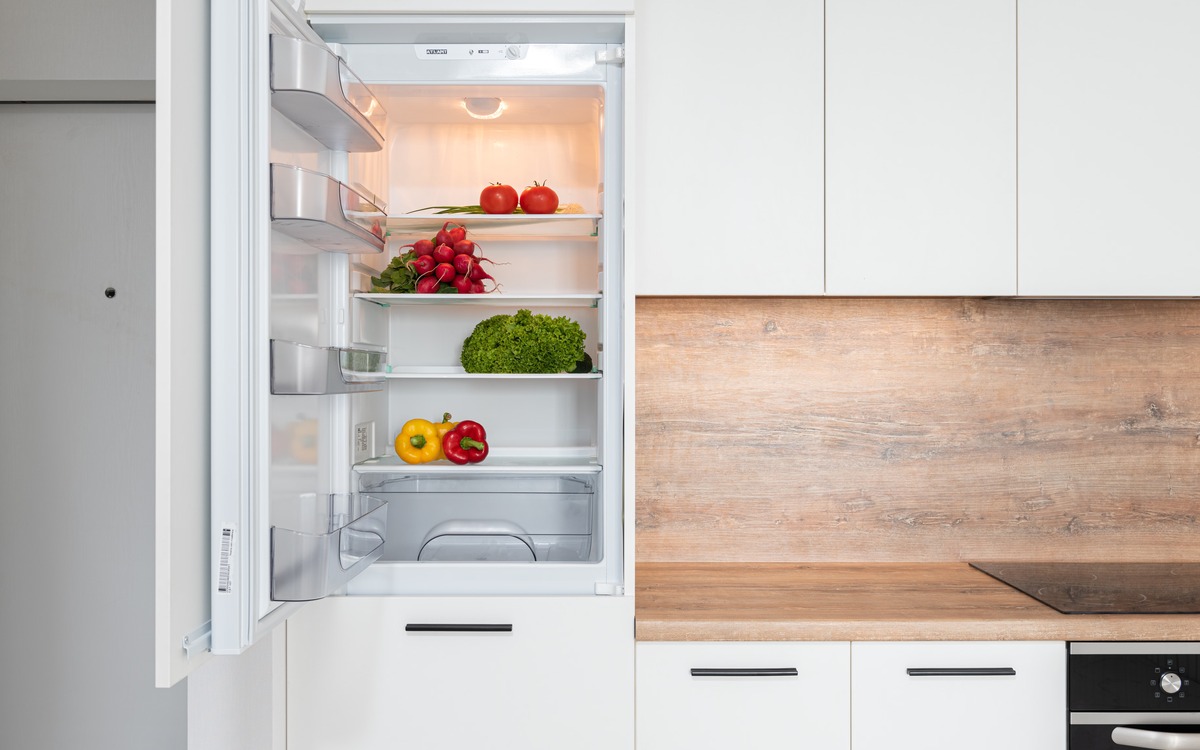
Fresh tomatoes and other produce stored inside an open refrigerator

Wash tomatoes under running water just before preparation

FDA guidance recommends washing fresh produce thoroughly under running water before eating or preparing it. Gently rub the tomato while rinsing it; soap, detergent, bleach, and commercial produce washes are not recommended.

Wash before cutting so dirt and bacteria on the surface are less likely to be transferred by the knife. Drying the tomato with a clean towel or paper towel can also help remove surface moisture. Keep produce preparation away from raw meat, poultry, and seafood and use clean knives and cutting boards.

Freeze ripe tomatoes for cooking, not for fresh salads

Freezing is useful when you have more ripe tomatoes than you can use. The National Center for Home Food Preservation recommends selecting firm, ripe tomatoes, washing them, loosening and removing the skins when desired, then freezing whole tomatoes or pieces in freezer containers with appropriate headspace.

The tradeoff is texture. Frozen tomatoes become soft after thawing, so they are much better for soups, sauces, stews, casseroles, and other cooked dishes than for sandwiches or salads. Utah State University Extension gives the same practical warning: thawed frozen tomatoes are mushy, but they remain useful in cooked foods.

If you usually cook with chopped tomatoes, freezing them in recipe-sized portions saves work later. Label the container, remove as much excess air as practical, and freeze only tomatoes that are still sound. Freezing preserves usable fruit; it does not make spoiled tomatoes safe again.

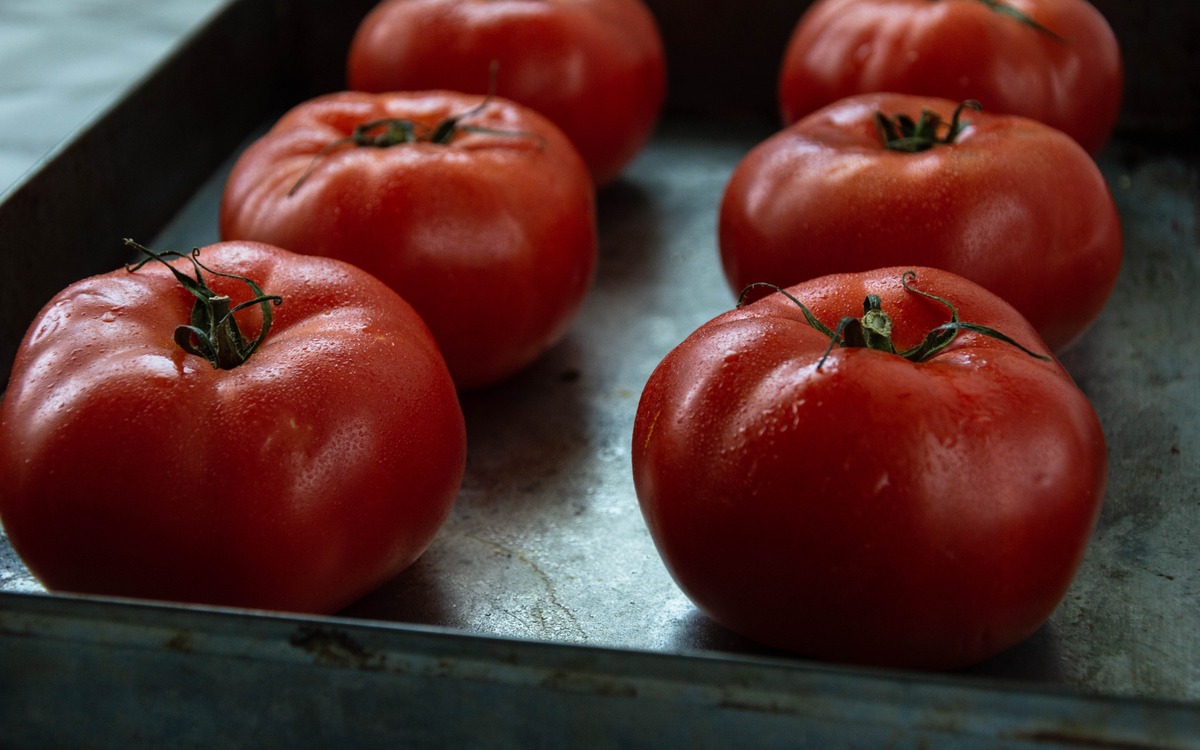
Fresh ripe tomatoes on a tray ready to be washed, cut, and prepared for freezing

Soft is not automatically spoiled, but mold is a different story

A very ripe tomato can be soft and still be useful for sauce. Look at the whole picture: aroma, leaking, surface condition, and whether the flesh is breaking down. FDA guidance says produce that looks rotten should be discarded.

Mold on tomatoes should be treated more strictly than a simple bruise. USDA Food Safety and Inspection Service guidance classifies tomatoes as soft, high-moisture produce and recommends discarding them when mold is present because contamination can extend below the visible surface. Do not just cut a small mold spot off a soft tomato and use the rest.

Also discard tomatoes with widespread watery decay, a clearly rotten or fermented odor, or extensive leaking that indicates breakdown rather than a small mechanical crack. When moldy produce has been stored next to other fruit or vegetables, inspect the nearby items and clean the storage area.

Common tomato-storage mistakes

  • Refrigerating tomatoes before they are ripe. Cold slows the ripening process and can reduce quality.
  • Leaving very ripe tomatoes on the counter too long. Once fully ripe, use them promptly or refrigerate briefly if you need extra time.
  • Washing tomatoes and leaving them wet for storage. Wash near preparation time unless you have a specific reason to wash earlier, and dry them well.
  • Leaving cut tomatoes at room temperature for extended periods. Refrigerate cut tomatoes promptly in a clean covered container.
  • Expecting frozen tomatoes to thaw crisp. Plan to use them in cooked dishes.
  • Trimming mold off a soft tomato. USDA guidance says moldy soft fruits and vegetables such as tomatoes should be discarded.

A simple tomato routine

  1. Buy tomatoes that are firm, intact, and at the ripeness stage that fits your meal plan.
  2. Keep underripe tomatoes at room temperature away from direct sun and excessive heat.
  3. Check ripening tomatoes daily and use fully ripe fruit promptly.
  4. If a fully ripe tomato needs a little more time, refrigerate it and use it soon.
  5. Wash tomatoes under running water before cutting; do not use soap or produce wash.
  6. Refrigerate cut tomatoes promptly in a clean covered container.
  7. Freeze sound ripe tomatoes when you have extras, knowing the thawed texture will be best for cooking.
  8. Discard tomatoes with mold, obvious rot, extensive watery decay, or a clearly rotten odor.

Bottom line

The best tomato storage method depends on ripeness. Let underripe tomatoes finish ripening outside the refrigerator, use ripe tomatoes while their texture is still good, refrigerate ripe or cut tomatoes when necessary, and freeze extras for cooked meals. That sequence protects quality better than using one storage rule for every tomato.

Most importantly, treat visible mold on a soft tomato as a discard signal rather than a trim-and-save situation. With a quick daily check and a plan for ripe fruit, you can use more of what you buy and waste less.

Photographic Grocery Explained guide to choosing, ripening, storing, refrigerating, freezing, and checking tomatoes for spoilage

Bagged Salad Greens: How to Buy, Store, and Handle Them Safely

Bagged salad can turn a rushed dinner into a real meal in minutes, but convenience works best when you treat fresh-cut greens as a refrige...