A practical guide to buying better cucumbers, washing them safely, storing them for better texture, and spotting the point when they should be tossed.
Cucumbers seem simple, but they are unusually sensitive to storage conditions. They lose water quickly, can develop chilling injury when kept too cold for too long, and yellow faster around ethylene-producing produce. The goal at home is not perfect commercial storage; it is to keep them cool, humid, undamaged, and away from the foods that speed deterioration.
How to choose cucumbers that will last
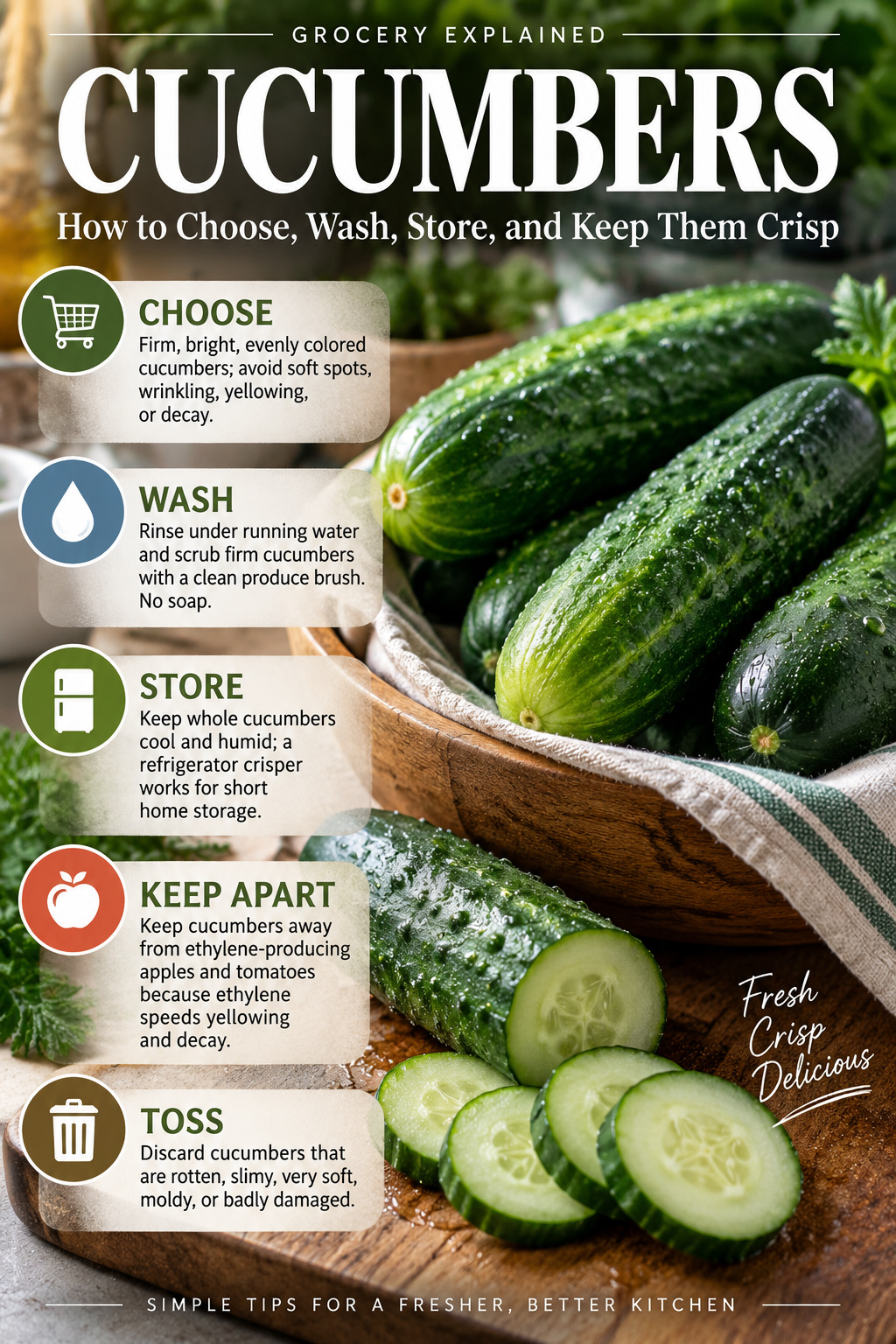
Look for cucumbers that feel firm and heavy for their size, with bright, even color and no soft spots, major bruising, shriveling, or yellowing. Colorado State University Extension recommends firm cucumbers without soft spots or discoloration, and UC Davis lists firmness, decay, yellowing, and physical damage among the key quality factors.

Wash them right before cutting or eating
Rinse cucumbers thoroughly under clean running water before preparing or eating them. Because cucumbers are firm produce, the FDA recommends scrubbing the surface with a clean produce brush. Do not wash produce with soap, detergent, bleach, or commercial produce wash. Dry the cucumber with a clean towel or paper towel after rinsing.

How to store cucumbers at home
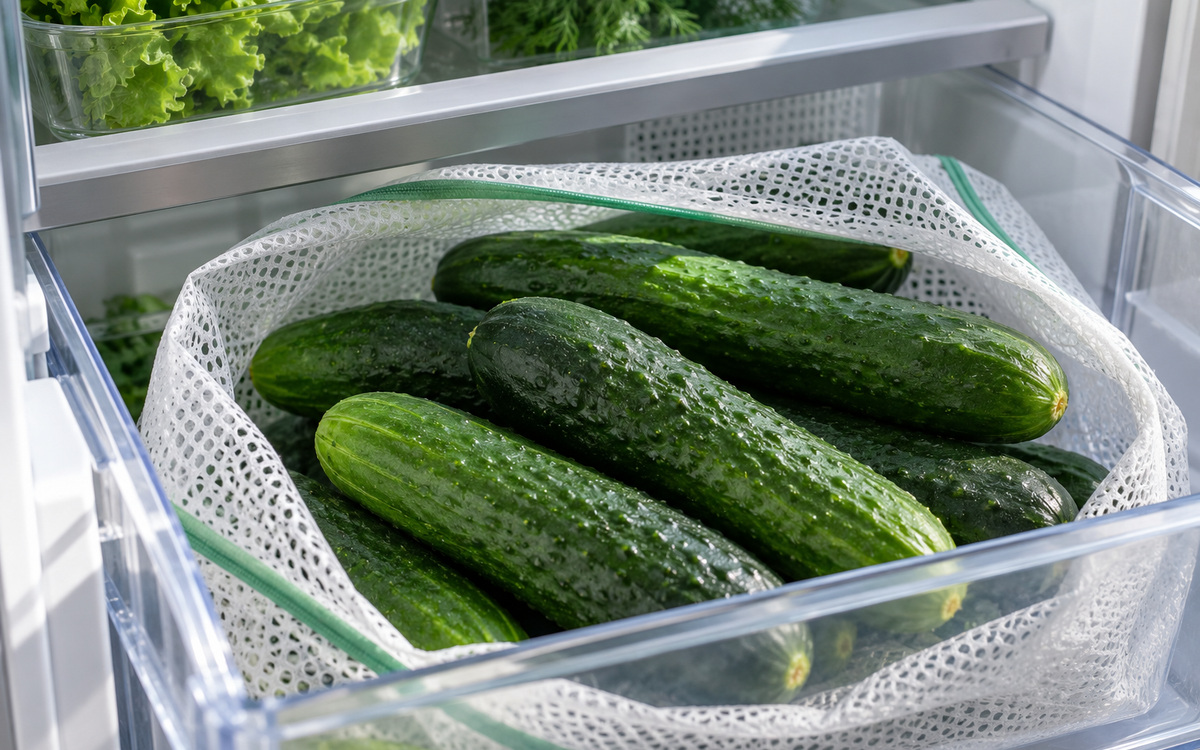
The ideal storage temperature for cucumbers is warmer than a typical refrigerator: UC Davis lists about 50–55°F (10–12.5°C), while University of Minnesota Extension notes that these ideal cool, humid conditions are hard to reproduce in most homes. In practice, a refrigerator crisper is a reasonable short-term option. A perforated or breathable bag helps limit moisture loss without trapping too much condensation.
Do not expect indefinite refrigerator storage. University of Minnesota Extension gives about one week as a practical home-storage expectation, while UC Davis notes that chilling injury can develop when cucumbers are held below about 50°F for several days. If your refrigerator runs very cold, use cucumbers sooner rather than trying to stretch their storage time.
Keep cucumbers away from apples and tomatoes
Cucumbers are sensitive to ethylene. UC Davis reports that low levels of ethylene can accelerate yellowing and decay, and University of Minnesota Extension specifically advises not storing cucumbers with apples or tomatoes. If your crisper contains those foods, separate them rather than packing everything tightly together.
Once you cut a cucumber
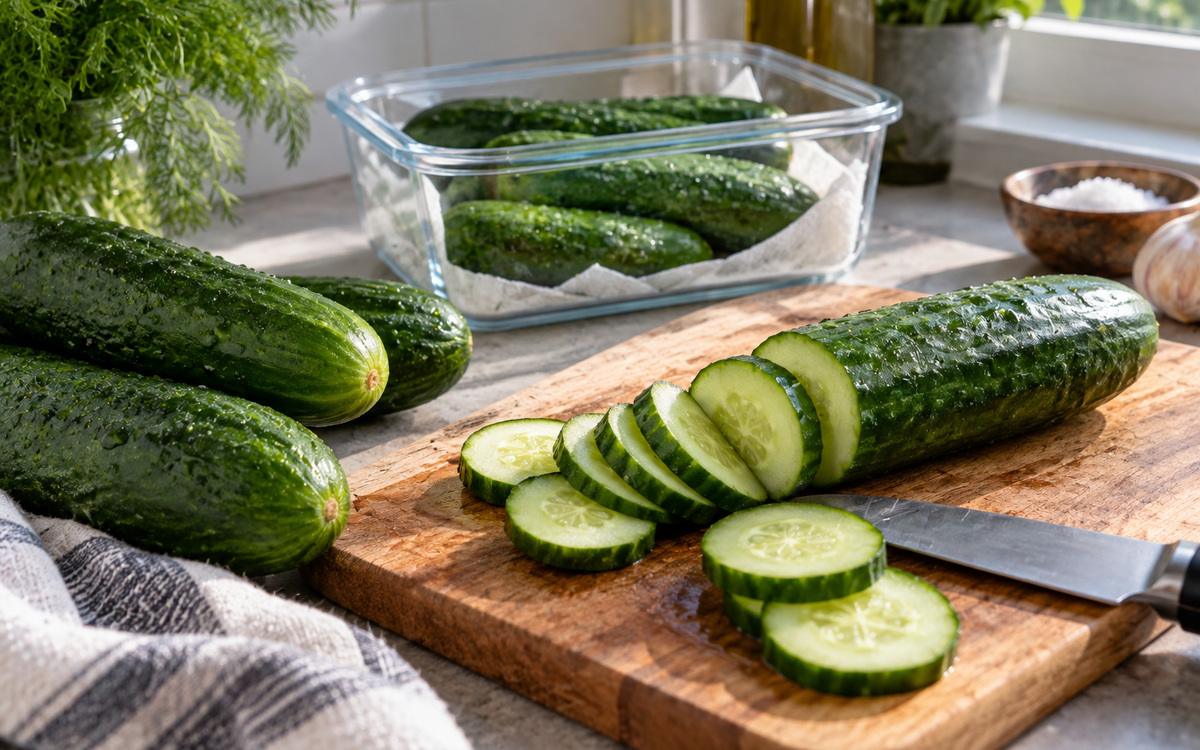
Cut produce should be kept cold. University of Minnesota Extension recommends holding cut produce at 41°F (5°C) or below, and FDA guidance says pre-cut produce should be refrigerated. Cover the cut cucumber or place the pieces in a clean covered container, return them to the refrigerator promptly, and use them while they still look and smell fresh.
When to toss cucumbers
Discard cucumbers that are clearly rotten, moldy, slimy, leaking, badly damaged, or very soft. FDA guidance says to throw away produce that looks rotten and to cut away damaged or bruised areas before preparation. If spoilage is widespread or the cucumber has broken down substantially, it is better to discard it than try to salvage it.
Simple takeaways
- Choose firm cucumbers with bright, even color and no soft spots.
- Wash under running water and scrub with a clean produce brush; do not use soap.
- Use a breathable or perforated bag for short-term cool storage.
- Keep cucumbers away from apples and tomatoes because ethylene speeds yellowing and decay.
- Refrigerate cut cucumber promptly and discard produce that is clearly spoiled.




No comments:
Post a Comment