Shrimp is quick to cook, easy to portion, and sold in enough forms to make the seafood case confusing: fresh, previously frozen, frozen raw, frozen cooked, peeled, shell-on, deveined, and breaded. The good news is that choosing and handling it safely does not require complicated rules. What matters most is keeping it cold, avoiding cross-contamination, thawing it safely, and cooking it until the flesh is firm, pearly, and opaque.
How to buy shrimp with fewer surprises
Start with temperature. The FDA recommends buying fresh fish and shrimp only when they are refrigerated or displayed on a thick bed of fresh ice. If the package has a time-and-temperature indicator, check it before buying.
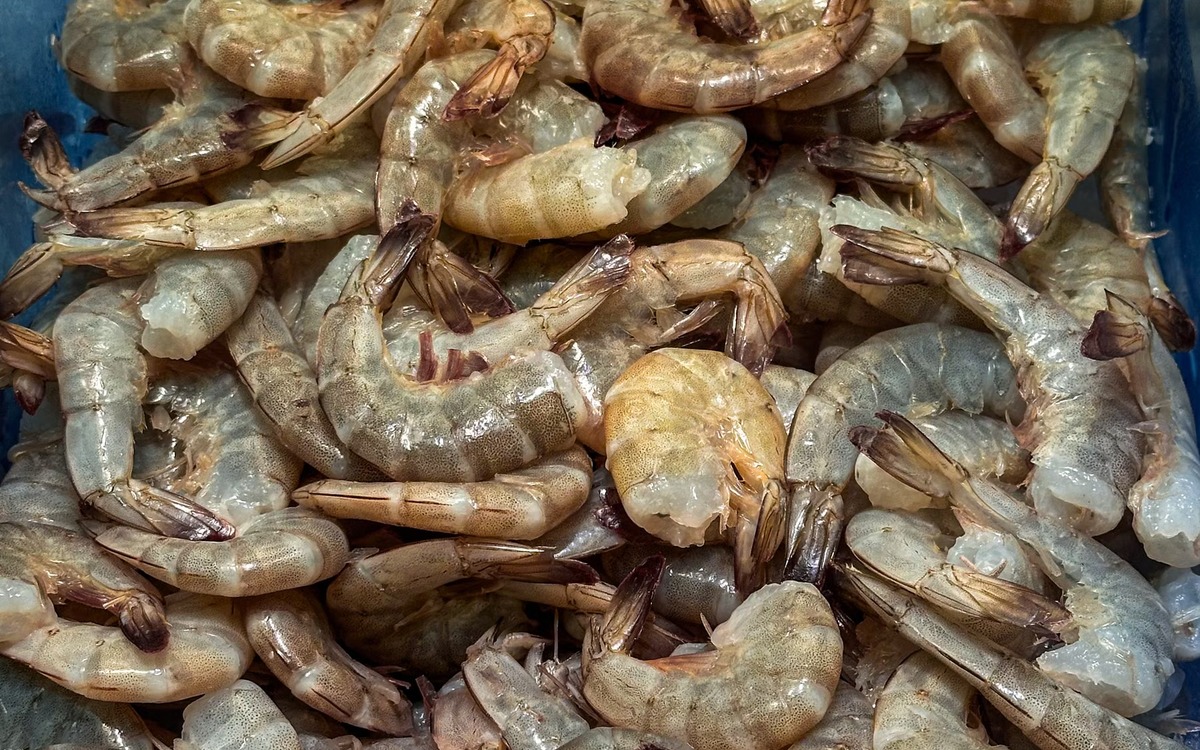
For fresh shrimp, look for clear, pearl-like flesh with little or no odor. A strong fishy, sour, rancid, or ammonia-like smell is a warning sign. Color by itself is not a dependable freshness test because processing and species differences can affect appearance.
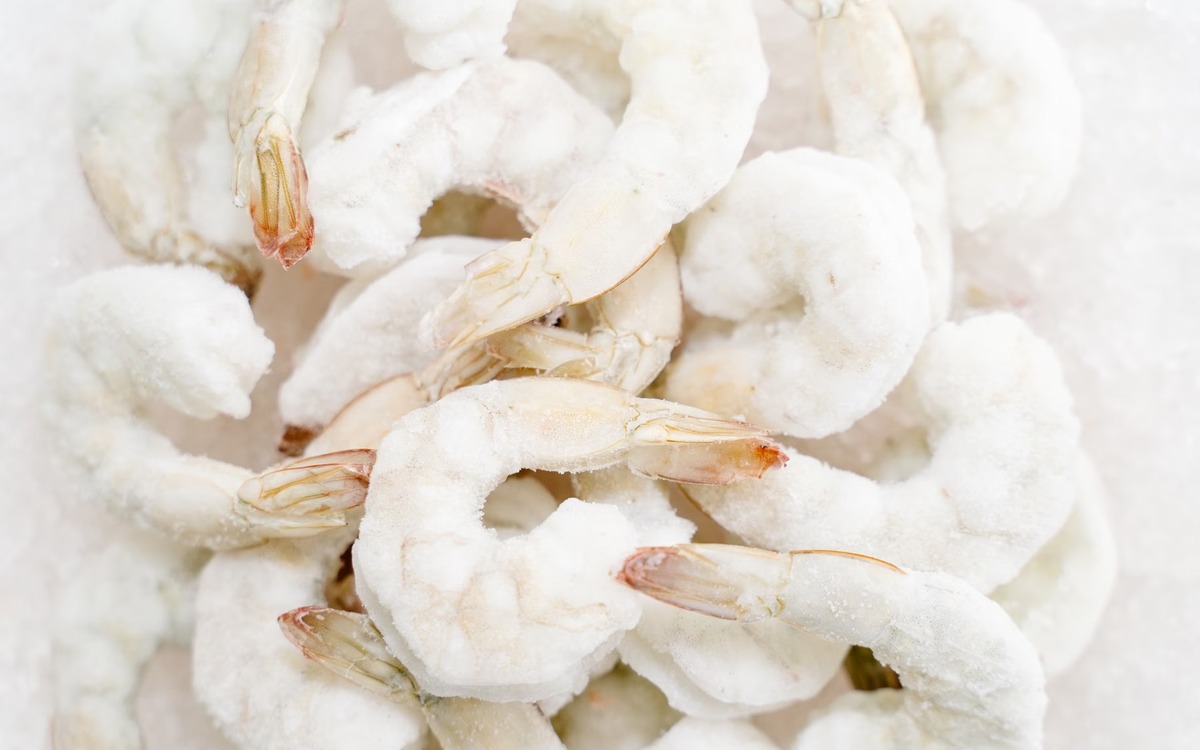
Frozen shrimp should feel solidly frozen rather than soft or partly thawed. Avoid packages that are torn, leaking, badly crushed, or covered with a large amount of loose frost and ice crystals. Heavy ice buildup can be a clue that the package has warmed and refrozen, although packaging style also matters.
If you are choosing between raw and cooked shrimp, decide based on how you plan to use it. Raw shrimp gives you more control over texture during cooking. Fully cooked frozen shrimp is convenient for chilled dishes and very quick meals, but it still needs safe thawing and cold storage.
Get shrimp cold quickly after shopping
Seafood is highly perishable, so make it one of the last things you put in your cart and get it home promptly. FDA guidance says seafood that will be used within two days should be kept in a clean refrigerator at 40°F (4°C) or below. If you will not use it within that window, freeze it instead.
The general two-hour rule also applies: refrigerate or freeze perishable food within two hours of buying or cooking it, and within one hour when the surrounding temperature is above 90°F (32°C). On hot days, that means an insulated bag or cooler can make a real difference between a routine grocery trip and an unsafe warm-up period.
Store raw shrimp in a leak-resistant container or sealed package and keep it separated from ready-to-eat foods. That prevents raw seafood juices from reaching produce, cooked food, or anything else that will not be cooked again.
Thaw shrimp safely, not on the counter
The easiest method is overnight refrigerator thawing. Put the shrimp in a covered container or bowl so any liquid stays contained. Slow refrigerator thawing keeps the shrimp cold throughout the process and is usually best for texture.
If you need shrimp faster, seal it in a leak-proof plastic bag and place the bag in cold water. The FDA also allows microwave defrosting when the shrimp will be cooked immediately afterward. What you should not do is leave frozen shrimp on the counter to thaw at room temperature.
After thawing, handle raw shrimp as you would any other raw seafood. Wash your hands with soap and water after touching it, and wash cutting boards, utensils, plates, and counters with hot, soapy water before they touch cooked or ready-to-eat food.
How to tell when shrimp is cooked
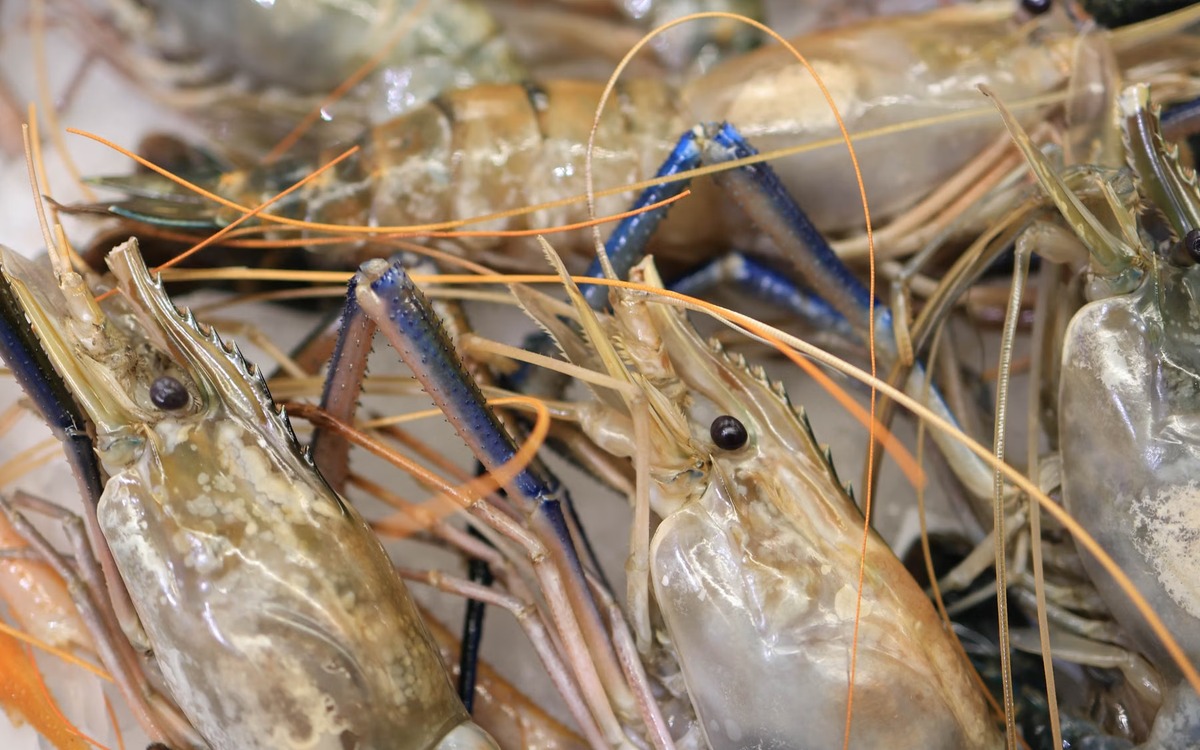
FDA guidance says most seafood should be cooked to 145°F (63°C). For shrimp specifically, a useful visual cue is that the flesh becomes firm, pearly, and opaque. Raw shrimp is usually translucent; cooked shrimp should no longer look glassy through the thickest part.
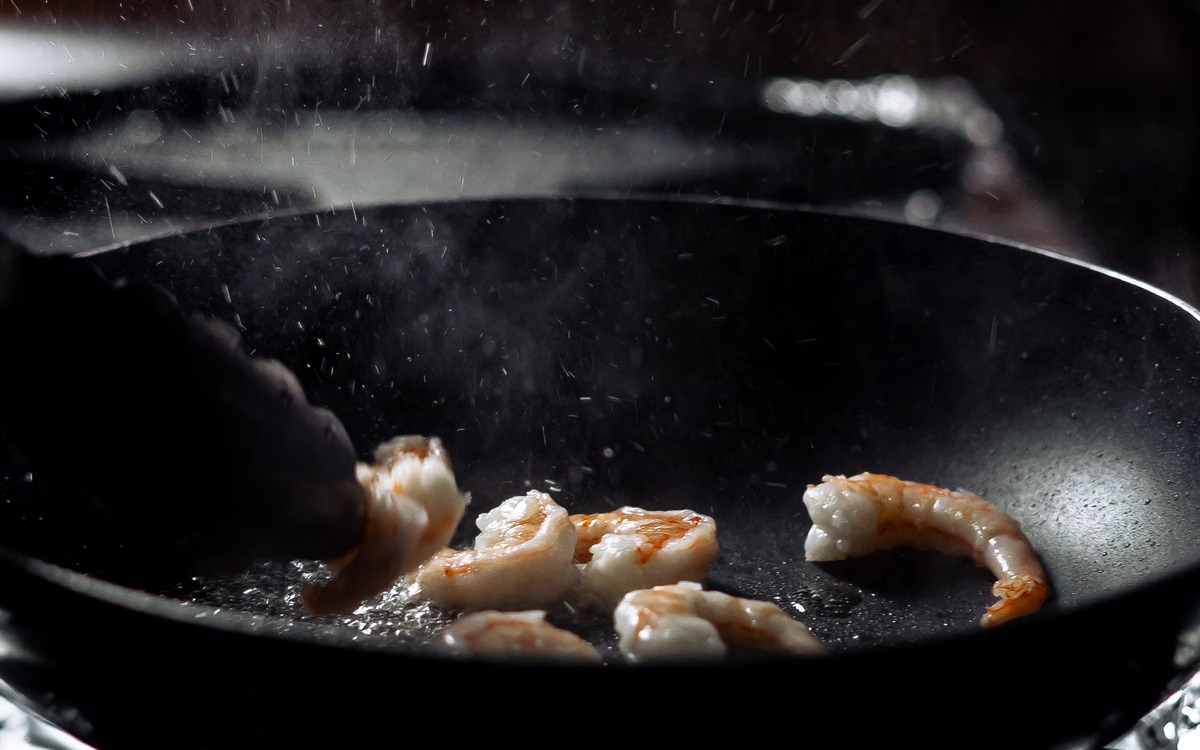
Do not rely on exterior color alone. Shrimp can turn pink before the center is fully cooked, especially in larger pieces or crowded pans. Cook in a single layer when possible, turn or stir so heat reaches the shrimp evenly, and avoid packing a skillet so tightly that the shrimp steam unevenly.
If cooked shrimp develops a strong sour, rancid, fishy, or ammonia-like odor, do not eat it. Cooking does not make spoiled seafood safe again.
Keep raw and cooked shrimp separate
Cross-contamination is one of the easiest mistakes to make with seafood. Do not put cooked shrimp back on the plate that held it raw unless the plate has been washed. The same goes for tongs, knives, bowls, and cutting boards.
This matters even when the shrimp will only be in the pan for a few minutes. A clean plate waiting beside the stove is a simple habit that removes the temptation to reuse a contaminated one.
What about shrimp cocktail and other chilled dishes?
Cooked shrimp served cold should stay cold. For a party or buffet, FDA guidance specifically recommends serving shrimp cocktail chilled on a bed of ice. Do not leave it sitting at room temperature for more than two hours, or more than one hour in temperatures above 90°F (32°C).
If you are using pre-cooked frozen shrimp, thaw only what you need and keep the rest frozen. Once thawed, treat it as a refrigerated perishable food rather than something shelf-stable.
A simple shrimp-safety routine
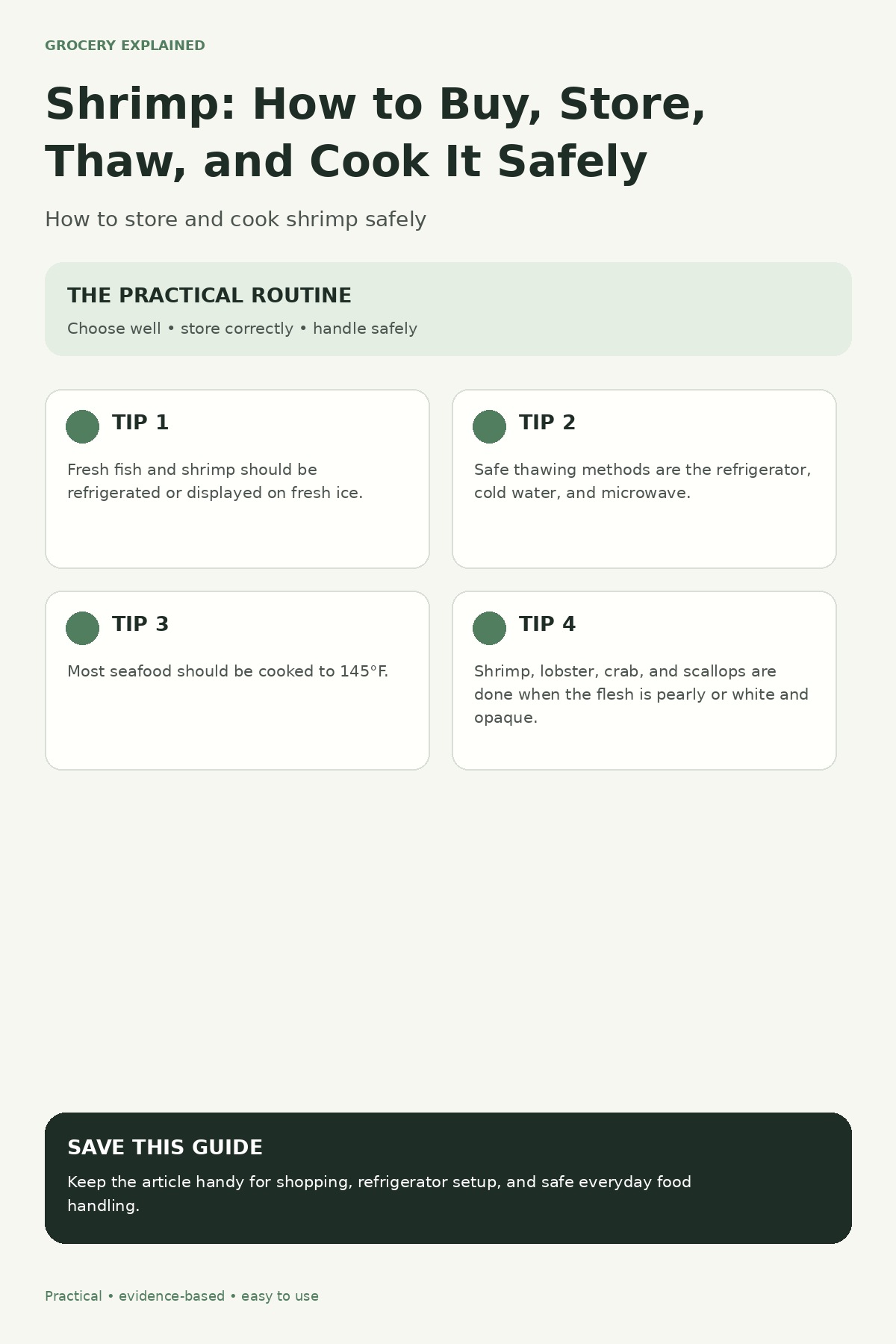
At the store, choose shrimp that is properly chilled, intact, and mild-smelling. At home, keep it at 40°F (4°C) or below and use refrigerated seafood within two days or freeze it. Thaw in the refrigerator, cold water, or microwave—not on the counter. Keep raw shrimp and its utensils away from cooked food, and cook until the flesh is firm, pearly, and opaque.
Those habits cover most of the practical risk without turning dinner into a science project. The goal is simply to control time, temperature, and cross-contamination from the grocery case to the plate.




No comments:
Post a Comment