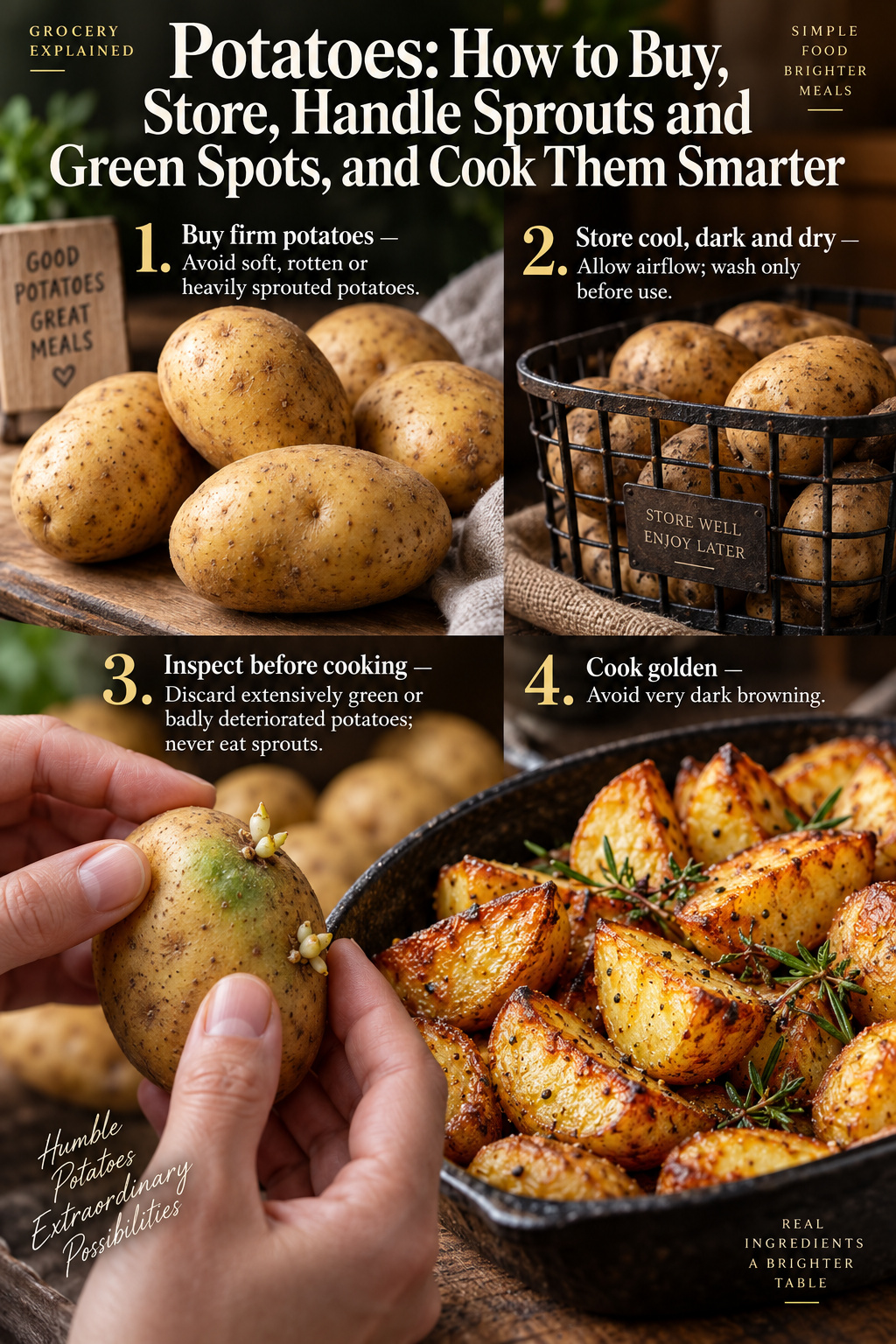
Potatoes look sturdy, but they are surprisingly sensitive to light, heat, moisture, and very cold storage. A bag that seems fine at the store can turn green, sprout, soften, or develop an odd sweet flavor if it sits in the wrong place at home.
The useful routine is simple: buy firm potatoes without large green areas or heavy sprouting, keep them dark and ventilated, wash them only when you are ready to cook, and be more cautious when a potato is extensively green, bitter, soft, or rotten. If you fry or roast potatoes, a few preparation choices can also reduce how much acrylamide forms during high-heat cooking.
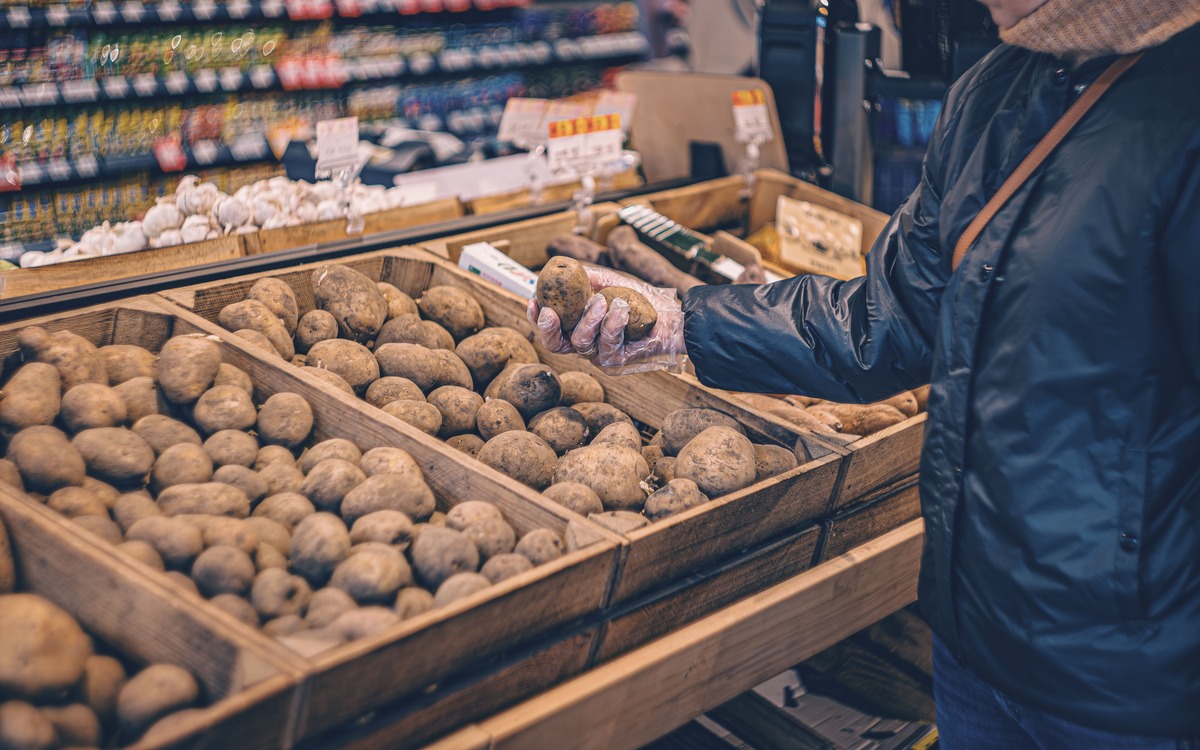
Start with firm potatoes at the store
Choose potatoes that feel firm for their size and do not have wet, soft, or badly damaged areas. Utah State University Extension recommends smooth, firm potatoes without soft or green spots. A few harmless-looking surface marks are normal on a crop that grows in soil, but deep cuts, wet decay, extensive bruising, and obvious greening are reasons to choose another potato.
Look at the entire bag, not just the potatoes visible through the front. Light exposure encourages greening, so a clear bag that has spent a long time under bright store lighting can hide greener potatoes on one side. If a potato is already heavily sprouted at the store, leave it behind rather than planning to rescue it later.
Variety matters more for texture than for basic safety. Russets tend to cook up fluffy, while waxier red or yellow potatoes hold their shape better. For storage, however, condition matters first: a firm, intact potato will generally keep better than one that is bruised, cut, wet, or already soft.
Store whole potatoes in a cool, dark, ventilated place
For most homes, the best storage spot is a dark pantry, cabinet, cellar shelf, or other cool place with some airflow. Utah State University Extension recommends a dark, cool location with air circulation and notes that paper bags or perforated plastic bags can help. Colorado State University Extension similarly recommends a well-ventilated, dry, dark, cool place.
Avoid sealing potatoes in an airtight container while they are raw and unpeeled. Trapped moisture makes spoilage more likely. A paper bag, open basket in a dark cupboard, or ventilated produce bag is usually more practical.
Do not wash potatoes before storage. Soil can be brushed off if needed, but added moisture shortens storage life. Wash and scrub them under running water shortly before you cook them.
Check stored potatoes every week or so. Remove any potato that becomes wet, moldy, badly softened, or rotten so it does not sit against the rest of the batch.
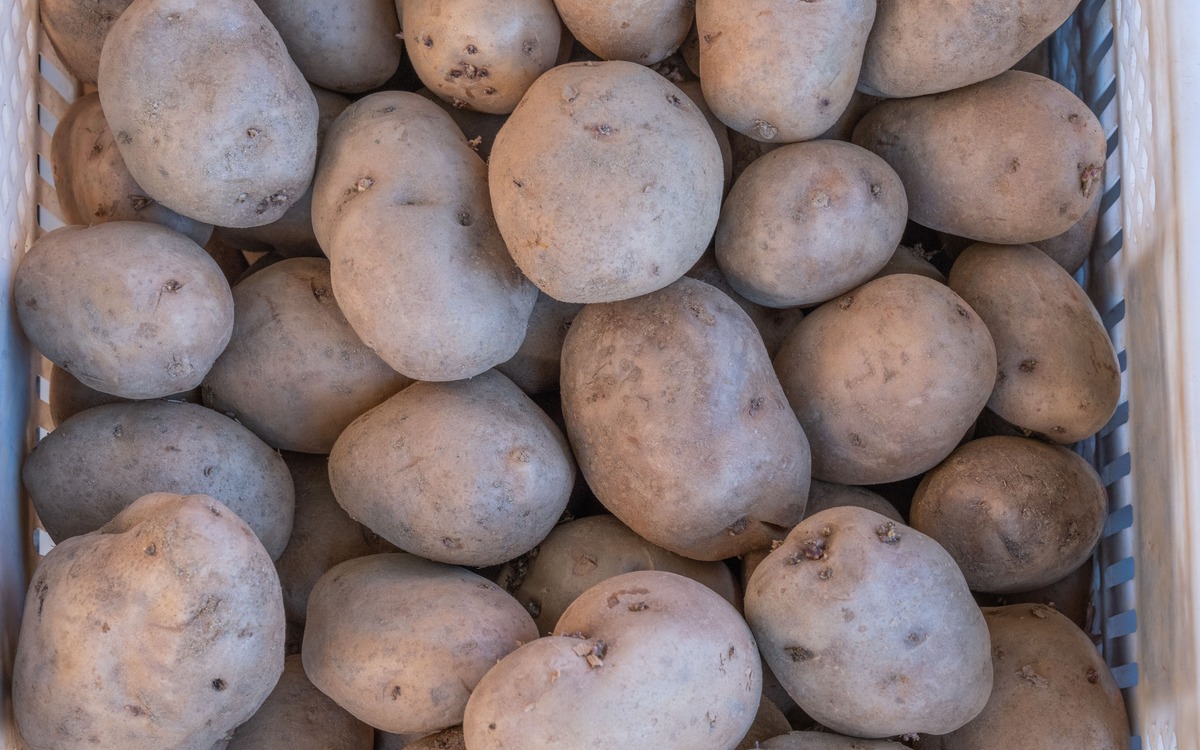
Why the refrigerator is not the first choice for raw potatoes
The U.S. Food and Drug Administration advises storing potatoes outside the refrigerator, preferably in a dark, cool place. Very cold storage can increase reducing sugars in potatoes. When those potatoes are later fried, roasted, or baked at high heat, the extra sugars can contribute to more acrylamide formation and stronger browning.
This matters most for high-temperature dry cooking. The FDA notes that frying produces more acrylamide than roasting potato pieces, while boiling and microwaving whole potatoes with the skin on do not produce acrylamide in its studies. The practical takeaway is not that potatoes are dangerous to eat; it is that a cool pantry is a better default than the refrigerator, especially when the potatoes are destined for fries or roasted potatoes.
If your kitchen is very warm and you have no genuinely cool storage area, buy smaller quantities more often instead of trying to keep a large bag for weeks.
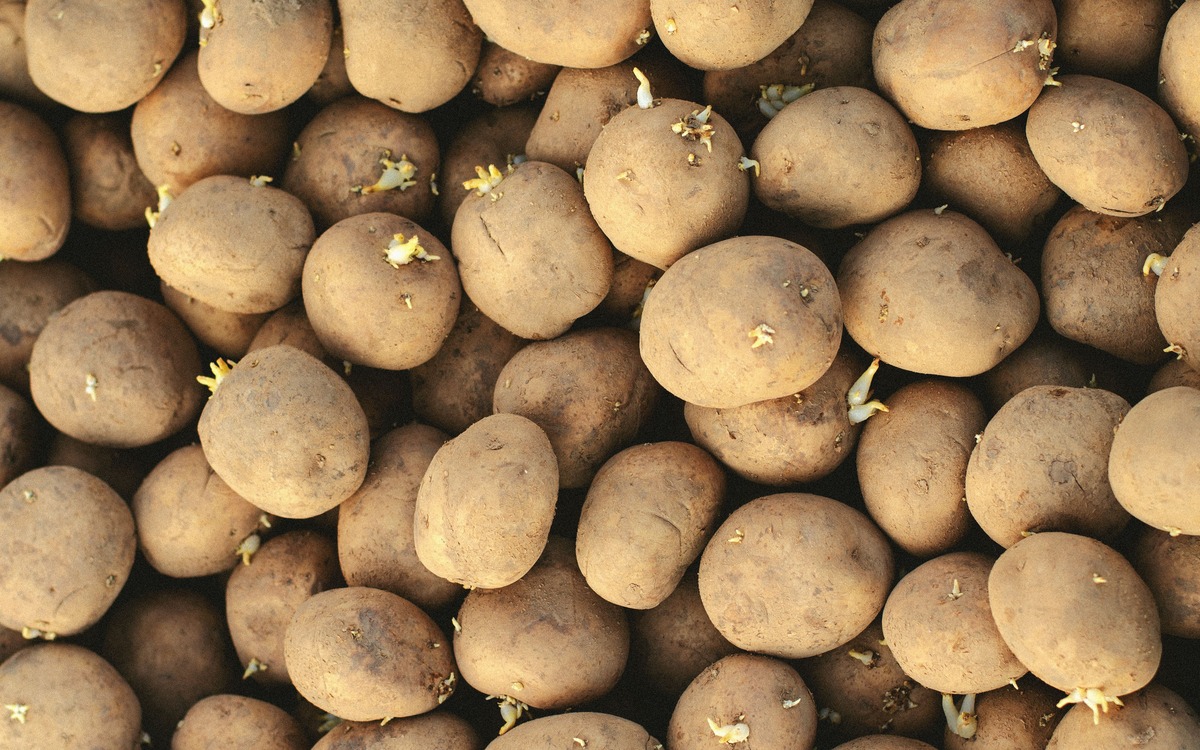
Sprouts are a warning to inspect the potato, not an automatic verdict
Sprouting happens as stored potatoes age. The sprouts themselves should not be eaten. University of Minnesota Extension advises removing sprouts before using the potato, and Penn State notes that sprouting indicates the tuber is trying to grow.
If a potato is still firm and has only small sprouts, remove the sprouts completely and cut away any nearby green tissue before cooking. If it is heavily sprouted, very shriveled, soft, wet, moldy, or smells rotten, discard it. A potato that has clearly deteriorated is not worth trying to salvage.
Green skin deserves more caution
The green color itself comes from chlorophyll after the potato has been exposed to light, but that same light exposure can also increase naturally occurring glycoalkaloids such as solanine. These compounds are concentrated more heavily in the skin, sprouts, and green areas and can cause illness when enough is consumed.
Penn State Extension advises trimming small green spots but discarding potatoes with more extensive greening. That is a practical household rule: a tiny superficial green area on an otherwise firm potato can be cut away generously, but a potato that is green over a large area, tastes unusually bitter, or has multiple signs of deterioration should go in the trash.
Do not rely on cooking to “fix” a badly green potato. The better strategy is to prevent greening in the first place by storing potatoes away from light.
Wash just before cooking
When you are ready to use the potatoes, scrub them under running water with a clean vegetable brush. There is no need to wash them with soap or detergent. Cut away damaged tissue, sprouts, and any green areas you intend to remove.
If you cut potatoes ahead of cooking, they can darken when exposed to air. Keeping the pieces temporarily submerged in water can slow that discoloration. Drain them well before roasting or frying so excess surface water does not interfere with browning or create splatter in hot oil.
For fries and roasted potatoes, aim for golden rather than very dark brown
Acrylamide forms naturally in some starchy plant foods during high-temperature cooking. The FDA says that longer cooking times and higher temperatures generally produce more acrylamide, and darker brown areas tend to contain more than lighter golden areas.
If you are making fries or roasted potato pieces, the FDA recommends soaking raw slices in water for 15 to 30 minutes before cooking. Drain and blot them dry afterward. Cooking to a golden yellow color rather than a deep brown is another practical way to reduce acrylamide formation.
Boiling and steaming are different because they use lower-temperature moist heat and generally produce little or no acrylamide. You do not need to avoid roasted or fried potatoes completely; simply avoid treating very dark browning as the goal.
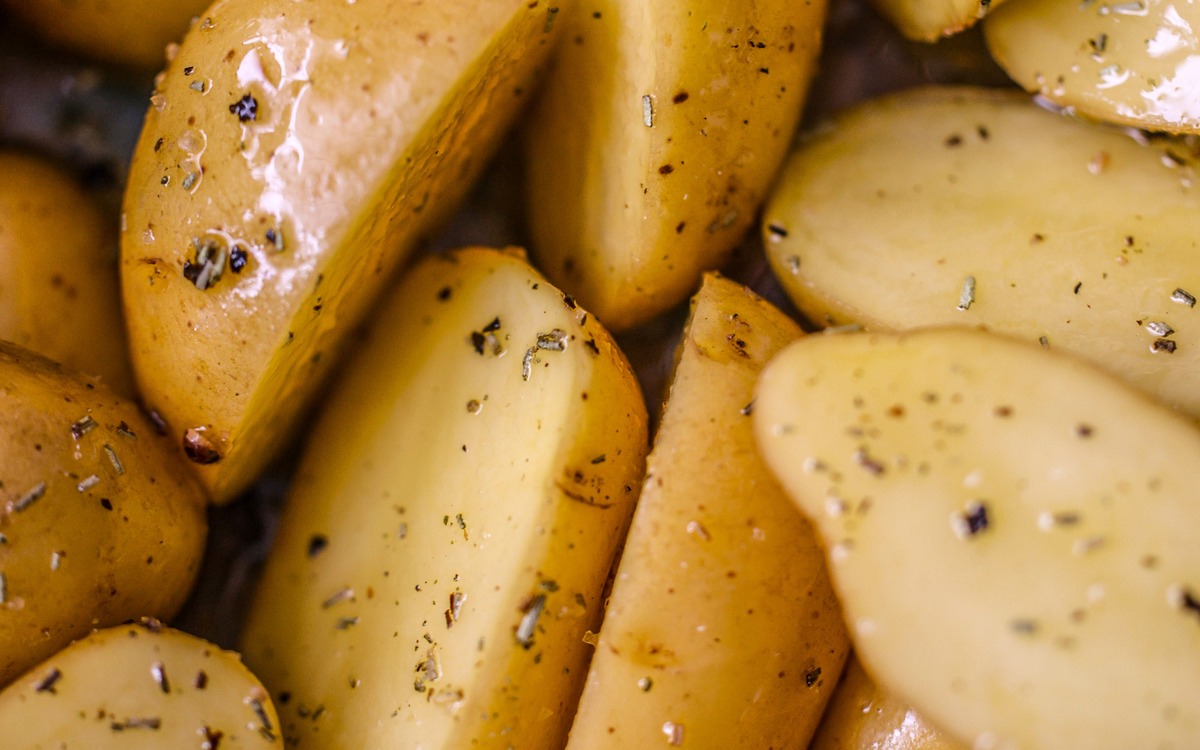
Six common potato-storage mistakes
- Leaving the bag in bright light. Light encourages greening and can increase glycoalkaloids.
- Keeping raw potatoes in a sealed, damp container. Poor airflow and moisture encourage spoilage.
- Washing the whole bag before storage. Extra moisture shortens keeping quality.
- Ignoring one rotten potato. Check the batch and remove deteriorating potatoes promptly.
- Keeping frying potatoes very cold. Cold storage can increase sugars and promote extra browning and acrylamide during high-heat cooking.
- Trying to rescue a potato that is extensively green, bitter, soft, or rotten. When several warning signs are present, discard it.
A simple potato routine that works
- At the store, choose firm potatoes without large green patches, wet damage, or heavy sprouting.
- At home, move them to a dark, cool, ventilated place.
- Keep them dry and wash only what you are about to cook.
- Check the batch regularly and remove spoiled potatoes.
- Remove small sprouts and minor green areas from an otherwise firm potato; discard extensively green or badly deteriorated potatoes.
- For frying or roasting, soak cut pieces for 15–30 minutes if practical, dry them, and cook to golden rather than very dark brown.
Bottom line
Potatoes last best when they are treated more like living produce than like a shelf-stable pantry staple. Keep them cool, dark, dry, and ventilated; do not wash them until you are ready to cook; and pay attention to sprouts, greening, softness, and rot.
Most potato problems are easier to prevent than to fix. A smaller bag stored well usually gives you better quality and less waste than a large bag forgotten in a bright or warm corner.