Meal prep works best when it solves a real problem: you want lunch ready before you get hungry, but you do not want to spend Sunday making five identical containers that turn watery by Thursday. A better approach is to prep a few sturdy components, build lunches for the next three or four days, and keep sauces, crunchy toppings, and delicate ingredients separate until you eat.
The freshness rule that matters most
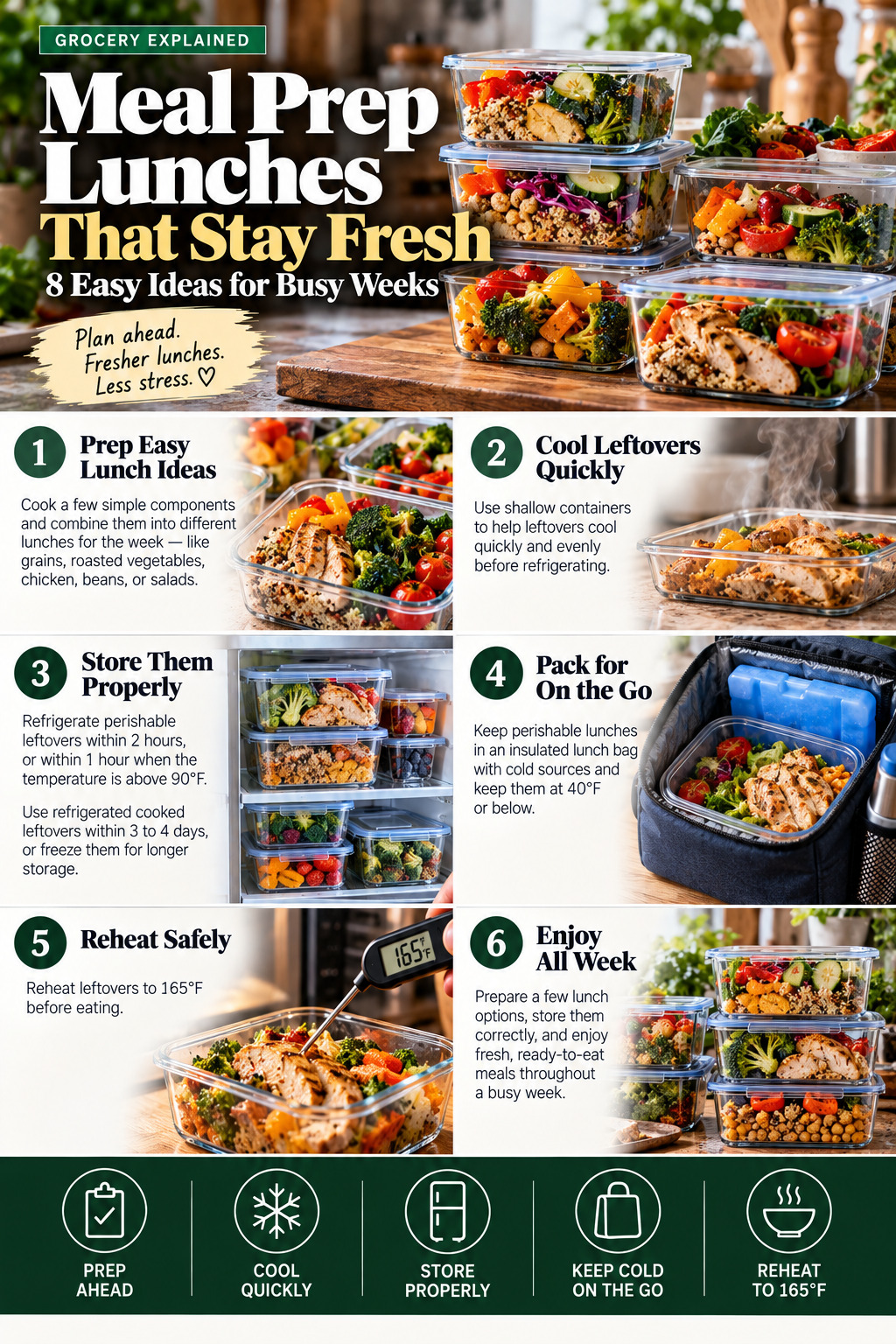
USDA food-safety guidance says most cooked leftovers should be refrigerated promptly and used within three to four days. Perishable food should not sit at room temperature for more than two hours, or one hour when temperatures are above 90°F (32°C). That makes a three- or four-day lunch cycle more practical than trying to keep every cooked component in the refrigerator for a full workweek.
If you want to prep farther ahead, freeze later portions when the recipe freezes well, or plan a quick midweek top-up. This usually gives you better texture too.
A simple meal-prep formula
You do not need a precise macro target to build a useful lunch. Start with four parts:
- Protein anchor: chicken, eggs, beans, lentils, tofu, tuna, salmon, turkey, or yogurt-based sauce.
- Sturdy base: rice, quinoa, couscous, pasta, potatoes, tortillas, or a mix of greens and grains.
- Vegetables: choose at least one sturdy option such as carrots, cabbage, broccoli, peppers, green beans, or roasted vegetables.
- Flavor: dressing, salsa, hummus, pesto, yogurt sauce, herbs, citrus, or a simple vinaigrette.
The easiest way to prevent sogginess is to keep the wettest ingredient away from the driest one. Dressings stay in a small container, tomatoes do not sit directly on bread, and crunchy toppings are added at lunchtime.
8 meal-prep lunches that hold up well
1. Chicken quinoa bowl
Combine cooked quinoa, roasted broccoli, carrots, chickpeas, and sliced chicken. Keep a lemon-tahini or yogurt-herb dressing in a separate cup. This is one of the easiest lunches to batch because most of the ingredients tolerate refrigeration well and can be reheated or eaten cold.
2. Chickpea crunch bowl
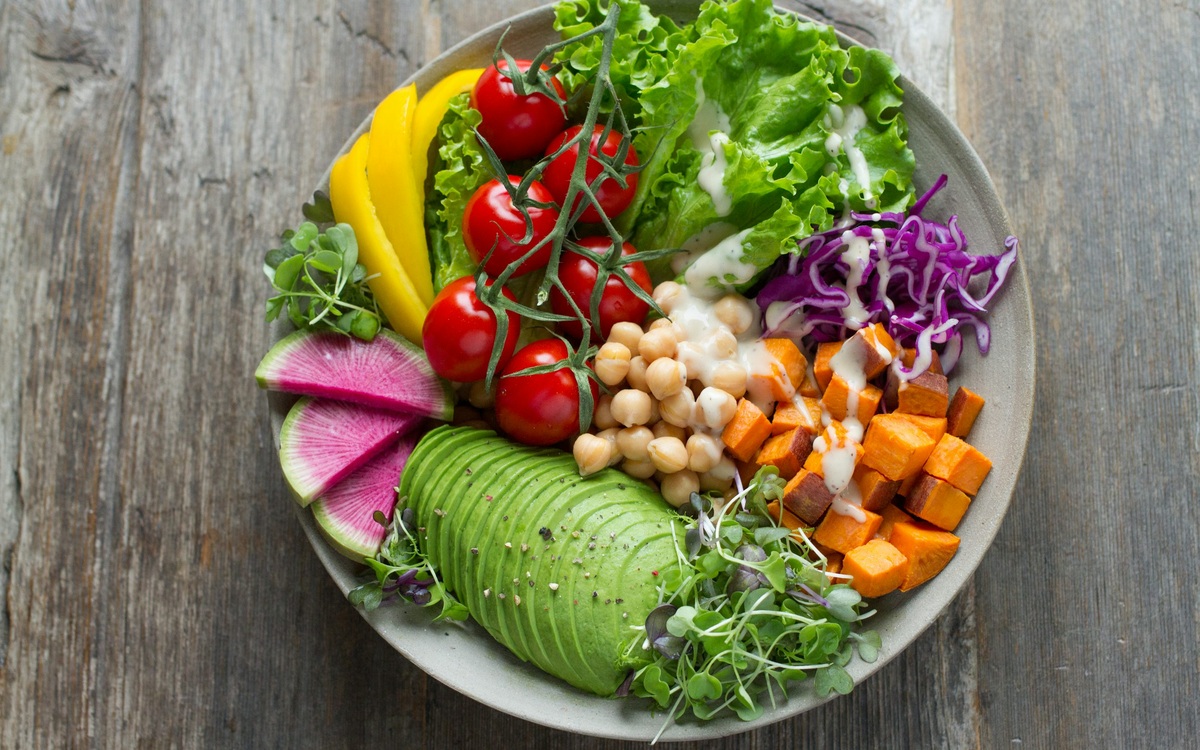
Use chickpeas, shredded cabbage, carrots, cucumber, peppers, and a grain such as bulgur or brown rice. Cabbage is especially useful for meal prep because it keeps more structure than delicate leafy greens. Add nuts, seeds, or roasted chickpeas just before eating if you want extra crunch.
3. Turkey and hummus wrap kit
Instead of assembling the wrap days in advance, pack the tortilla, turkey, hummus, lettuce, and sliced vegetables separately. Build it in two minutes at lunch. If you do assemble ahead, create a moisture barrier with lettuce or cheese between the tortilla and wetter vegetables.
4. Pasta salad with sturdy vegetables
Use short pasta, roasted peppers, olives, chopped spinach, chickpeas, and a modest amount of vinaigrette. Avoid flooding the pasta with dressing on day one. A lightly dressed base holds its texture better, and you can add more dressing when you eat.
5. Salmon, potatoes, and green beans
Roasted salmon with baby potatoes and green beans makes a useful early-week lunch. Because cooked fish leftovers are generally best used within the same three- to four-day refrigerator window, put fish-based lunches earlier in your rotation rather than saving them for the end of the week.
6. Egg and vegetable snack box
Pack hard-cooked eggs with carrots, peppers, fruit, whole-grain crackers, and a small portion of hummus or cheese. USDA guidance lists hard-cooked eggs at up to one week refrigerated, although the other ingredients in your box may have shorter practical storage windows.
7. Bean taco salad
Layer black beans, corn, cabbage, peppers, and cooked rice in a container. Pack salsa and yogurt or sour cream separately. Add avocado the morning you plan to eat it, or use a squeeze of lime and keep it tightly covered if you prep it earlier.
8. Tofu noodle box
Pair baked tofu with soba or rice noodles, shredded cabbage, carrots, edamame, and scallions. Keep peanut, sesame, or soy-ginger sauce separate so the noodles do not absorb all the liquid in the refrigerator.
How to prep without turning Sunday into a project
Choose two proteins, one or two bases, and three vegetables. Cook them in batches, then combine them differently. For example, roasted chicken can become a quinoa bowl one day and a wrap the next. Chickpeas can go into a salad, a grain bowl, or a snack box.
You do not have to portion every meal immediately. Sometimes it is better to keep cooked grains, roasted vegetables, and protein in separate containers so you can decide what you want that day.
Cool and store food safely
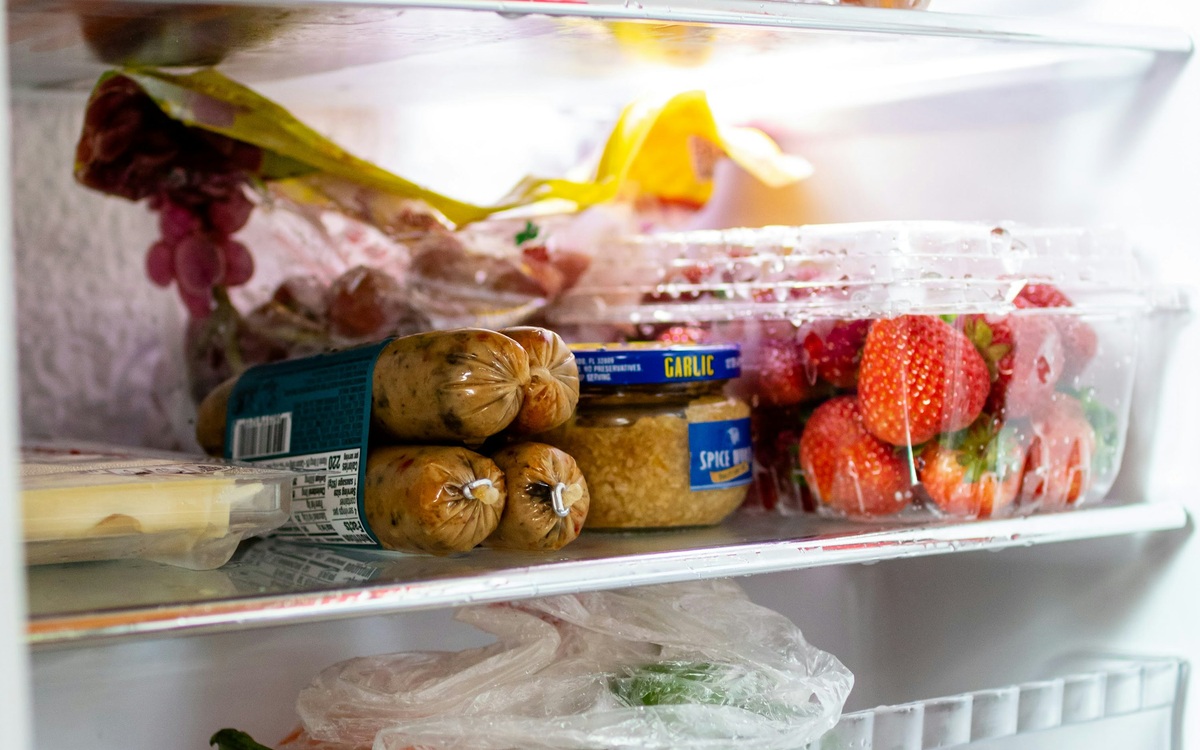
USDA recommends refrigerating leftovers promptly and using shallow containers so food cools faster. Most cooked leftovers should be used within three to four days. If you are making lunches on Sunday for later in the week, freeze suitable portions or plan a small second prep session midweek rather than stretching refrigerator storage unnecessarily.
If lunch leaves the house
Perishable lunches need to stay cold. FoodSafety.gov recommends an insulated lunch bag with a cold source such as a frozen gel pack, frozen water bottle, or frozen juice box. If a refrigerator is available at work, move the lunch there when you arrive instead of leaving it at your desk all morning.
Budget shortcuts that actually help
- Use beans, eggs, lentils, canned tuna, and tofu to rotate lower-cost proteins.
- Buy frozen vegetables for backup so a missed cooking day does not mean wasted produce.
- Cook one inexpensive grain in a larger batch and change the sauces rather than buying many different bases.
- Use cabbage, carrots, potatoes, and onions when you want vegetables that usually last longer than delicate greens.
- Choose larger tubs of yogurt or hummus when the unit price is better and you know you will finish them.
A realistic three-day prep example
- Day 1: chicken quinoa bowl + lemon-tahini dressing.
- Day 2: turkey and hummus wrap kit + fruit.
- Day 3: chickpea crunch bowl + yogurt-herb dressing.
Then decide whether you want a quick midweek refresh or a frozen portion for the next day. That is often easier than forcing every meal to survive from Sunday to Friday.
Final thoughts
The best meal-prep system is not the one with the most containers. It is the one you can repeat without wasting food or getting bored. Keep the components simple, separate moisture when it matters, stay within safe storage windows, and prep only as far ahead as your routine actually requires.