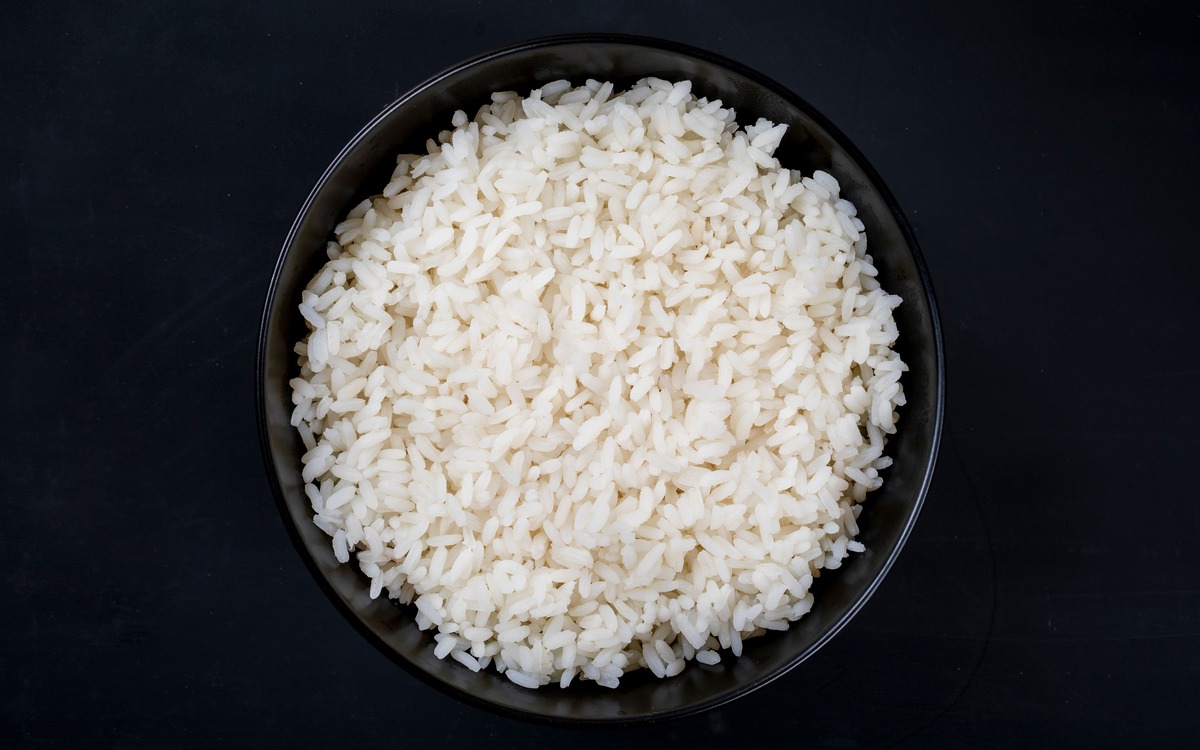
Rice is one of the easiest foods to batch-cook, which is exactly why leftover handling matters. Dry rice is a pantry staple. Cooked rice, however, is a perishable food and should be treated like other leftovers: cool it promptly, refrigerate it on time, keep it cold, and reheat it thoroughly.
This guide follows U.S. USDA and FoodSafety.gov home-leftover guidance.
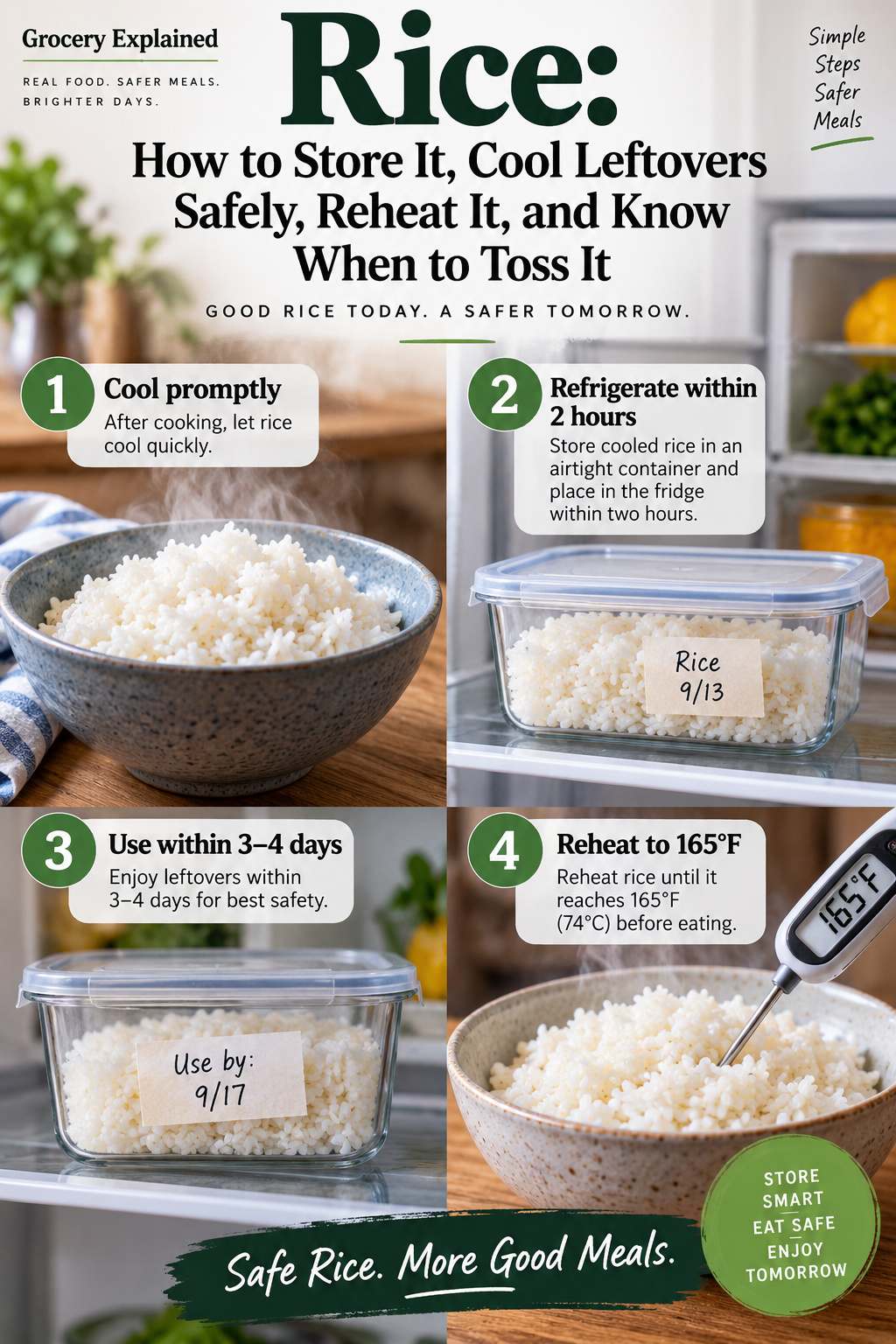
The practical routine is simple. Store uncooked rice dry and sealed, refrigerate cooked rice within the normal two-hour food-safety window, divide larger amounts into shallow containers so they cool faster, use refrigerated leftovers within a few days, and reheat leftovers to 165°F (74°C).
Start with dry rice: keep moisture and pests out
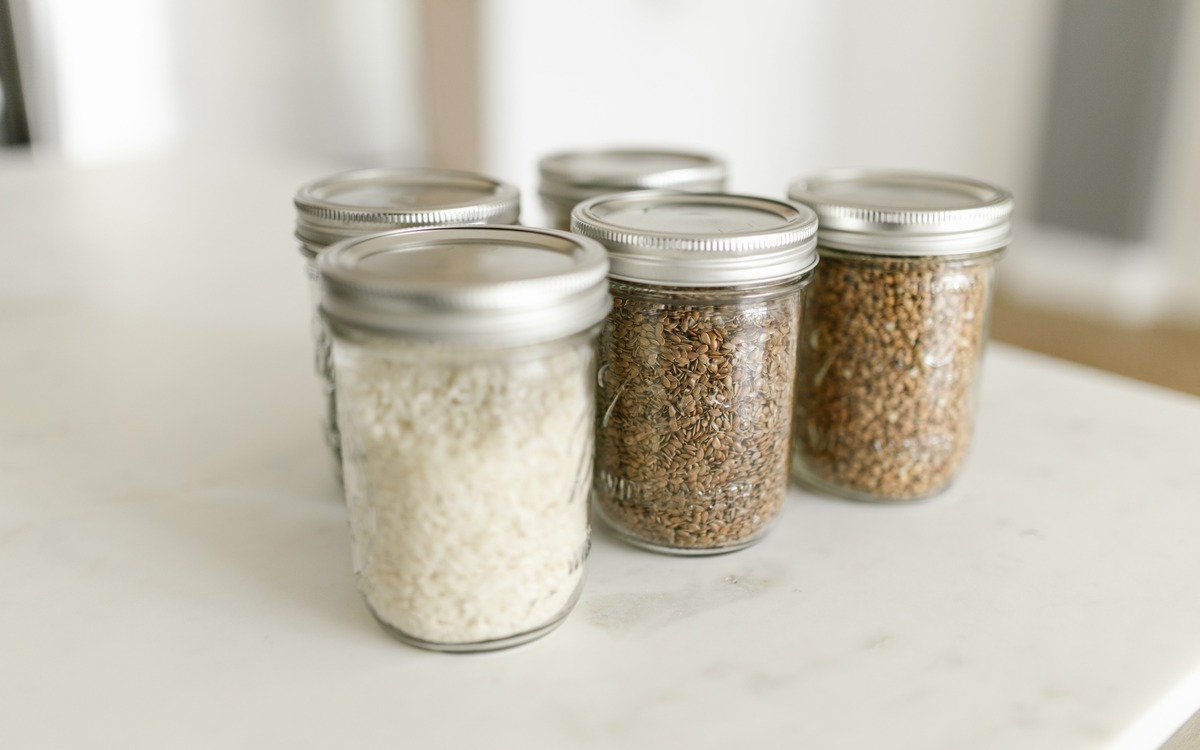
For pantry storage, the goal is mostly to protect dry rice from moisture, insects, and contamination. Utah State University Extension recommends storing rice in tightly sealed, food-safe containers such as glass jars or suitable food-grade plastic containers. That is especially useful after opening a thin retail bag that no longer seals well.
Keep the container in a clean, dry pantry or cupboard. If you buy rice in bulk, splitting it into smaller sealed containers can make everyday use easier and reduces the number of times the whole supply is opened.
Why cooked rice deserves normal leftover rules
Cooking does not make rice permanently safe at room temperature. The FDA describes Bacillus cereus as a spore-forming bacterium that can be present in many foods, and cooked rice has been implicated in foodborne illness when it is prepared and then held without adequate refrigeration.
That is why the important safety step is not a special rice trick. It is time and temperature control. USDA food-safety guidance says perishable foods and leftovers should be refrigerated within two hours of cooking, or within one hour when the surrounding temperature is above 90°F (32°C).
You also should not rely on reheating to fix rice that sat out too long. CDC investigations of fried-rice outbreaks have documented situations in which rice was cooled or held at room temperature for extended periods before serving. The safer choice is to refrigerate on time rather than trying to rescue temperature-abused rice later.
Cool leftovers quickly instead of leaving the pot on the counter
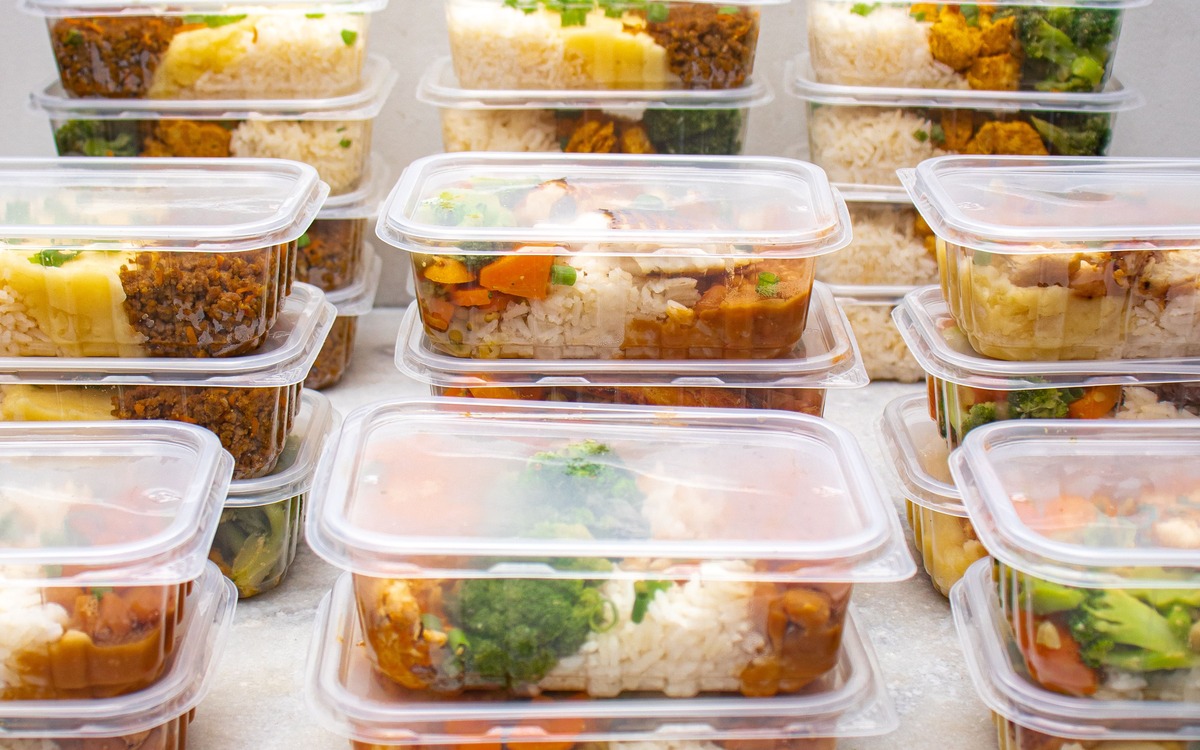
USDA recommends placing leftovers in shallow containers for rapid cooling. That advice is especially useful when you have cooked a large pot of rice: a deep, tightly packed mass holds heat longer than a thinner layer.
Portion the rice into shallow containers and refrigerate it promptly. You do not need to wait until the rice reaches room temperature before putting it in the refrigerator. USDA explicitly notes that hot foods can go directly into the refrigerator when handled properly.
Keep the refrigerator at 40°F (4°C) or below. Labeling a container with the date can also help you avoid the common problem of finding an anonymous box of rice at the back of the fridge and wondering how old it is.
How long should cooked rice stay in the refrigerator?
USDA recommends using cooked leftovers within 3 to 4 days; FoodSafety.gov advises using them within four days. Cooked rice fits into that leftover rule. If you know you will not use it within that window, freeze it sooner rather than letting it spend extra days in the refrigerator.
Freezing is mainly a quality-management choice once the rice has been cooled and handled safely. Portioning before freezing makes it easier to thaw or reheat only what you need.
Reheat rice like a leftover, not like a dry side dish
USDA says leftovers should be reheated to 165°F (74°C). A food thermometer is the most reliable way to confirm that temperature. When using a microwave, cover the rice and stir or rotate it so cold spots are less likely.
For texture, a small splash of water before reheating can help restore moisture. That is a cooking tip, not a food-safety substitute: the safety target is still thorough reheating to 165°F.
If you are reheating frozen rice, USDA notes that frozen leftovers can be reheated without thawing first; they simply take longer to heat through.
When to toss cooked rice
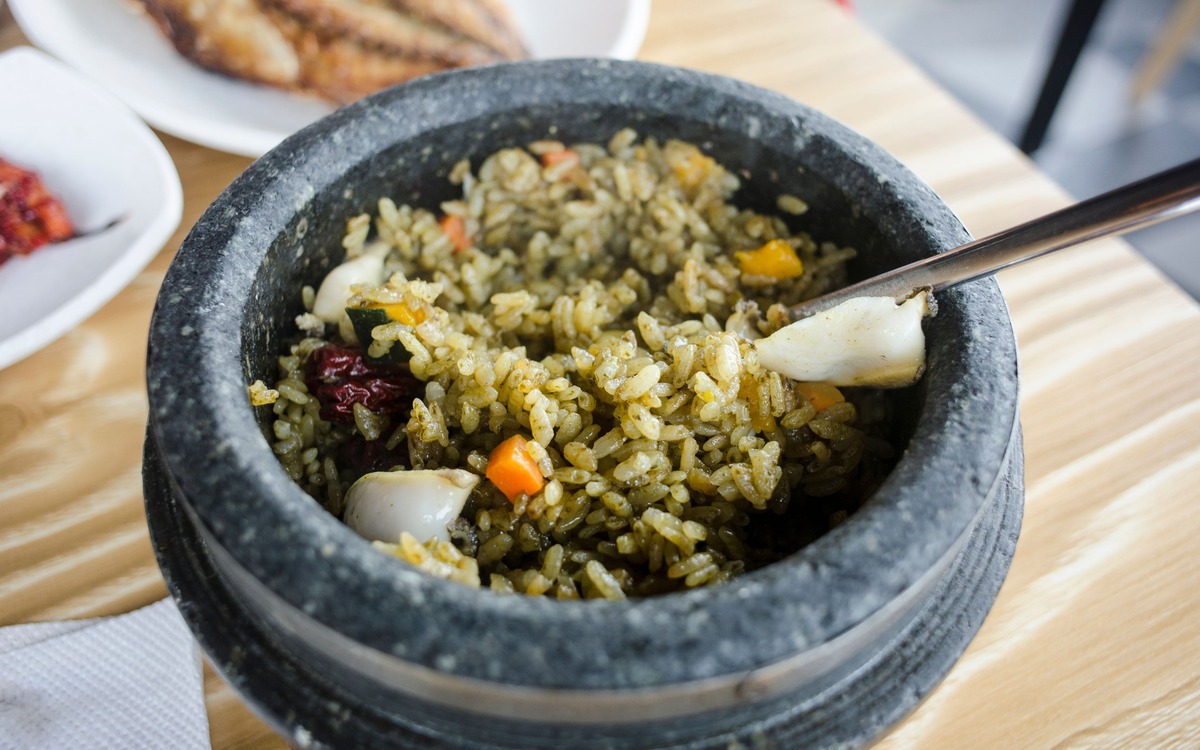
The clearest discard rule is based on time, not smell. FoodSafety.gov says to throw away perishable food, which includes cooked rice, if it has been left at room temperature for more than two hours, or more than one hour when the temperature is above 90°F (32°C).
Also discard rice if you see mold, obvious spoilage, or a clearly unpleasant odor. But the absence of those signs does not prove that rice handled outside safe time-and-temperature limits is safe. Harmful bacteria or toxins are not always visible or detectable by smell.
If you cannot remember when the rice was cooked and the container may already be beyond the recommended refrigerator window, the practical low-risk choice is to discard it rather than guess.
A simple rice-leftover routine
- Store dry rice in a clean, tightly sealed food-safe container.
- After cooking, portion leftover rice into shallow containers.
- Refrigerate within 2 hours, or within 1 hour in temperatures above 90°F.
- Keep the refrigerator at 40°F or below.
- Use refrigerated cooked rice within 3 to 4 days, or freeze it sooner.
- Reheat leftovers to 165°F, stirring or rotating for even heating.
- Discard rice that has spent too long at room temperature.
Keep the routine simple
Rice is not unusually difficult to handle safely. The mistake is treating cooked rice like a dry pantry food after it has been cooked. Once water and heat have turned it into a prepared food, use the same disciplined leftover habits you would use for other cooked dishes.
Cool it promptly, refrigerate it on time, use it within the normal leftover window, and reheat it thoroughly. Those simple steps do more for safety than any smell test or reheating shortcut.




No comments:
Post a Comment