Carrots are inexpensive, versatile, and easy to keep on hand, but they can lose quality surprisingly fast when they are stored with their leafy tops, left exposed to dry refrigerator air, or washed too early. A few simple habits make them last longer and make it easier to tell the difference between a harmless quality problem and a real spoilage problem.
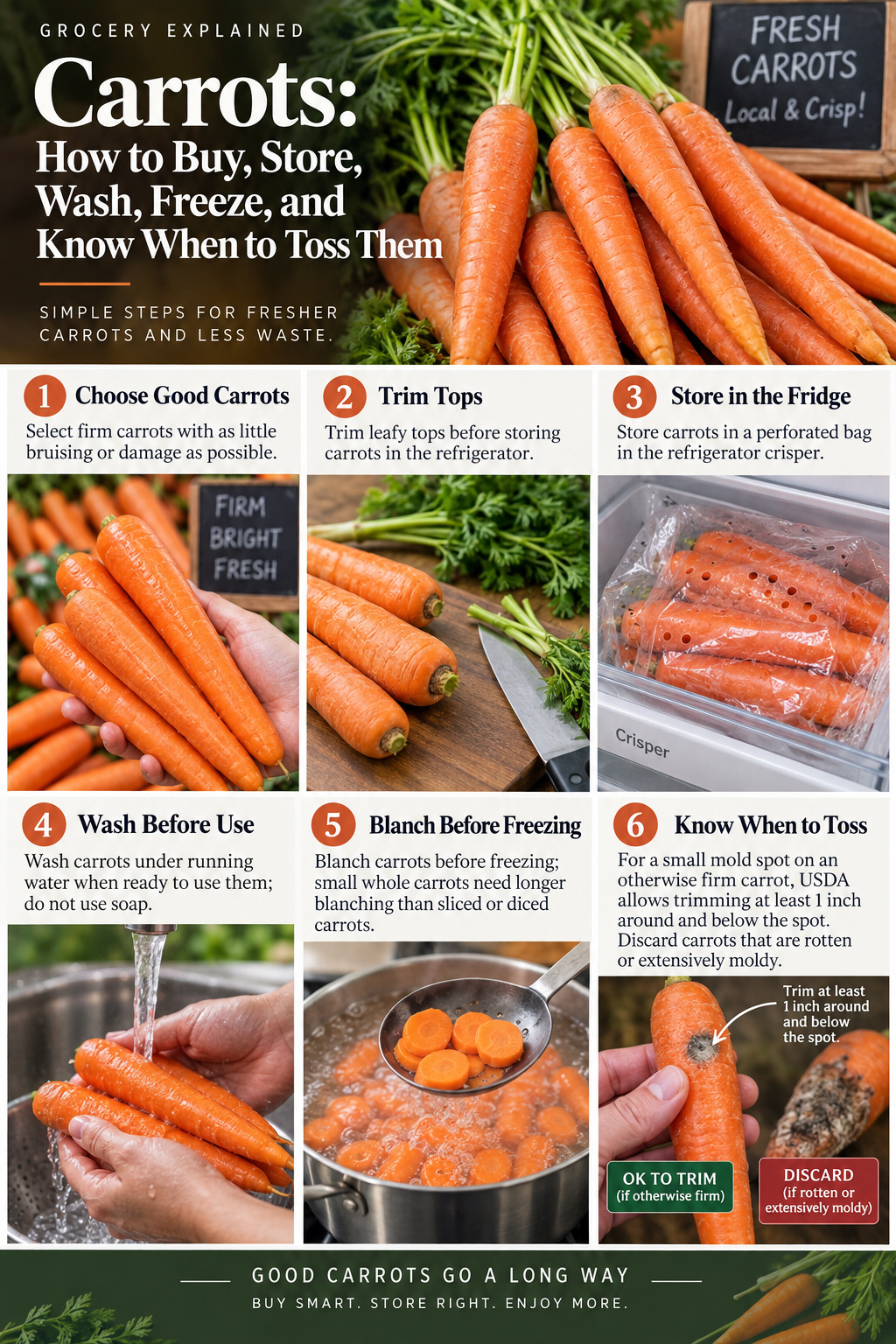
The practical routine is simple: buy firm carrots with as little damage as possible, remove leafy tops before storage, keep the roots cold and protected from moisture loss, wash them under running water when you are ready to use them, and blanch them before freezing. If mold appears, carrots are treated differently from soft fruits because they are a firm, low-moisture vegetable.
Choose firm carrots with minimal damage
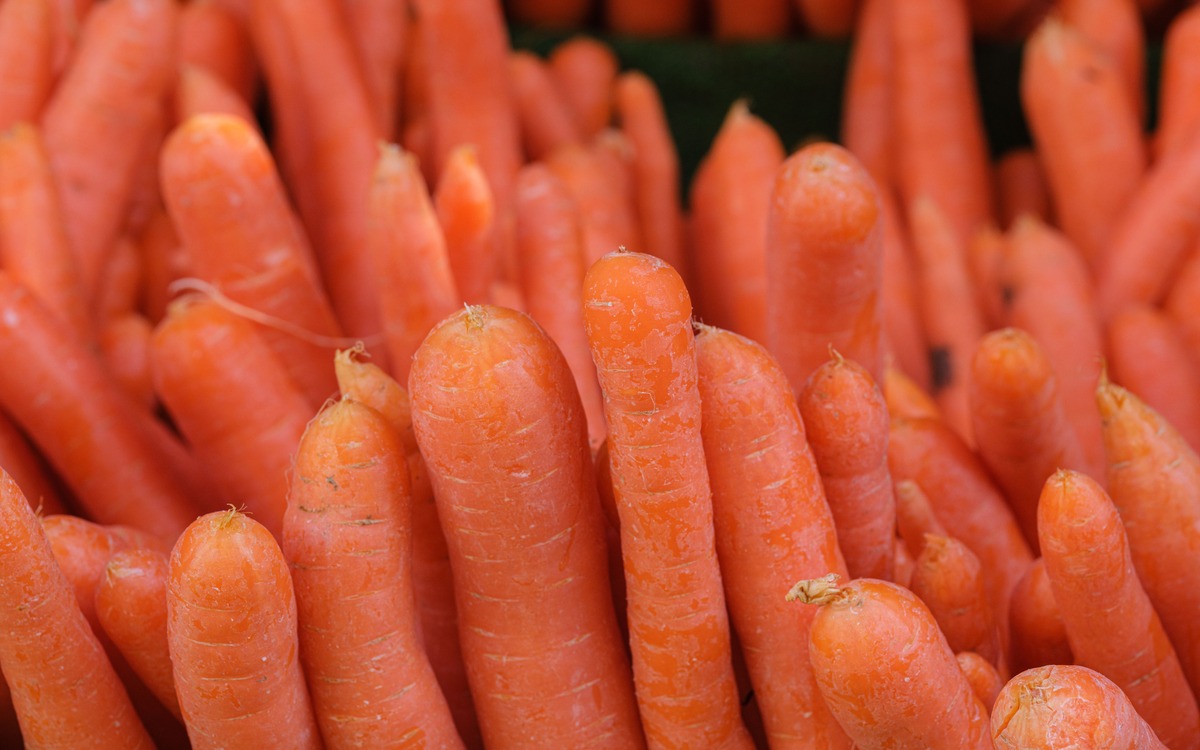
Start with texture. Good carrots should feel firm rather than limp, rubbery, or mushy. The FDA recommends choosing produce that is not bruised or damaged when possible, so avoid carrots with major soft spots, deep cuts, obvious decay, or large wet areas.
Color can vary by variety, and a slightly irregular shape is not a safety problem. What matters more for everyday shopping is that the root is sound and feels dense. If you are buying carrots with greens attached, fresh-looking tops can be a useful sign that the bunch was harvested relatively recently, but those tops should not stay attached during storage.
For bagged carrots, look through the package for excess condensation, slimy pieces, or carrots that are already breaking down. Buying the amount you are likely to use within the next few weeks is usually more useful than buying the largest bag just because the unit price is lower.
Trim leafy tops and refrigerate carrots in the crisper
If the carrots still have their leafy tops, remove the tops before refrigeration. Colorado State University Extension recommends trimming the tops and storing the roots in the refrigerator, while Utah State University Extension notes that carrot tops draw moisture from the roots during storage.
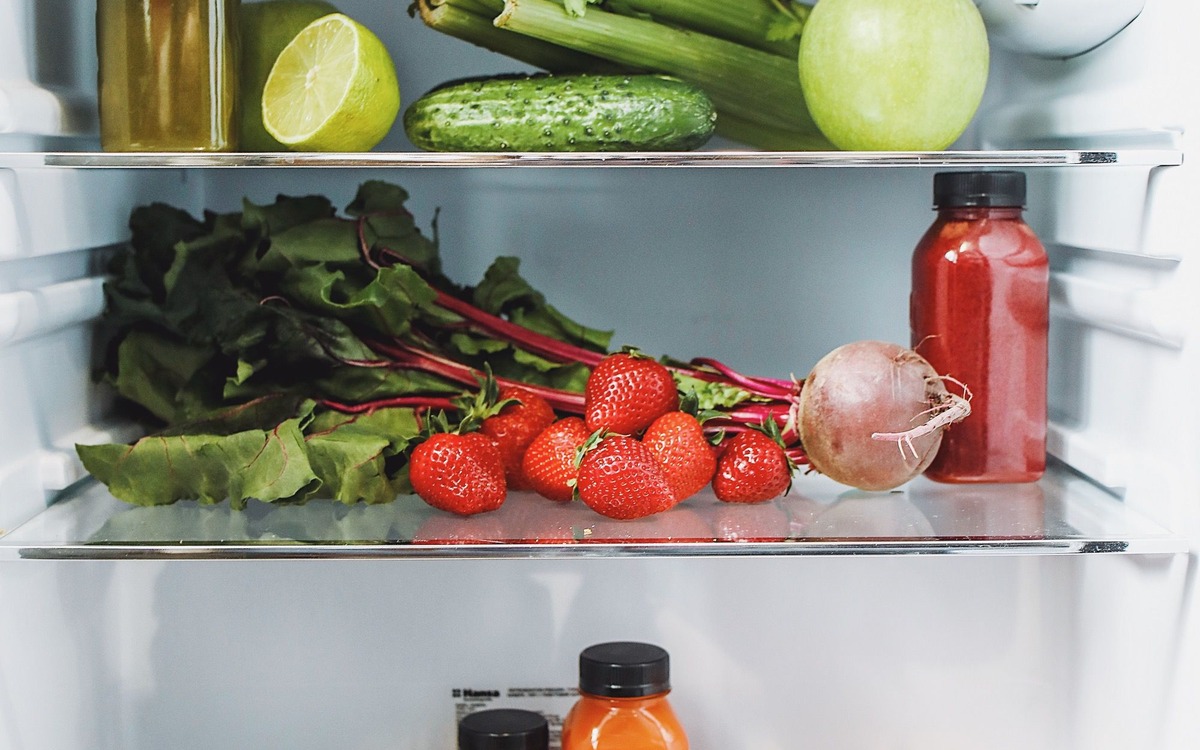
A practical home setup is a perforated plastic bag in the refrigerator crisper drawer. The bag slows moisture loss without completely sealing the carrots into a wet environment. Utah State University Extension describes carrots as a vegetable that can keep for a few weeks in the refrigerator under these conditions.
Keep the refrigerator cold and clean. FDA guidance recommends 40°F (4°C) or below for perishable refrigerated produce. If possible, store carrots away from ripening fruit. Utah State University Extension notes that ethylene produced by fruit can shorten the storage life of carrots and some other vegetables.
Do not worry if a carrot becomes slightly dry or less crisp but still smells normal and has no rot or mold. That is mainly a quality problem. Use those carrots sooner in soup, stew, roasting, or another cooked dish instead of waiting for them to deteriorate further.
Wash carrots under running water when you are ready to use them
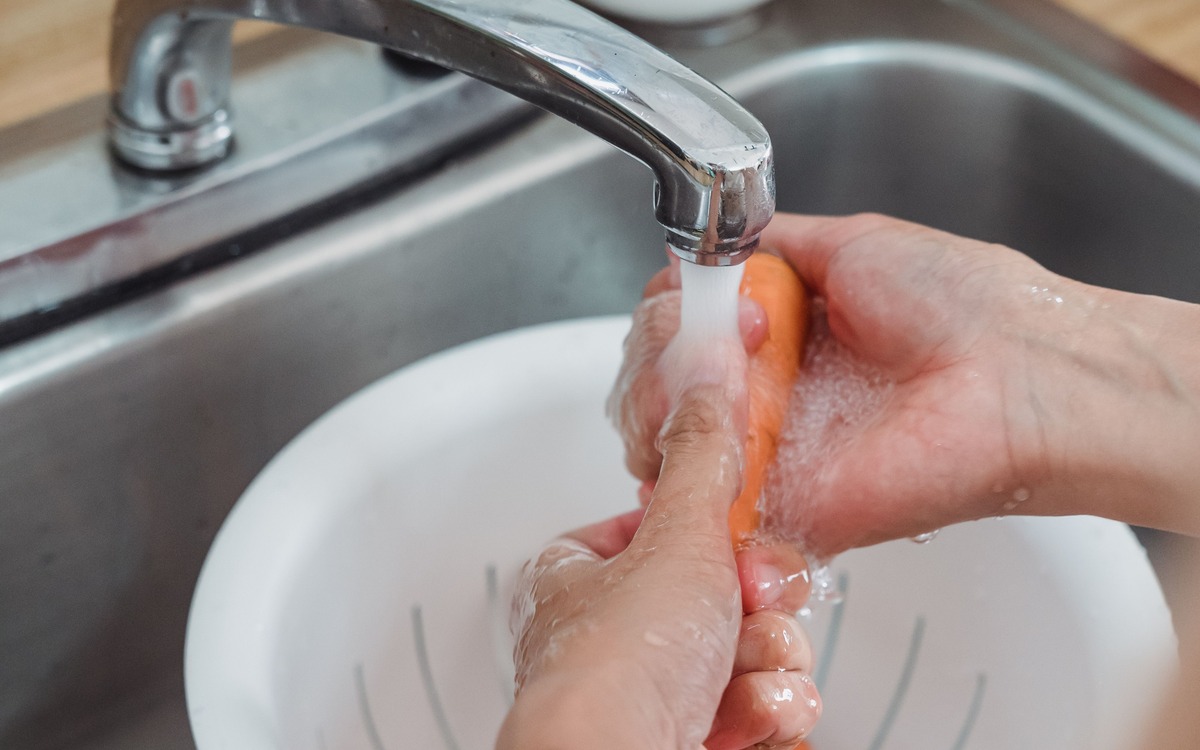
For everyday kitchen use, wait to clean carrots until you are ready to prepare or serve them. Colorado State University Extension recommends cleaning them at use time rather than before storage.
FDA guidance is straightforward: rinse fresh produce thoroughly under running water. Do not use dish soap, detergent, bleach, or commercial produce wash. If you plan to peel the carrots, rinse them first so dirt and bacteria on the outside are less likely to be transferred by the peeler or knife.
If you are leaving the peel on, scrub the surface with a clean produce brush under running water. Firm vegetables such as carrots can hold soil in small grooves and around the top of the root, so a little mechanical scrubbing is more useful than soaking them in soapy water.
After washing, dry the carrots with a clean towel if that helps with the recipe. For slicing or shredding, use a clean cutting board and knife and keep produce separate from raw meat, poultry, seafood, and their juices.
Freeze carrots before quality declines
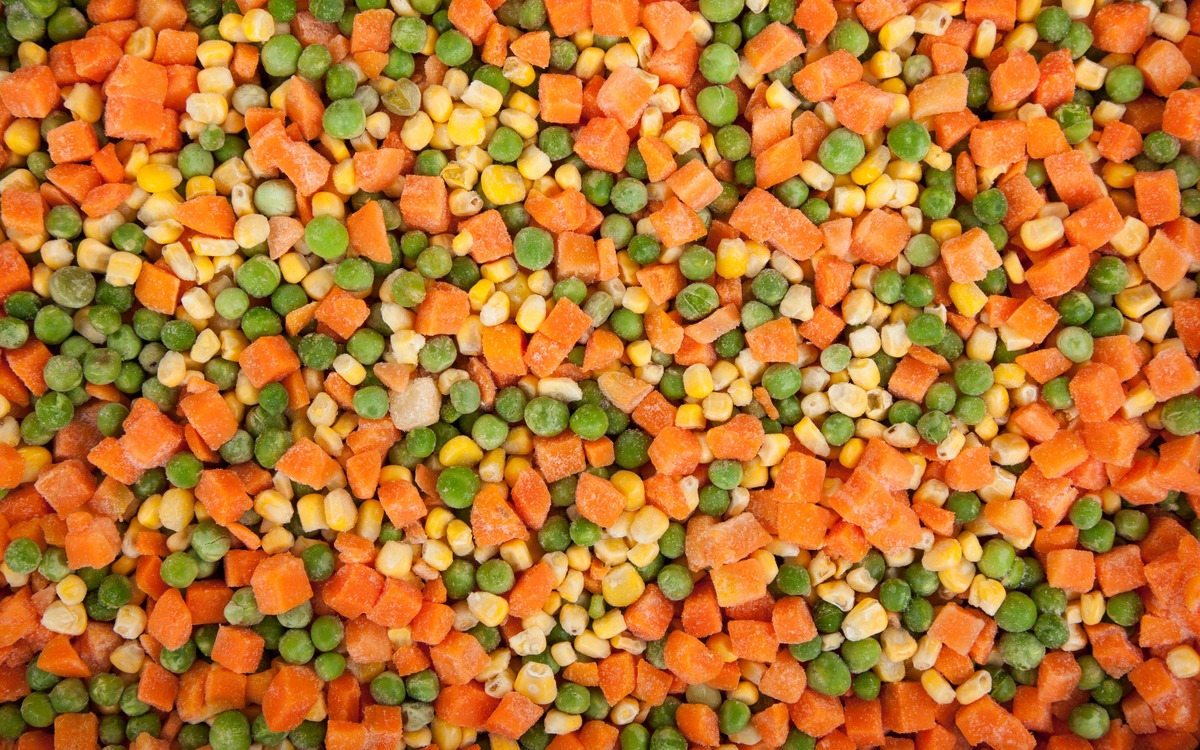
Freezing is useful when you have more carrots than you can use while they are still crisp. The National Center for Home Food Preservation recommends selecting young, tender carrots, removing the tops, washing and peeling them, then cutting larger carrots into suitable pieces before blanching.
Blanching matters because it slows enzyme activity that can damage color, flavor, and texture during frozen storage. For water blanching, the National Center for Home Food Preservation specifies 5 minutes for small whole carrots and 2 minutes for diced, sliced, or lengthwise strips.
After blanching, cool the carrots promptly, drain them well, package them in freezer-safe containers or bags, and freeze. Frozen carrots will not have exactly the same raw crunch after thawing, so they are especially useful in soups, stews, casseroles, stir-fries, roasted dishes, and other cooked meals.
A small mold spot on a firm carrot is different from mold on soft fruit
USDA Food Safety and Inspection Service guidance treats firm vegetables such as carrots differently from soft, high-moisture produce. If there is only a small isolated mold spot on an otherwise firm carrot, USDA says you can cut off at least 1 inch around and below the mold spot, keeping the knife out of the mold so it does not cross-contaminate the part you plan to keep.
That advice is for a small mold spot on a firm vegetable. It is not a reason to salvage a carrot that is extensively moldy, rotten, very soft, slimy, or breaking down. FDA guidance says to throw away produce that looks rotten. When the whole carrot is deteriorating, discarding it is the simpler choice.
Also avoid sniffing moldy food closely. USDA advises against smelling moldy items because spores can irritate the respiratory system. Check nearby produce too, especially if the carrots were stored in a damp bag or container.
Do you need to peel carrots?
Peeling is mostly a preparation choice, not a substitute for washing. If you peel carrots, rinse them first. If you leave the peel on, scrub the surface well under running water. Either way, cut away damaged areas before use.
For soups and long-cooked dishes, a slightly dry or cosmetically rough carrot may still work well after washing and trimming. For raw snacks or salads, firmer, fresher carrots will usually give a better texture. This is a quality decision rather than a separate food-safety rule.
A simple carrot routine
- At the store, choose firm carrots with as little bruising or damage as possible.
- If greens are attached, trim them off before refrigerating the roots.
- Store carrots in a perforated bag in the refrigerator crisper drawer.
- Keep them away from ripening fruit when practical.
- Wash under running water when you are ready to use them; do not use soap.
- Scrub unpeeled carrots with a clean produce brush.
- Freeze extras while they are still in good condition, and blanch them first.
- For a tiny mold spot on an otherwise firm carrot, follow the USDA 1-inch trimming rule; discard carrots that are rotten or extensively deteriorated.
Bottom line
Carrots keep best when they start out firm, have their leafy tops removed, and stay cold without drying out. Wash them at use time, freeze extras before they decline, and remember that small mold spots on a firm carrot can sometimes be trimmed more conservatively than mold on soft fruit.
The easiest way to reduce waste is to use quality changes as an early warning: cook slightly tired carrots sooner, freeze surplus while it is still good, and discard roots that are genuinely rotten or extensively moldy.




No comments:
Post a Comment