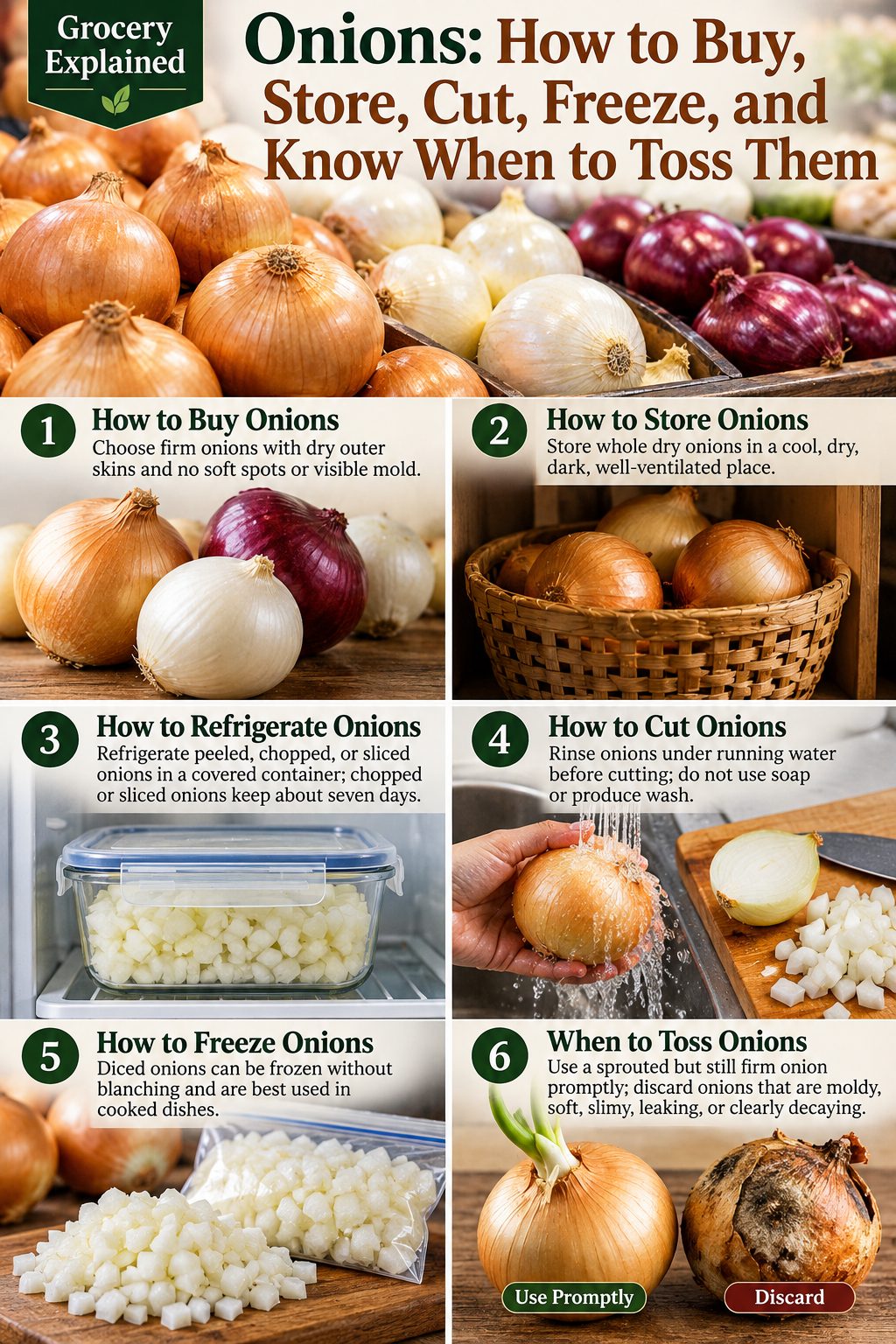
Onions are one of the easiest ingredients to keep around, but they last much longer when the storage setup matches the form they are in. Whole dry onions generally want airflow and a cool, dry, dark place. Once an onion is peeled or cut, the routine changes: refrigerate it in a covered container and use it while quality is still good.
The practical approach is simple: buy firm bulbs with dry skins, give whole onions ventilation, refrigerate cut onions, rinse produce under running water before cutting, freeze chopped onions when you have too many, and discard bulbs that are moldy, slimy, badly softened, or clearly decaying.
Choose firm onions with dry outer skins
Start with feel. Utah State University Extension advises choosing onions with crisp, dry outer skin and no soft spots, visible mold, or obvious sprouting. A firm bulb with a tight, dry exterior is a better storage candidate than one that already feels damp or soft around the neck.
Do not worry about cosmetic differences between yellow, white, and red onions. Variety changes flavor and storage potential, but for everyday shopping the most useful signs are firmness, dryness, and absence of decay. If a bag contains several damaged or wet bulbs, skip it even if the price looks attractive.
Buying a large bag only saves money if you have a dry, ventilated place to keep it and will use the onions before they deteriorate. For many households, a smaller quantity with better storage conditions wastes less food.
Store whole dry onions somewhere cool, dry, dark, and ventilated
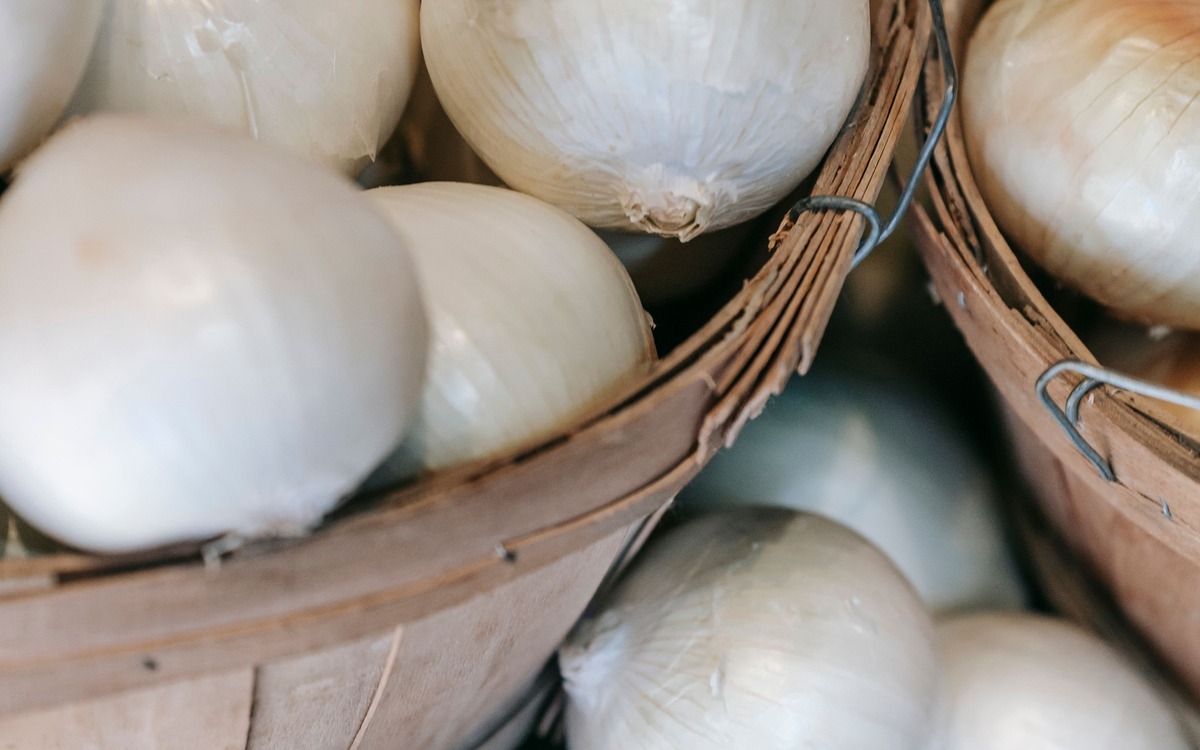
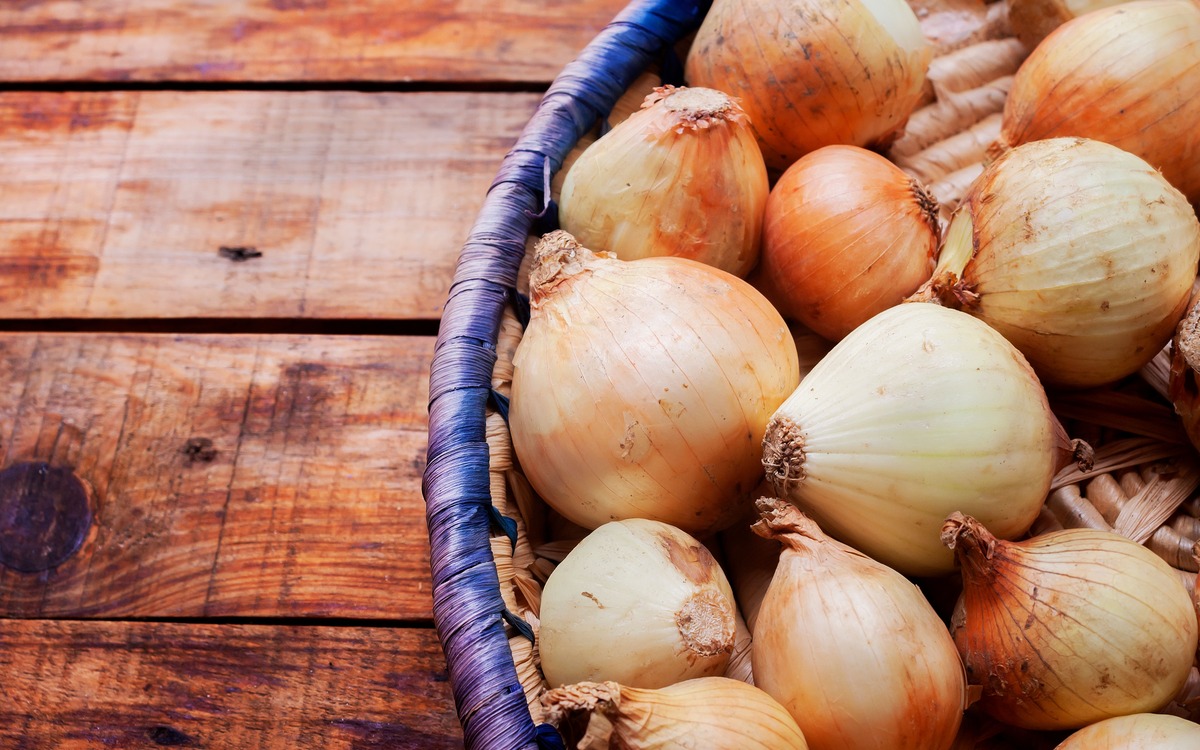
Penn State Extension recommends keeping properly cured onions in a cool, dark, well-ventilated place. A mesh bag, wire basket, or other breathable container works better than a tightly sealed plastic bag because air can circulate around the bulbs.
Keep the storage area dry. Moisture and poor airflow encourage deterioration, while warmer storage encourages sprouting. University of Minnesota Extension notes that onions begin to sprout when storage temperatures are too warm; Utah State University also describes sprout growth as a sign of unsuitable storage conditions.
Check stored onions occasionally. Remove a soft, leaking, or moldy bulb before it affects nearby onions. Rotate older onions to the front so they get used first.
If you also keep potatoes in pantry storage, the basics overlap but the details differ around light, greening, and refrigeration. See our potato storage guide for those differences.
Once an onion is peeled or cut, refrigerate it
Whole dry onions and cut onions should not be stored the same way. FoodSafety.gov advises refrigerating peeled or cut produce, and Utah State University Extension says chopped or sliced onions can be refrigerated for up to about seven days in a sealed container.
Use a clean covered container or sealed food-storage bag so the cut surface is protected and strong onion odors stay contained. Keep the refrigerator at 40°F (4°C) or below, the standard cold-storage recommendation from U.S. food-safety agencies.
If a cut onion becomes slimy, develops obvious mold, smells rotten, or has extensive soft, watery breakdown, discard it rather than trying to trim around the problem.
Rinse before cutting, and skip soap
FDA guidance says fresh produce should be rinsed under running water before preparing or eating it, including produce that will be peeled. The reason is practical: dirt and bacteria on the outside can be transferred inward by a knife.
For onions, remove loose papery layers, rinse the bulb under plain running water, and then cut it on a clean board with a clean knife. Do not use dish soap, detergent, bleach, or commercial produce wash. FDA specifically advises against those products for fresh produce.

Freeze chopped onions when you have more than you can use
Freezing is useful when a large bag is starting to outpace your cooking. The National Center for Home Food Preservation says diced onions can be peeled, trimmed, cleaned, chopped, and frozen without blanching.
You can pack chopped onions directly into freezer bags or containers, or freeze the pieces first in a single layer on a clean tray and then transfer them to packaging. Remove as much air as practical before sealing.
Frozen onions lose the crisp texture of fresh onions, so they are best saved for cooked dishes such as soups, stews, casseroles, sauces, and stir-fries. The National Center for Home Food Preservation notes that frozen diced onions are best used within a few months for quality.
Blanching rules vary by vegetable: chopped onions can go into the freezer without blanching, while carrots are handled differently. Our carrot storage and freezing guide explains that contrast.
What about an onion that has started to sprout?
Sprouting usually means the bulb is leaving dormancy and its quality is starting to decline. It is not the same thing as mold or rot. Extension guidance recommends using sprouted onions promptly when they are still firm and otherwise sound.
Once a sprouted onion becomes soft, moldy, watery, or rotten, discard it. If you are shopping rather than trying to use what is already at home, choose an unsprouted, firm bulb because it is likely to store better.
When should you toss an onion?
FDA guidance says produce that looks rotten should be discarded. For onions, practical red flags include visible mold, slimy or leaking layers, a strongly rotten odor, or extensive soft and watery tissue.
A dry outer layer or loose papery skin is normal. A little surface dirt is also not spoilage. The bigger concern is breakdown that has moved into the bulb itself.
When in doubt, avoid trying to rescue an onion that is extensively moldy or decaying. Because onions have many layered surfaces, trimming an obviously spoiled bulb is not a useful food-waste strategy.
A simple onion routine
- Buy firm onions with dry skins and no soft, moldy, or badly sprouted areas.
- Store whole dry onions in a cool, dry, dark, well-ventilated place.
- Check the basket periodically and remove deteriorating bulbs.
- Refrigerate peeled, chopped, or sliced onions in a covered container.
- Rinse onions under running water before cutting; do not use soap.
- Freeze chopped surplus onions without blanching and use them mainly in cooked dishes.
- Use a sprouted but still firm onion sooner rather than later.
- Discard onions that are moldy, slimy, badly softened, leaking, or clearly rotten.
Bell peppers are a natural partner for onions in quick skillet meals; our bell pepper storage and freezing guide explains how to keep the other ingredient ready to use.
Bottom line
The easiest way to keep onions useful longer is to separate the storage rules for whole and cut bulbs. Whole dry onions need cool, dry airflow; cut onions need refrigeration. Freeze extras before quality drops, and treat sprouting as a sign to use the bulb sooner rather than as a reason to automatically throw it away.
Good onion storage is mostly about preventing moisture, heat, and forgotten leftovers. A breathable basket for whole bulbs and a covered refrigerator container for cut onions solve most of the common problems.