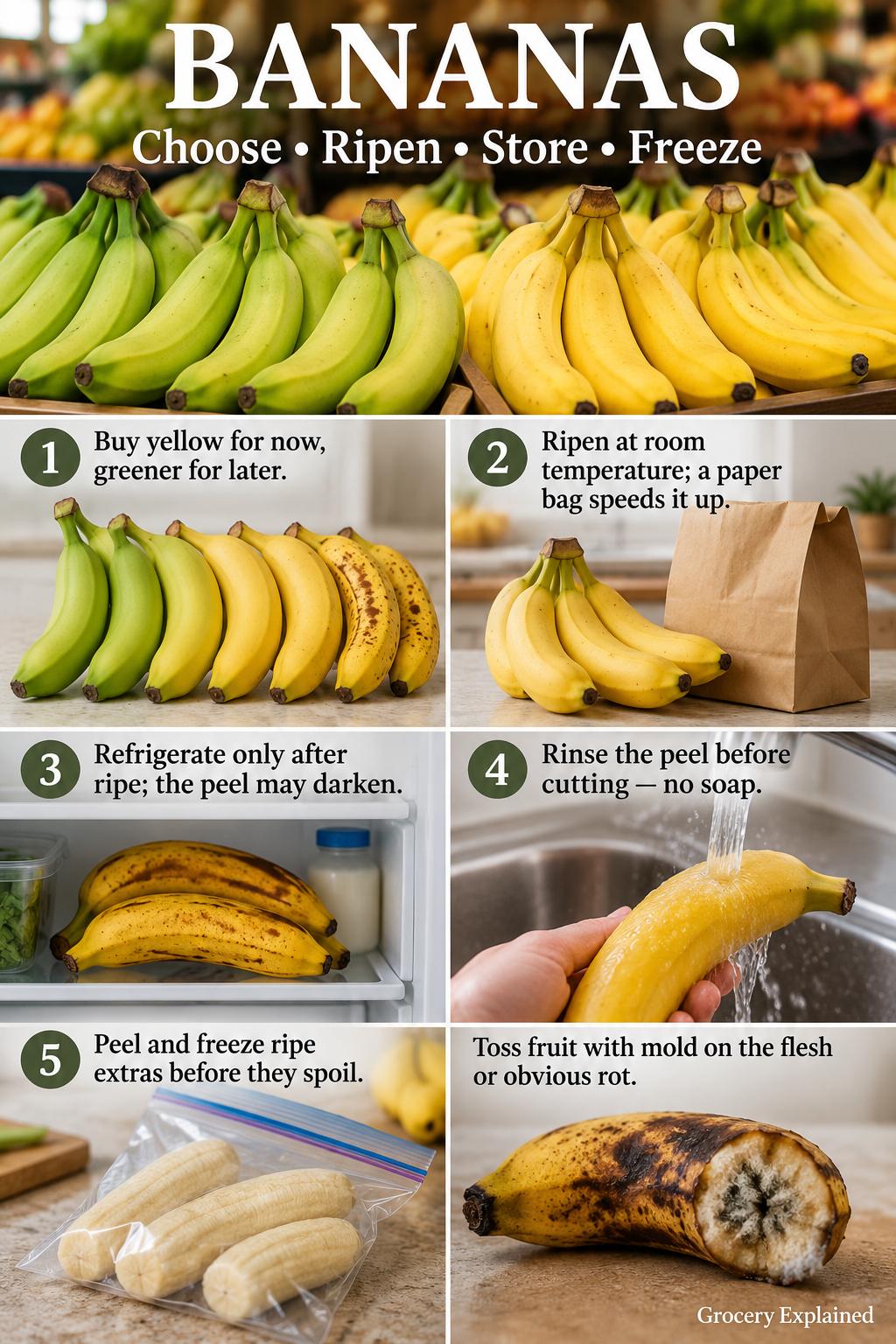
Bananas are one of the easiest fruits to buy and one of the easiest to mistime. A bunch can move from too green to just right to heavily spotted in a few days, especially in a warm kitchen. The useful trick is not to stop ripening completely; it is to buy the stage you actually need, control how quickly the fruit ripens, and switch to refrigeration or freezing at the right moment.
The practical routine is simple: choose bananas by when you plan to eat them, let green or yellow-green fruit ripen at room temperature, use a paper bag when you want to speed the process, refrigerate only after the fruit is ripe if you need a little more time, and peel and freeze surplus bananas before the flesh becomes unpleasant or spoiled.
Buy bananas for the day you plan to eat them
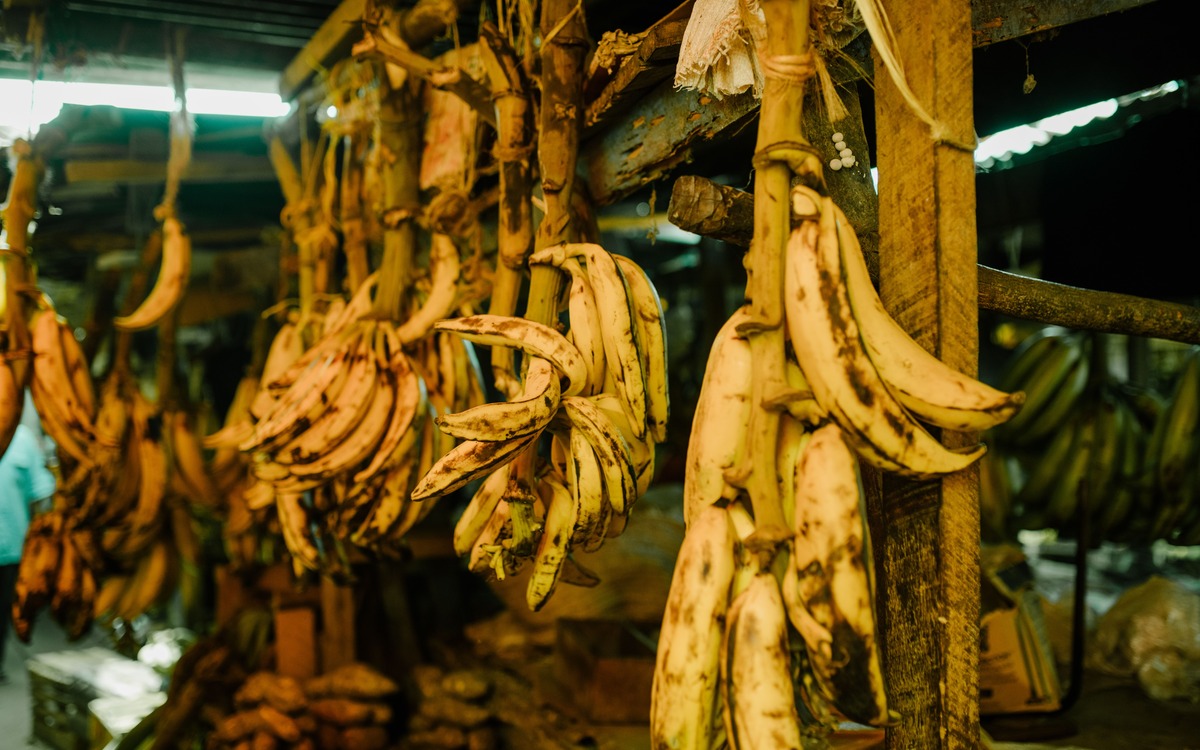
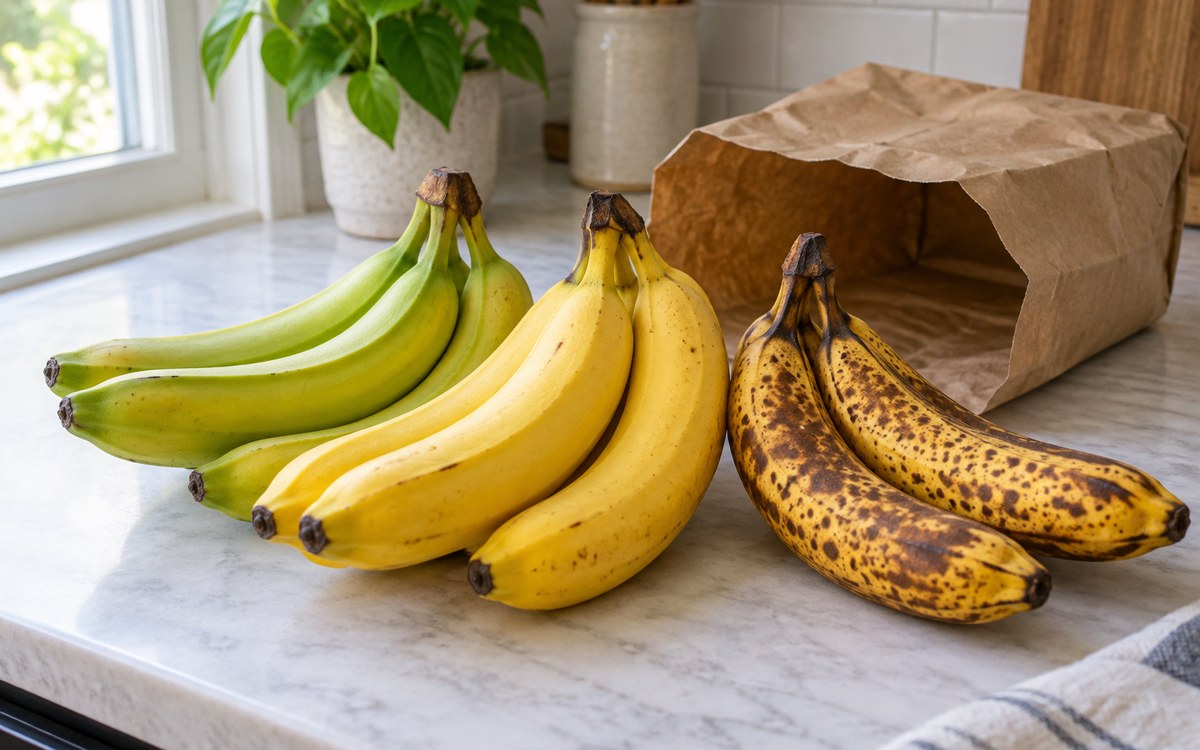
Banana color is useful because the fruit keeps ripening after harvest. Oregon State University Extension notes that bananas change from green to yellow, then develop brown speckles and eventually become more brown or black as they ripen. The flesh also becomes softer and more flavorful.
If you need bananas today, choose mostly yellow fruit with the firmness you prefer. If you are shopping for several days, a mix of yellow bananas and bananas with a little green at the tips gives you a longer usable window. Utah State University Extension recommends choosing evenly colored bananas that are slightly green at the tips and free of bruises and soft brown spots for good keeping quality.
Do not confuse normal freckles with damage. Small brown speckles are part of ripening and often mean sweeter, softer fruit. Large wet-looking patches, deep bruises, leaking fruit, mold, or an unpleasant fermented or rotten smell are different problems. FDA guidance recommends avoiding badly bruised or damaged produce when possible and discarding produce that looks rotten.
Ripen green bananas at room temperature
Bananas are climacteric fruit, which means they continue to ripen after harvest and produce ethylene as part of that process. Iowa State University Extension describes bananas as a fruit that should normally be allowed to ripen at room temperature before refrigeration.
Keep unripe bananas on the counter away from direct sunlight and excessive heat. A warmer room generally speeds ripening, while a cooler room slows it. If you want the bunch to ripen more evenly, give it some air circulation instead of sealing it in plastic where moisture can collect.
To speed ripening, Oregon State University Extension recommends putting bananas in a closed paper bag in a warm area. The bag holds some of the ethylene around the fruit, helping the bananas move through the ripening process faster. Check the bag daily so the fruit does not overshoot the stage you want.
If you are trying to slow ripening, keep bananas away from other ripe ethylene-producing fruit when practical. That does not stop ripening, but it avoids giving the bunch an extra ethylene boost.
Refrigerate bananas after they are ripe, not while they are still green
For normal home use, let bananas reach the ripeness you like before moving them to the refrigerator. Utah State University Extension says ripe bananas can be refrigerated to extend their usable life for a few more days. Iowa State University Extension gives the same basic strategy: ripen at room temperature, then refrigerate ripe fruit.
The peel may turn dark brown or nearly black in the refrigerator even while the flesh inside remains usable. That dramatic peel color is a quality change, not automatic proof that the banana is spoiled. Judge the inside too: the flesh should still smell normal and should not be leaking, moldy, or showing obvious decay.
Because different extension sources give different exact refrigerator windows, a better household rule is to refrigerate ripe bananas when you need extra time and then use them promptly rather than relying on a fixed number of days. The refrigerator slows further ripening; it does not make an overripe banana fresh again.

Wash the peel before you cut or peel the banana
Banana peel is not usually eaten, but the FDA still recommends rinsing produce under running water before preparing or eating it, including produce with skins or rinds that are not eaten. That helps reduce the chance of transferring dirt or bacteria from the outside to your hands, knife, cutting board, or the edible fruit.
Use plain running water; do not wash bananas with dish soap, detergent, bleach, or commercial produce wash. If the peel is visibly dirty, gently rub it under running water and dry it with a clean towel. Wash your hands before food preparation as well.
Once a banana is peeled or cut, treat it like other cut fruit. If you are not eating it soon, keep it refrigerated in a clean covered container. Cut banana will brown quickly in contact with air, but browning by itself is mainly a quality issue.
Freeze ripe bananas before they become unusable
Freezing is the easiest rescue plan for a bunch that ripens faster than you can eat it. Iowa State University Extension recommends freezing overripe bananas in an airtight bag for later use in foods such as smoothies or banana bread.
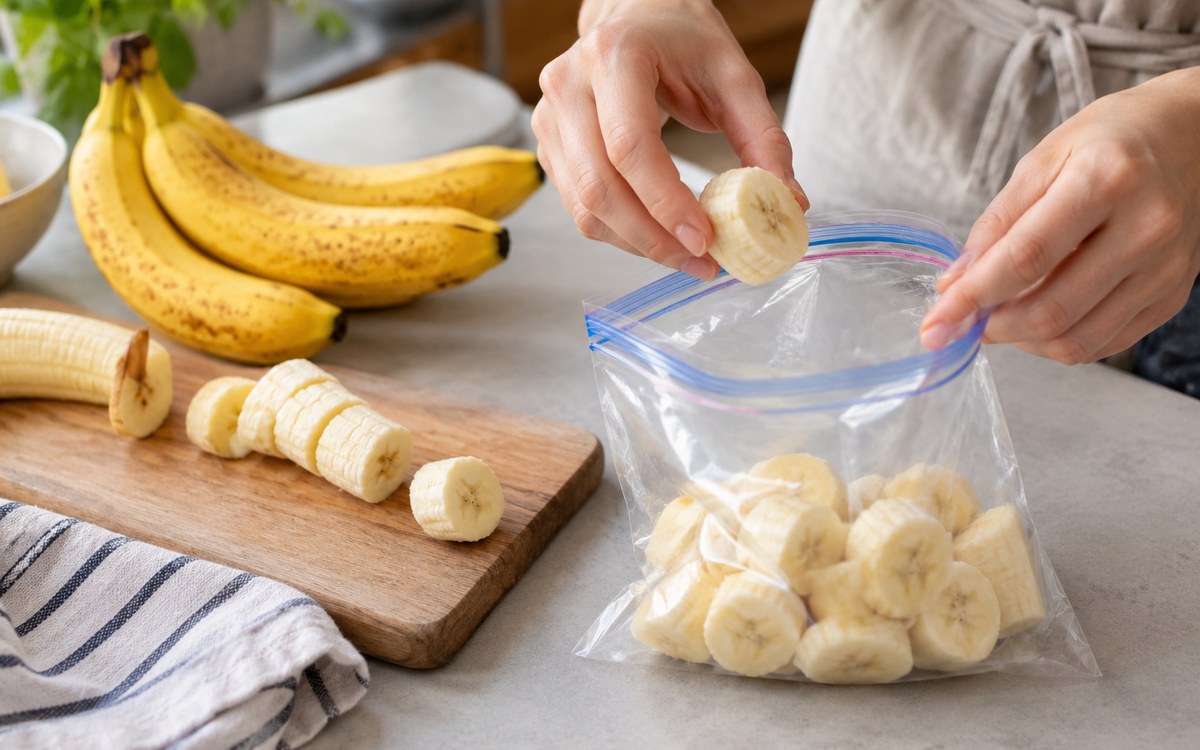
For the most convenient freezer setup, peel the bananas first. Freeze them whole if you usually bake with whole bananas, or cut them into chunks if you use smaller amounts for smoothies, oatmeal, pancakes, or blending. Packing the fruit in a freezer-safe bag or container keeps it from drying out and prevents it from picking up freezer odors.
For pieces that you want to keep separate, spread them in a single layer on a tray until firm, then transfer them to a freezer bag. This extra step is about convenience rather than safety; it keeps the pieces from freezing into one large block.
Frozen banana becomes much softer after thawing, so it is better suited to blending and baking than to fruit salad. If you freeze a banana because it is already soft and heavily spotted, make sure the flesh still looks and smells normal before it goes into the freezer. Freezing does not reverse spoilage.
Brown spots are not the same as spoilage
As bananas ripen, starches change, the flesh softens, and the peel develops brown speckles. A very ripe banana can look unattractive from the outside and still be useful for baking or smoothies. Normal ripening usually produces soft, sweet-smelling flesh rather than slimy, moldy, leaking, or foul-smelling fruit.
Discard the banana if you see mold on the edible flesh, extensive wet decay, leaking that is not simply from a crushed spot, or a clearly rotten or fermented odor. FDA guidance is simple on visibly rotten produce: throw it away. Do not use freezing as a way to save fruit that is already spoiled.
What about separating bananas or wrapping the stems?
You will see many storage hacks online, including wrapping individual stems, covering the crown of the bunch, hanging bananas, or separating every banana. These methods may change airflow, bruising, or how ethylene accumulates around the fruit, but they are much less important than the basic controls: buy the ripeness you need, use room temperature for ripening, use a paper bag to speed ripening when necessary, refrigerate after ripening, and freeze surplus fruit before it spoils.
If a banana hanger keeps the fruit from being crushed on your counter, it can still be useful. Just treat it as a bruise-prevention tool rather than a guarantee that the bunch will stay fresh for a specific number of extra days.
A simple banana routine
- Buy yellow bananas for immediate use and slightly greener bananas for later in the week.
- Let green or yellow-green bananas ripen at room temperature away from direct sunlight.
- Use a closed paper bag when you want to speed ripening, and check the fruit daily.
- Once bananas reach the ripeness you like, refrigerate them if you need more time.
- Expect the refrigerated peel to darken; judge the flesh as well as the outside.
- Rinse the peel under running water before peeling or cutting; do not use soap.
- Peel and freeze extra ripe bananas in a freezer-safe bag or container before quality drops too far.
- Discard fruit with mold on the flesh, obvious rot, leaking decay, or a clearly rotten odor.
Bottom line
The best way to store bananas depends on their ripeness. Green and yellow-green bananas belong at room temperature while they finish ripening. Ripe bananas can move to the refrigerator when you need to slow the process, even though the peel may darken. When a bunch is getting ahead of you, peel and freeze the fruit while the flesh is still good.
That simple sequence—counter, refrigerator, freezer—gives you more control over ripening and makes it easier to use the whole bunch instead of throwing away the last few bananas.