Whole Grain Bread: How to Choose a Better Loaf Without Falling for Front-Label Claims
The bread aisle can make a simple purchase feel unnecessarily complicated. One loaf says “multigrain,” another says “wheat,” another has seeds all over the crust, and a fourth promises a specific number of grams of whole grain. None of those front-of-package details tells the whole story by itself.
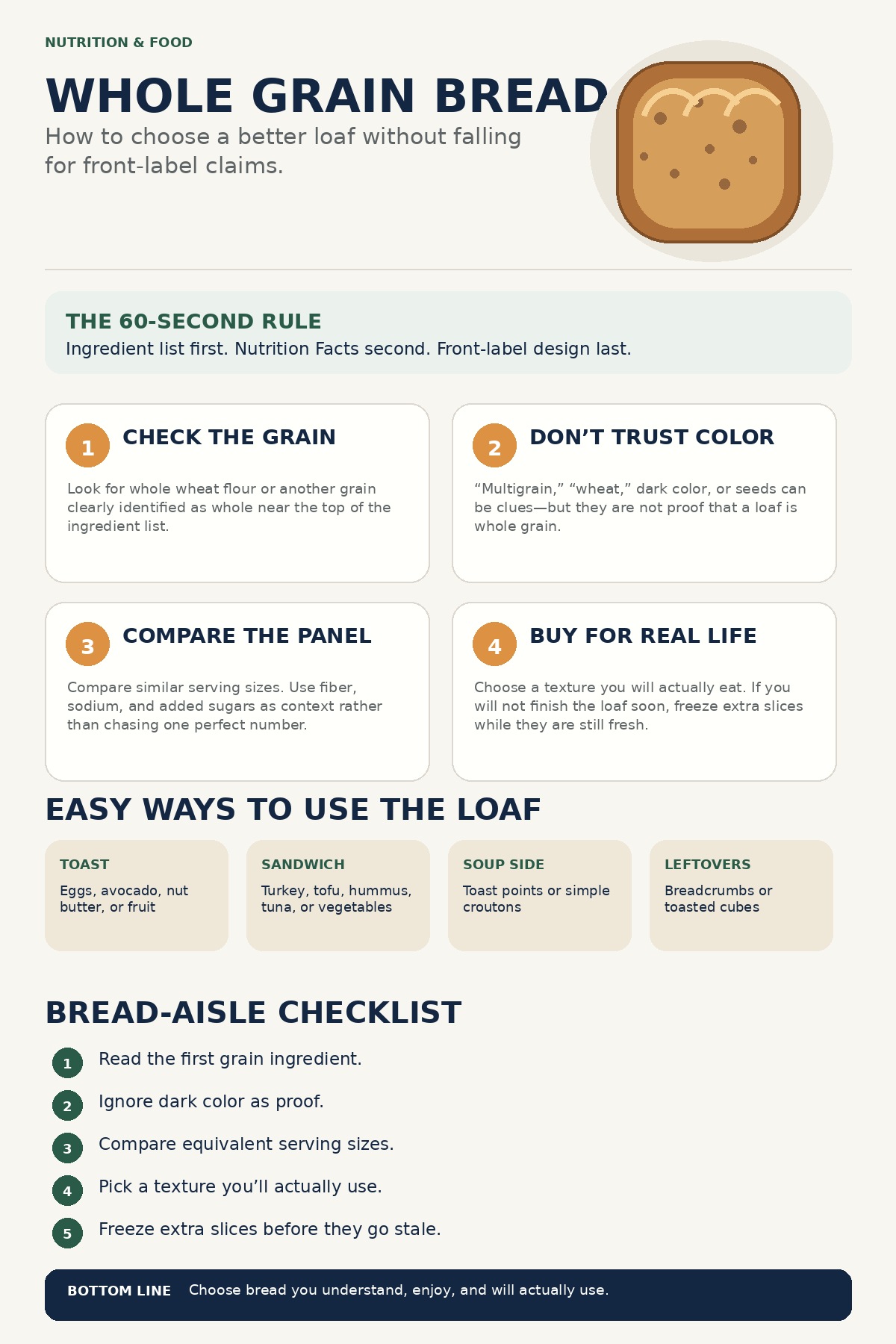
A better way to shop is to use a short sequence: check the grain ingredients first, compare the Nutrition Facts panel on similar serving sizes, think about how you actually use bread, and buy an amount you can finish or freeze. This guide shows you how to do that without turning bread shopping into a nutrition exam.
Start with the ingredient list, not the color of the loaf
If your goal is whole grain bread, the ingredient list is the most useful place to start. FDA guidance explains that consumers should be able to look at the ingredient statement to see whether the predominant or first grain ingredient is a whole grain. Examples include terms such as whole wheat flour, whole rye flour, or another grain clearly identified as whole.
That distinction matters because wheat flour is not the same thing as whole wheat flour. FDA guidance notes that ordinary wheat flour is refined, while whole wheat flour contains the bran, germ, and endosperm in the proportions expected for a whole grain.
You do not need to memorize every grain name in the store. The practical habit is simple: look for the word whole attached to the main grain ingredient, then read the rest of the ingredient list for context.
“Multigrain,” “wheat,” and a dark brown color are not guarantees
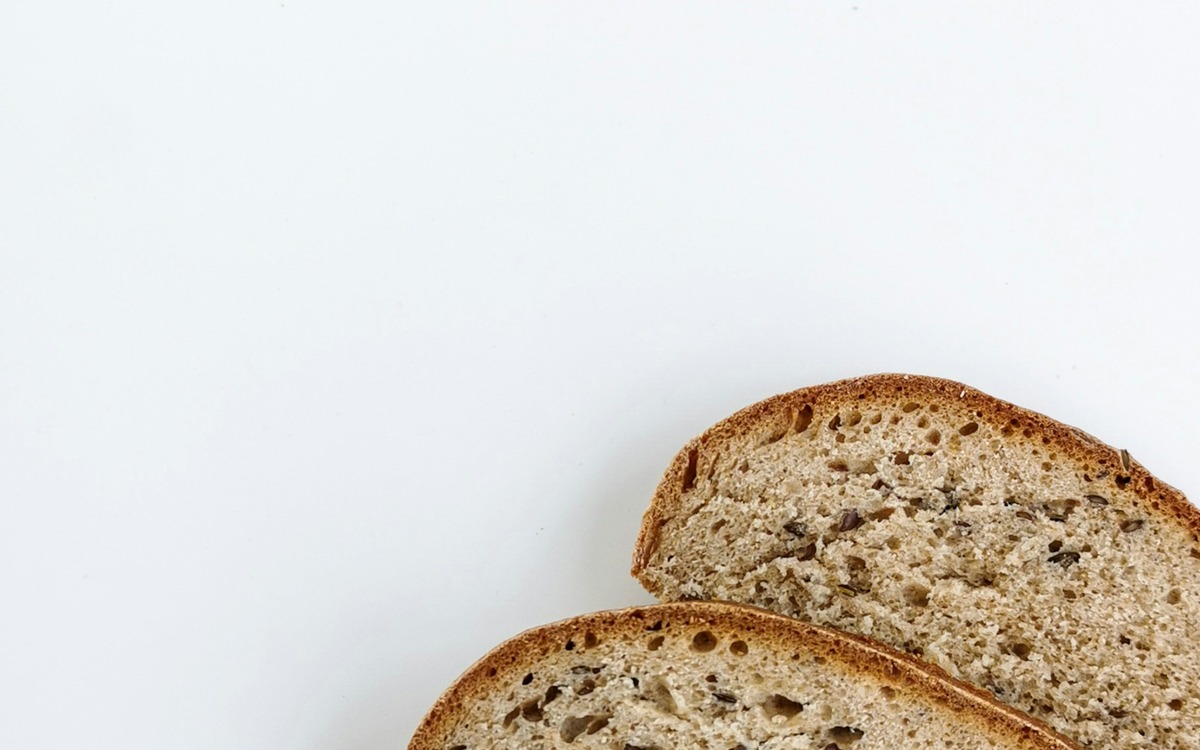
Some labels sound more specific than they are. “Multigrain” tells you that more than one grain may be present; it does not automatically tell you that those grains are whole. A loaf can also look brown because of ingredients such as molasses, caramelized components, seeds, or darker flours.
The same principle applies to rustic-looking bread. Seeds, cracked grains, and a dense crust can be useful ingredients and may taste great, but appearance is not a reliable substitute for reading the ingredient list.
FDA allows factual whole-grain statements when they are truthful and not misleading, but the agency’s whole-grain guidance also emphasizes the role of the ingredient statement. In other words, treat the front label as a clue, not the final answer.
Compare breads on similar serving sizes
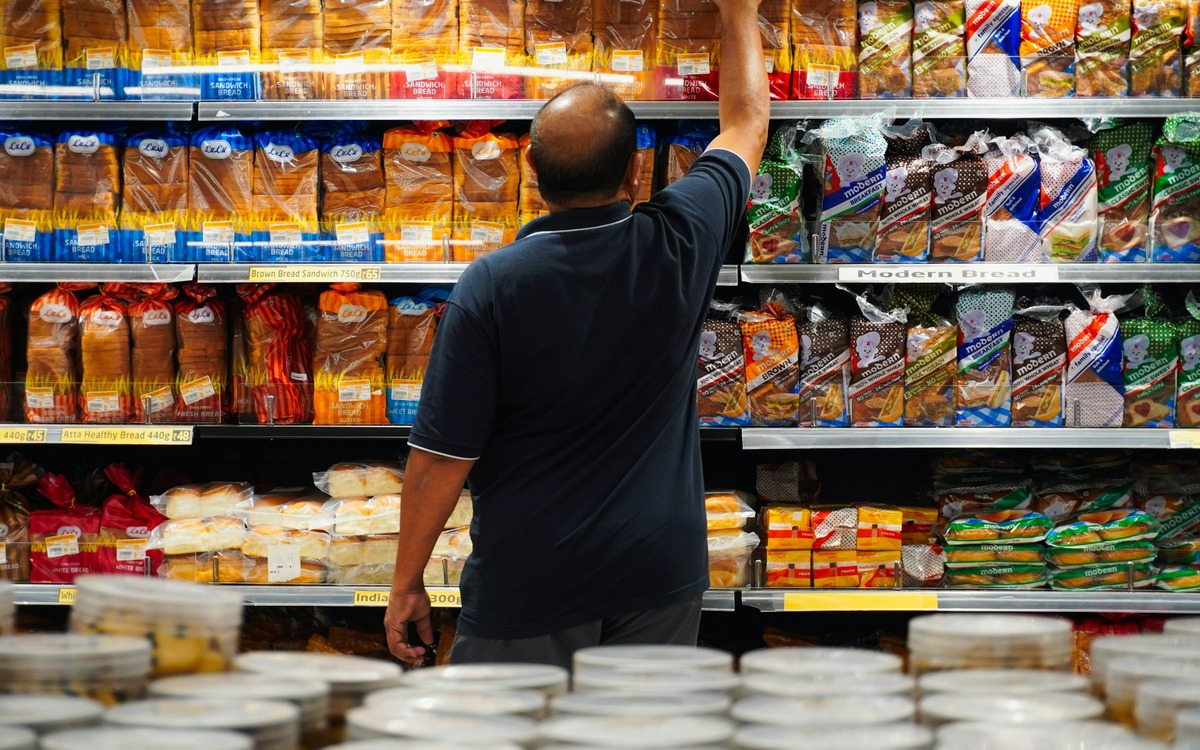
Once two loaves have a grain profile you are comfortable with, the Nutrition Facts panel can help you choose between them. The important word is compare. One brand may list one slice as a serving while another lists two, so comparing numbers without checking serving size can be misleading.
For most shoppers, three lines are especially useful:
- Dietary fiber: FDA’s Daily Value for fiber is 28 grams on a 2,000-calorie reference diet. You do not need every slice of bread to be extremely high in fiber, but the label lets you see whether one loaf contributes meaningfully more than another.
- Sodium: the Daily Value is 2,300 milligrams. FDA specifically points out that breads can contribute sodium across the day because people may eat them multiple times, even when one serving does not taste especially salty.
- Added sugars: this is useful context when comparing similar breads. A small amount does not automatically make a loaf a bad choice, but the label lets you decide whether you want it there.
FDA uses a general % Daily Value rule of thumb: 5% DV or less per serving is considered low, while 20% DV or more is considered high. That can help you scan fiber or sodium quickly, but it is still only one part of the decision.
Do not chase a perfect number
A practical grocery guide should not turn one nutrient into a pass-or-fail test. Bread varies by style: a thin sandwich loaf, dense rye, sprouted loaf, seeded sourdough, and bakery-style whole wheat bread can all have different serving sizes, moisture levels, and textures.
Instead of searching for one “perfect” fiber or sodium number, compare products you would realistically substitute for each other. If two sandwich breads cost about the same and you like both, the ingredient list and Nutrition Facts panel can help break the tie.
Taste still matters. A loaf that looks ideal on paper but sits untouched in the pantry is not a useful purchase.
What about “100% whole grain” or “100% whole wheat”?
These phrases are more specific than a vague “made with whole grains” message. FDA guidance recommends that products labeled “100% whole grain” not contain grain ingredients other than whole grains. For whole wheat bread, federal standards also define whole wheat bread in terms of whole wheat flour.
That does not mean you must only buy bread with a 100% claim. A mixed-grain loaf may still fit your preferences and meals. The useful point is that percentage wording tells you something different from a broad marketing phrase, so read it literally and confirm it against the ingredient list.
Choose a loaf for the job you need it to do
Nutrition labels matter, but so does function. A loaf that works for toast may not be the one you want for a packed sandwich. Before buying, think about the next three or four times you expect to use it.
For example:
- Everyday sandwiches: choose slices that hold together when filled and are not so thick that the bread overwhelms the filling.
- Breakfast toast: a denser whole grain loaf can work well with eggs, yogurt on the side, nut butter, avocado, or fruit.
- Soup or salad: sturdier slices can become toast points or croutons.
- Small households: a smaller loaf or a bread that freezes well may reduce waste.
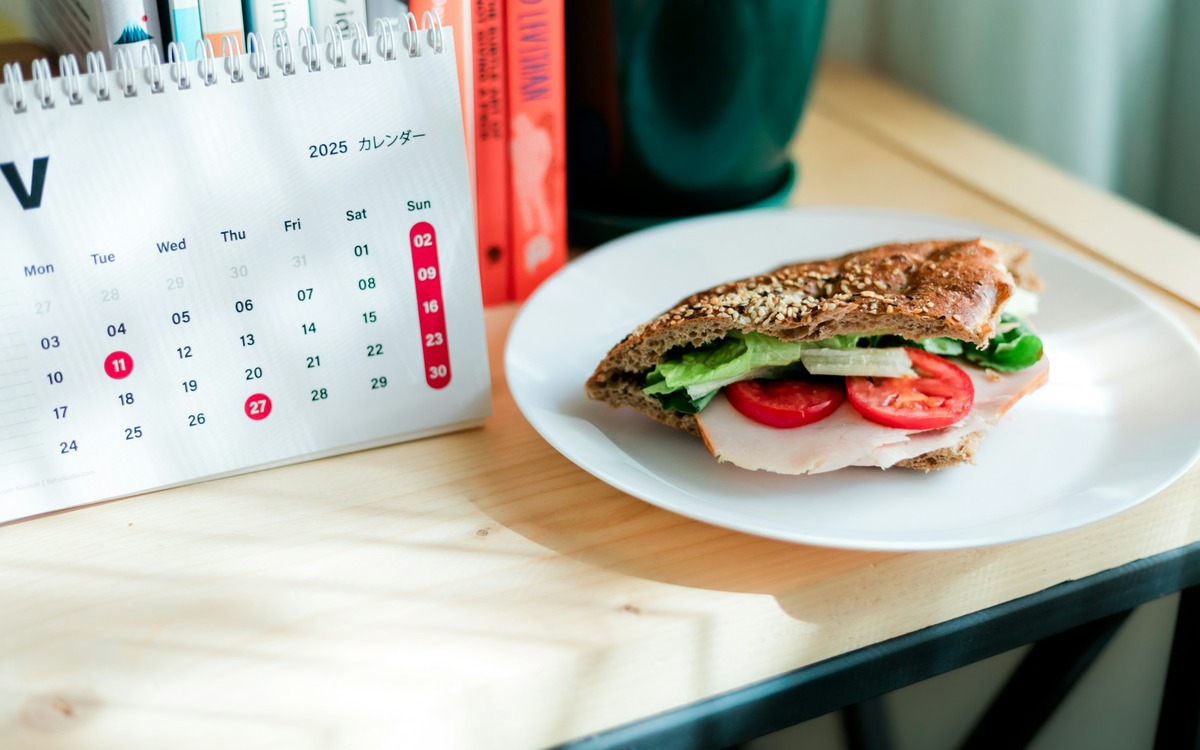
A simple way to make bread part of a more complete meal
Bread does not have to carry the entire meal nutritionally. It works best as one component. Build around it with ingredients that add protein, vegetables, fruit, or another food you enjoy.
A few easy combinations:
- Whole grain toast + eggs + tomatoes.
- Turkey or tofu sandwich + lettuce + cucumber + fruit.
- Hummus toast + roasted vegetables.
- Peanut or almond butter toast + banana or berries.
- Open-faced tuna or bean salad toast + crunchy vegetables.
- Grilled vegetable sandwich + yogurt or a simple soup.
These are combinations, not rules. Use the foods that fit your budget, dietary needs, and preferences.
How to store bread without wasting half the loaf
For bread you expect to use soon, follow the package directions and keep it sealed so it does not dry out. If you bought more than you are likely to finish, freezing part of the loaf early is often more practical than waiting until it is already stale.
USDA explains that freezing keeps food safe by preventing microbial growth while frozen, although quality can decline over time. For bread, quality is usually the practical issue: protect slices from air and moisture, freeze portions you can use easily, and thaw or toast only what you need.
A simple method is to freeze several slices together in a well-sealed freezer bag, separating layers if your bread tends to stick. That makes it easier to take out a few slices without thawing the whole loaf.

Do not throw out bread just because it is no longer sandwich-soft
If bread is dry but otherwise normal, it may still be useful. Turn it into toast, breadcrumbs, croutons, or a baked dish rather than automatically discarding it.
Mold is different. Do not simply cut visible mold off a loaf and keep eating the rest. If bread is moldy, discard it rather than trying to rescue adjacent slices.
The 60-second bread-aisle checklist
If you want the shortest possible version of this guide, use this order:
- Read the first grain ingredient. Look for a grain clearly identified as whole when whole grain bread is your goal.
- Ignore color as proof. Brown, seeded, or rustic-looking bread is not automatically whole grain.
- Compare equivalent servings. Check fiber, sodium, and added sugars on similar products.
- Choose a texture you will actually eat. Practical value matters more than an impressive package.
- Plan for storage. If you will not finish it soon, freeze part of the loaf while it is still fresh.
Bottom line
You do not need a complicated scoring system to choose whole grain bread. Start with the ingredient list, use the Nutrition Facts panel to compare similar loaves, and ignore visual shortcuts such as dark color or a pile of seeds. Then choose the bread that fits your meals, tastes good to you, and will actually get used.
The goal is not to find a magical loaf. It is to make a repeatable grocery decision that takes about a minute and gives you bread you are happy to eat.