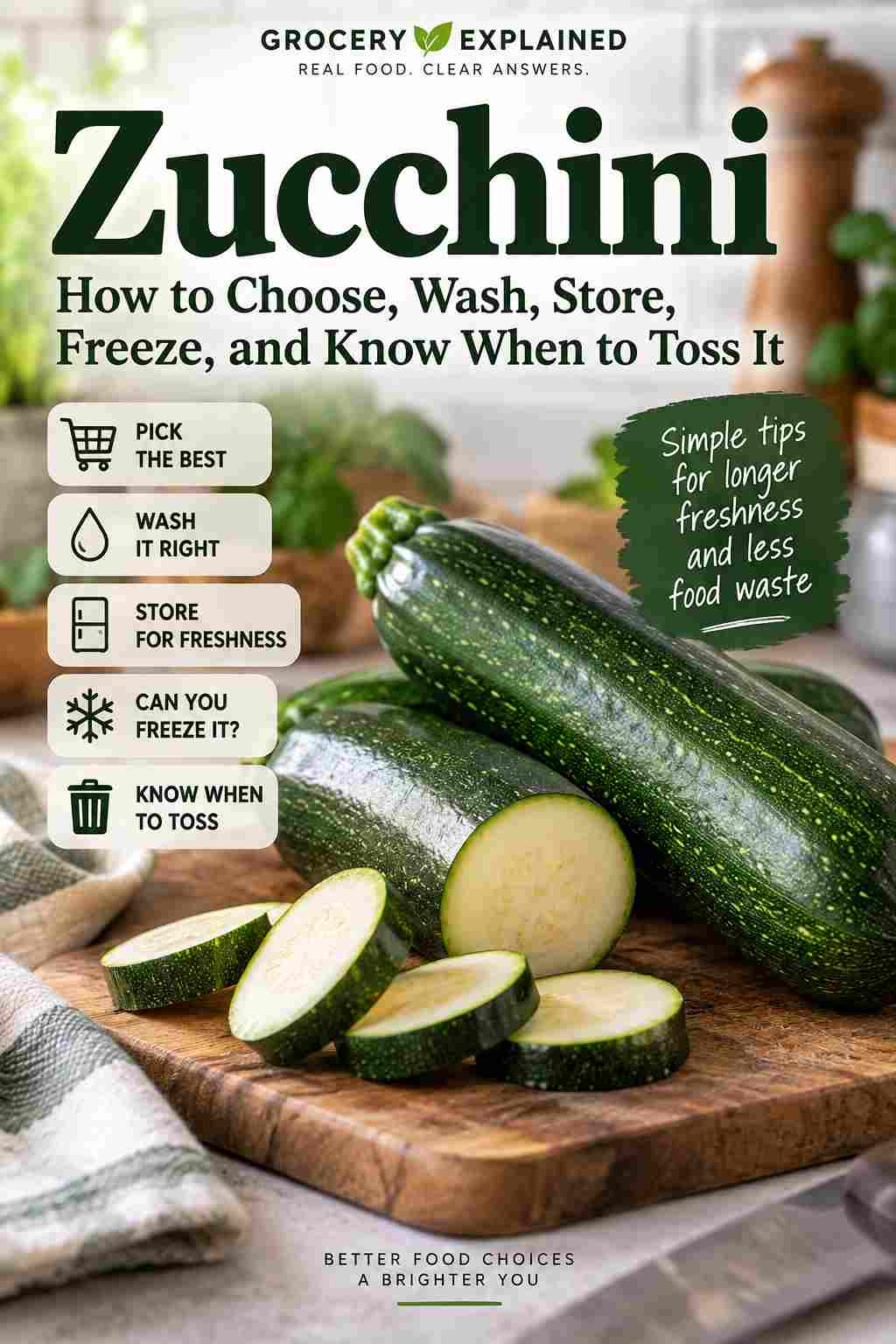
A practical guide to buying tender zucchini, keeping it fresh in the refrigerator, washing it at the right time, freezing extras, and spotting spoilage.
Zucchini is one of those vegetables that can look perfectly sturdy at the store and then lose quality surprisingly fast at home. Its thin skin and high water content make it convenient to cook, but they also make it prone to bruising, shriveling, chilling injury, and decay if it sits too long.
The basic strategy is simple: buy firm, glossy zucchini; keep it dry and cold for short-term storage; wash it just before preparation; and freeze extra zucchini with the right blanching step instead of waiting for it to soften in the refrigerator.
How to choose good zucchini
Look for zucchini that feels firm for its size and has glossy, tender-looking skin. The stem end should be intact, and the surface should be free of cuts, deep bruises, pitting, yellowing, or visible decay. UC Davis lists overall firmness, glossy skin, a tender rind, and freedom from physical damage and decay among the main quality indicators for summer squash.
Smaller to medium zucchini are often the easiest choice for everyday cooking because very mature squash can develop tougher skin, larger seeds, and more fibrous flesh. A huge zucchini is not automatically unsafe, but it may be less tender than a younger one.
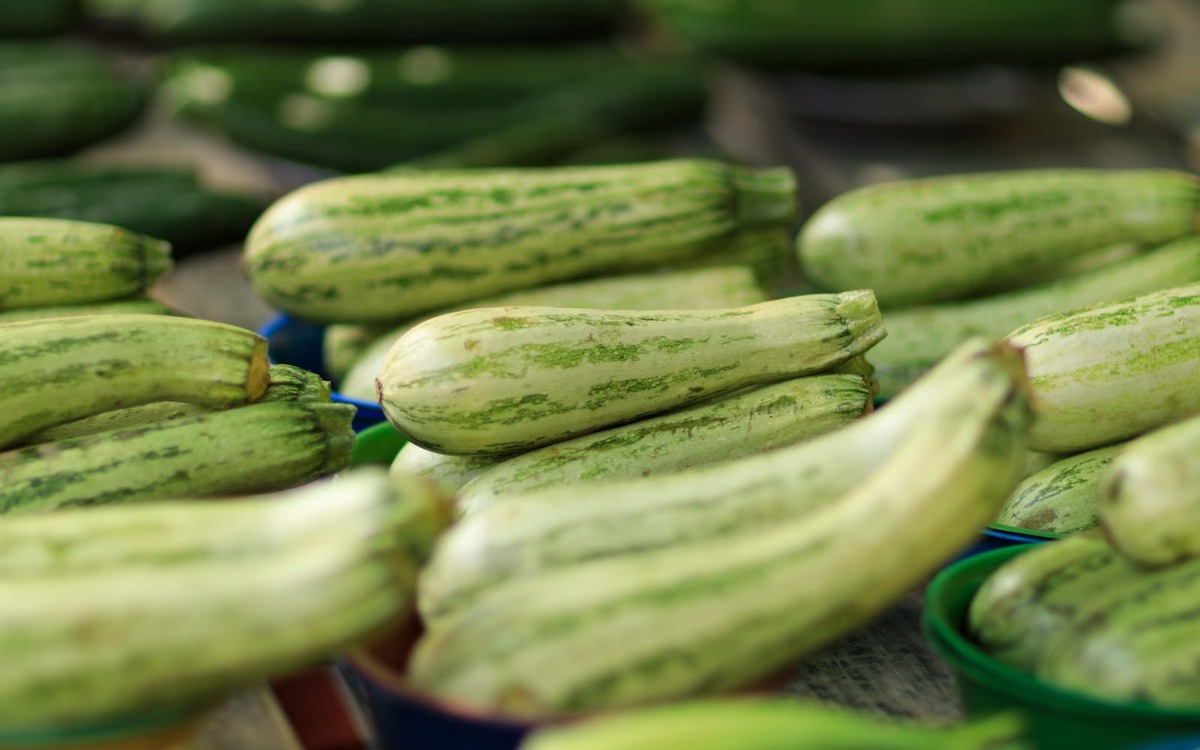
Wash zucchini just before you use it
For storage, keeping zucchini dry is useful because extra surface moisture can encourage spoilage. Utah State University recommends storing zucchini unwashed and washing it just before preparation.
When you are ready to cook or cut it, rinse the zucchini thoroughly under cool running water and gently rub the surface. The FDA recommends washing produce under running water and does not recommend soap, detergent, or commercial produce wash. Dry the zucchini with a clean towel or paper towel after rinsing.
How to store zucchini in the refrigerator
For normal home storage, place dry, unwashed zucchini in a perforated produce bag or another container that limits moisture loss without trapping heavy condensation, then keep it in the refrigerator crisper drawer. Utah State University lists about one week as an expected upper shelf-life range, while noting that best quality is usually earlier.
There is an important temperature nuance: commercial postharvest guidance puts the ideal range for summer squash around 41–50°F (5–10°C). Standard home refrigerators are often colder than that. UC Davis notes that extended storage below about 41°F can cause chilling injury, including surface pitting, discoloration, and faster decay after the squash warms up again. In practice, store zucchini in the crisper rather than against the very cold back wall and plan to use it promptly rather than treating it as a long-storage vegetable.
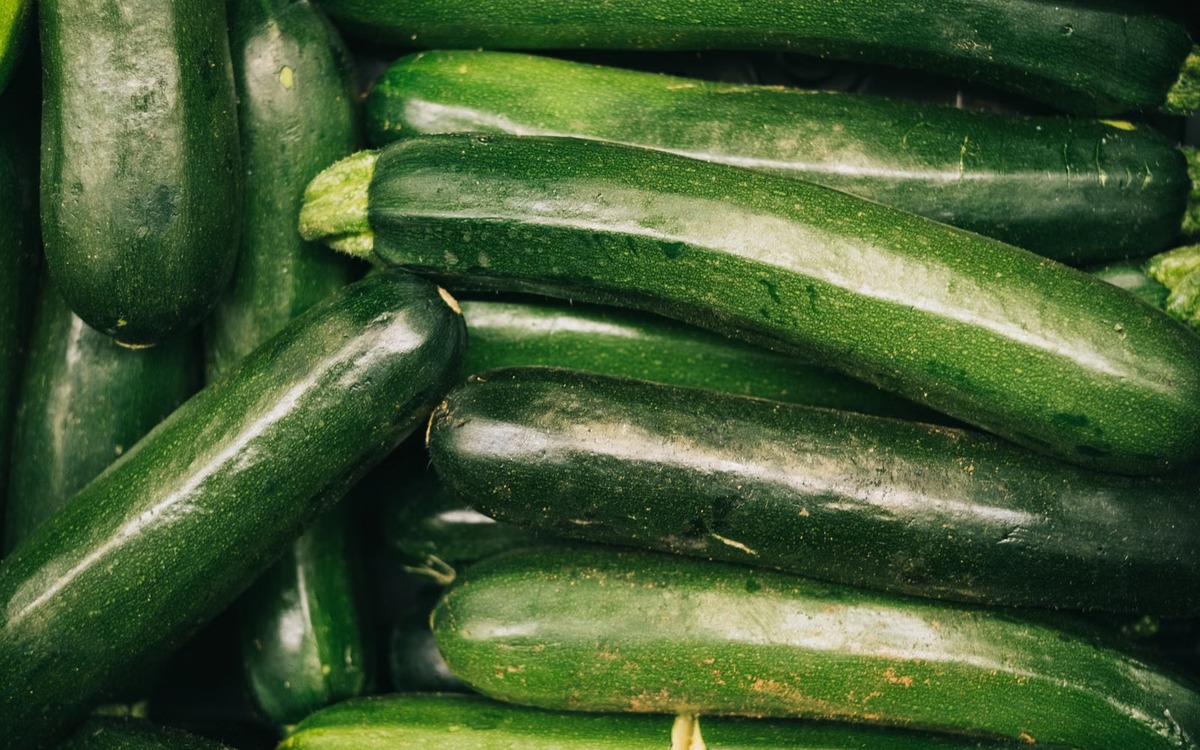
Keep whole zucchini whole until you need it
Whole zucchini generally holds quality better than cut zucchini. Once you slice or grate it, more moist surface area is exposed and texture declines faster. If you only need half, refrigerate the cut portion promptly in a clean covered container and use it soon.
Before slicing, inspect the squash. Small superficial marks can often be trimmed away, but widespread softness, leaking liquid, mold, or a rotten smell are signs that the zucchini should not be used.
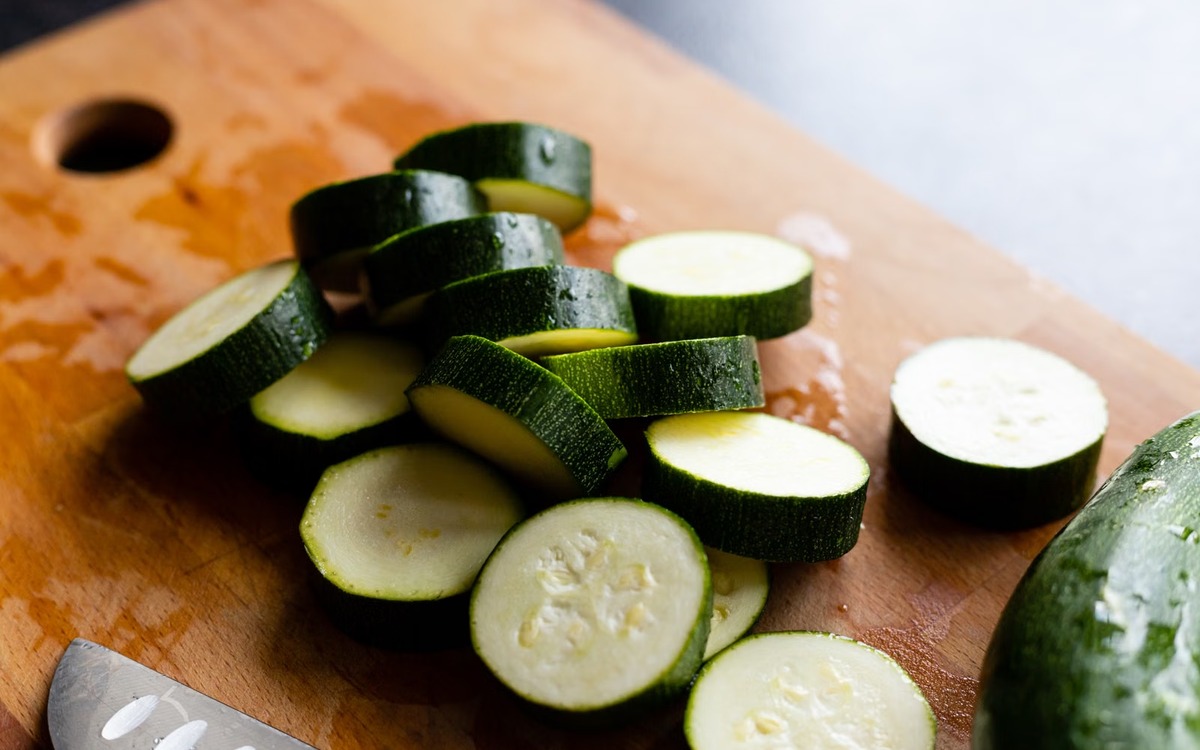
How to freeze zucchini
Freezing is a good option when you have more zucchini than you can use while it is fresh, but the preparation matters. The National Center for Home Food Preservation recommends choosing young squash with tender skin, washing it, cutting it into 1/2-inch slices, and water-blanching the slices for 3 minutes before cooling, draining, packaging, and freezing.
Blanching slows enzyme activity that would otherwise damage color, flavor, and texture during frozen storage. After blanching, cool the zucchini promptly, drain it well, package it in freezer-safe containers or bags, label it, and freeze it. Thawed zucchini will be softer than fresh zucchini, which makes it better suited to soups, casseroles, sauces, sautés, and baked dishes than to raw salads.
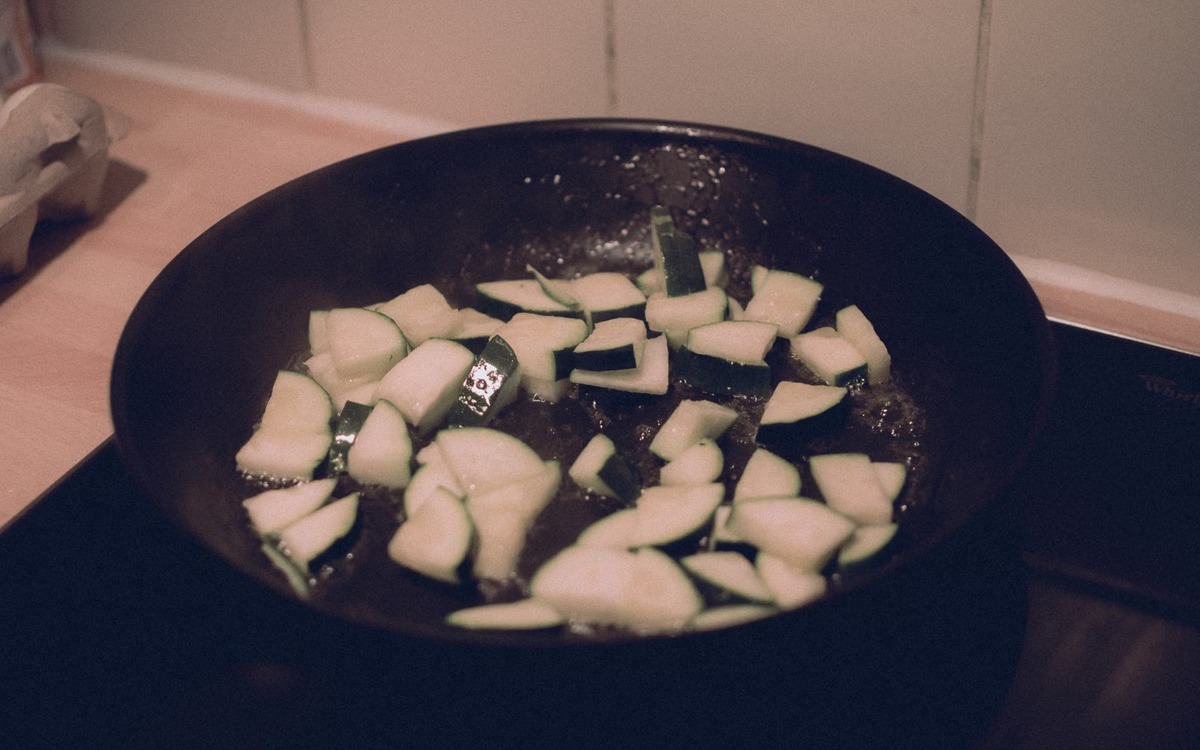
How to tell when zucchini has gone bad
Discard zucchini that is visibly rotten, moldy, slimy, leaking, or extensively soft. The FDA advises throwing away produce that looks rotten. Deep pitting, large water-soaked areas, strong discoloration, or an unpleasant fermented or rotten odor are also good reasons not to use it.
A slightly dull surface or a small dry scar does not automatically mean the whole squash is spoiled. Judge the zucchini as a whole: firmness, smell, visible decay, and the condition of the flesh after cutting are more useful than one cosmetic mark.
Simple zucchini storage routine
- Buy firm, glossy zucchini with minimal damage.
- Store it dry and unwashed in the refrigerator crisper.
- Wash under running water just before preparation; do not use soap.
- Use fresh zucchini promptly rather than storing it for long periods.
- For freezing, slice and blanch for 3 minutes, then cool, drain, pack, and freeze.
- Discard zucchini that is rotten, moldy, slimy, leaking, or extensively soft.
Handled this way, zucchini stays useful for quick weeknight meals without turning into a forgotten soft squash at the back of the refrigerator.




No comments:
Post a Comment