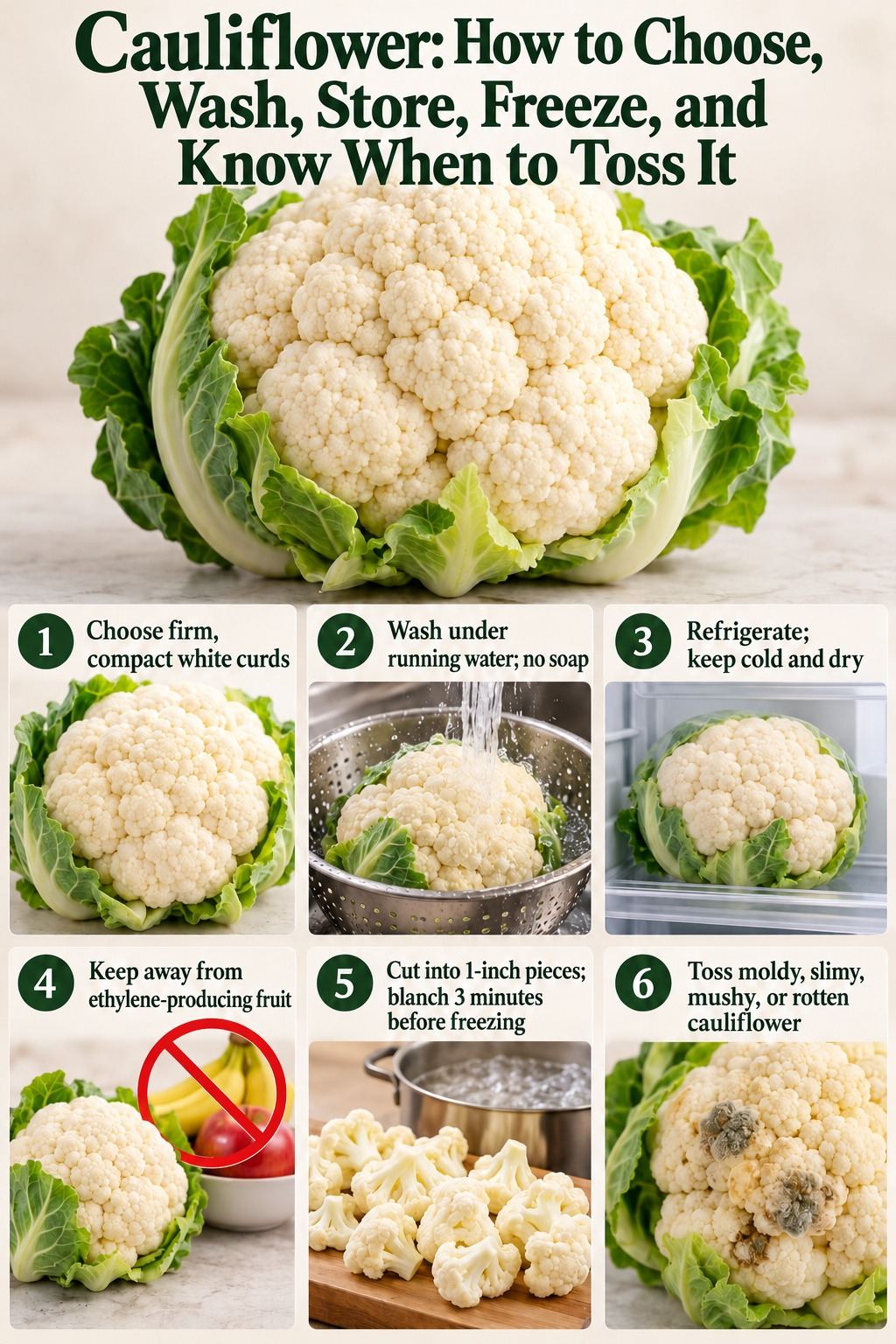
Cauliflower keeps its best texture and mild flavor when you start with a compact, fresh head and keep it cold. The most useful habits are simple: choose firm curds with fresh wrapper leaves, wait to wash until you are ready to use it, refrigerate promptly, keep it away from strong ethylene producers, and blanch it before freezing.
How to choose fresh cauliflower
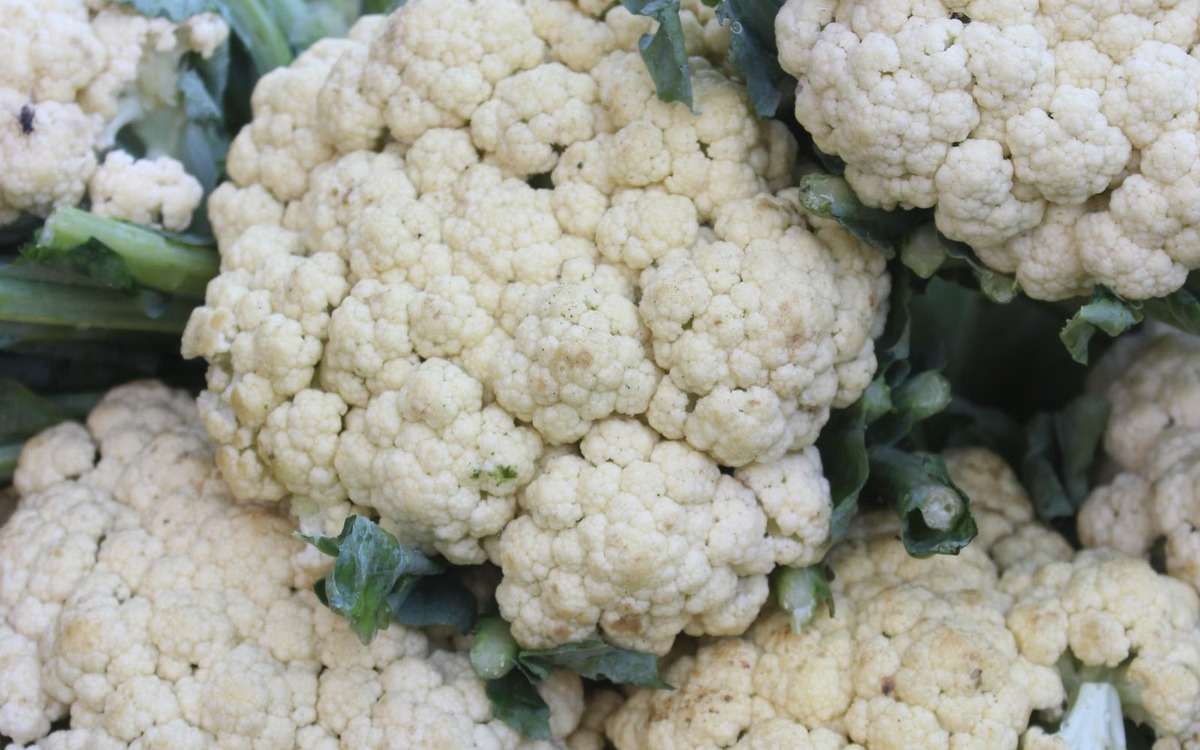
Look for a compact, firm head with white to creamy-white curds and fresh-looking green wrapper leaves. The curd should feel dense rather than loose or soft. Avoid heads with obvious decay, large damaged areas, wet mushy spots, or extensive discoloration.
Should you wash cauliflower before storing it?
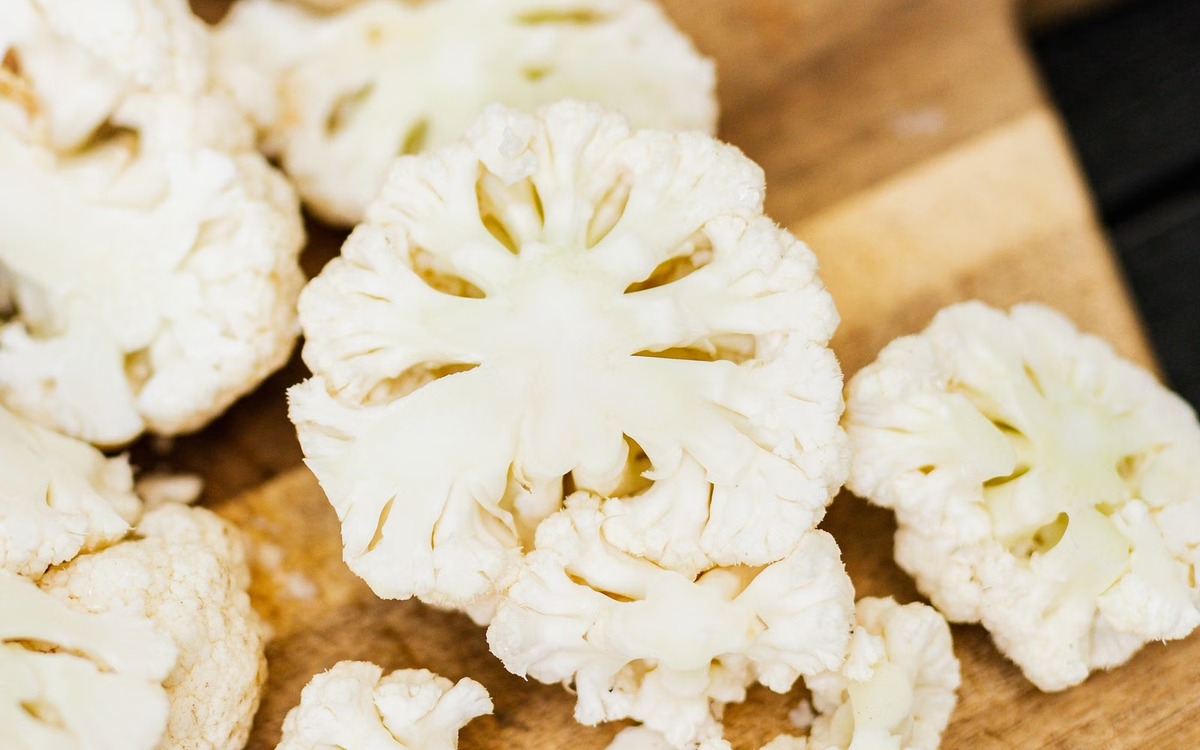
For normal refrigerator storage, keep cauliflower dry and wait to wash it until shortly before preparation. When you are ready to use it, trim away the outer leaves as needed, cut the head into manageable sections, and rinse thoroughly under cool running water.
The FDA advises washing produce under running water and does not recommend soap, detergent, or commercial produce wash. Dry the cauliflower if it will sit for a while before cooking.
How to store cauliflower in the refrigerator
Cauliflower is a cold-storage vegetable. Refrigerate it promptly and protect it from moisture loss without trapping standing water around the head. A produce bag or container that limits drying while still allowing some airflow is a practical home setup.
Cold conditions are important because they slow wilting, browning, yellowing, and decay. If you often buy both cruciferous vegetables, our broccoli storage and freezing guide covers the closely related vegetable and its own handling differences.
Keep cauliflower away from strong ethylene producers
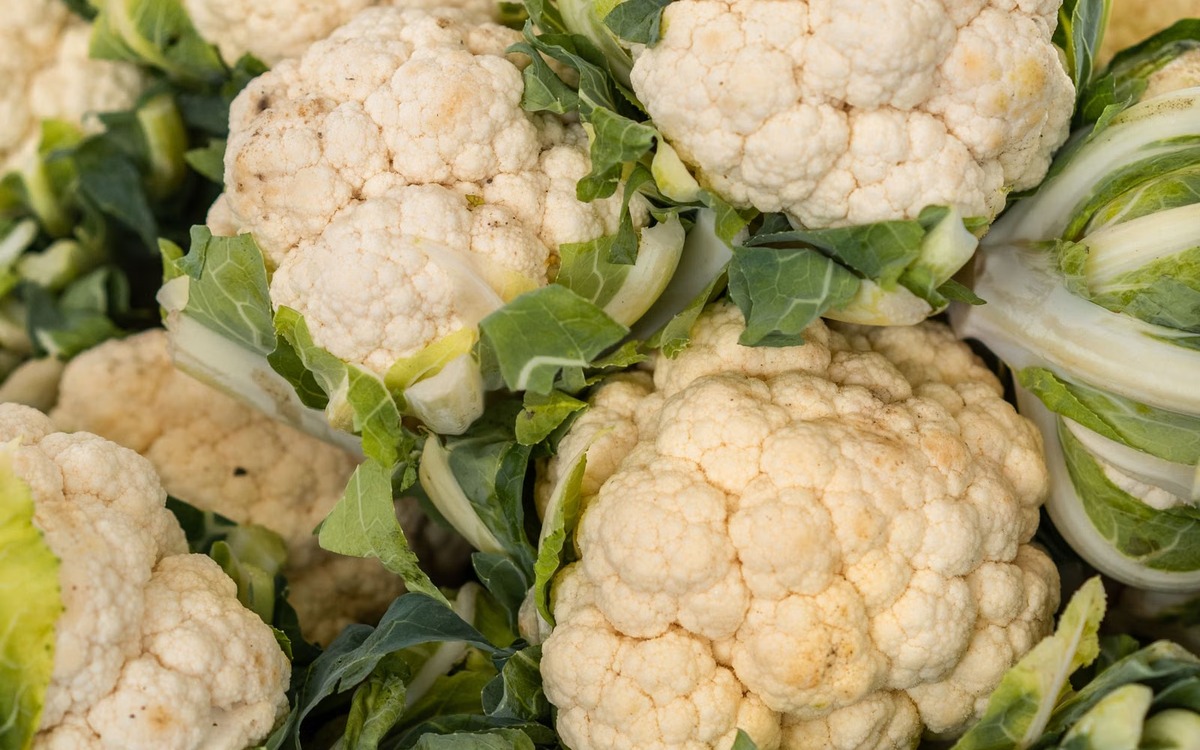
Cauliflower is highly sensitive to ethylene. Exposure can discolor the curd and accelerate yellowing of the wrapper leaves, so it is better not to store cauliflower right beside strong ethylene-producing produce such as apples and pears.
How to freeze cauliflower
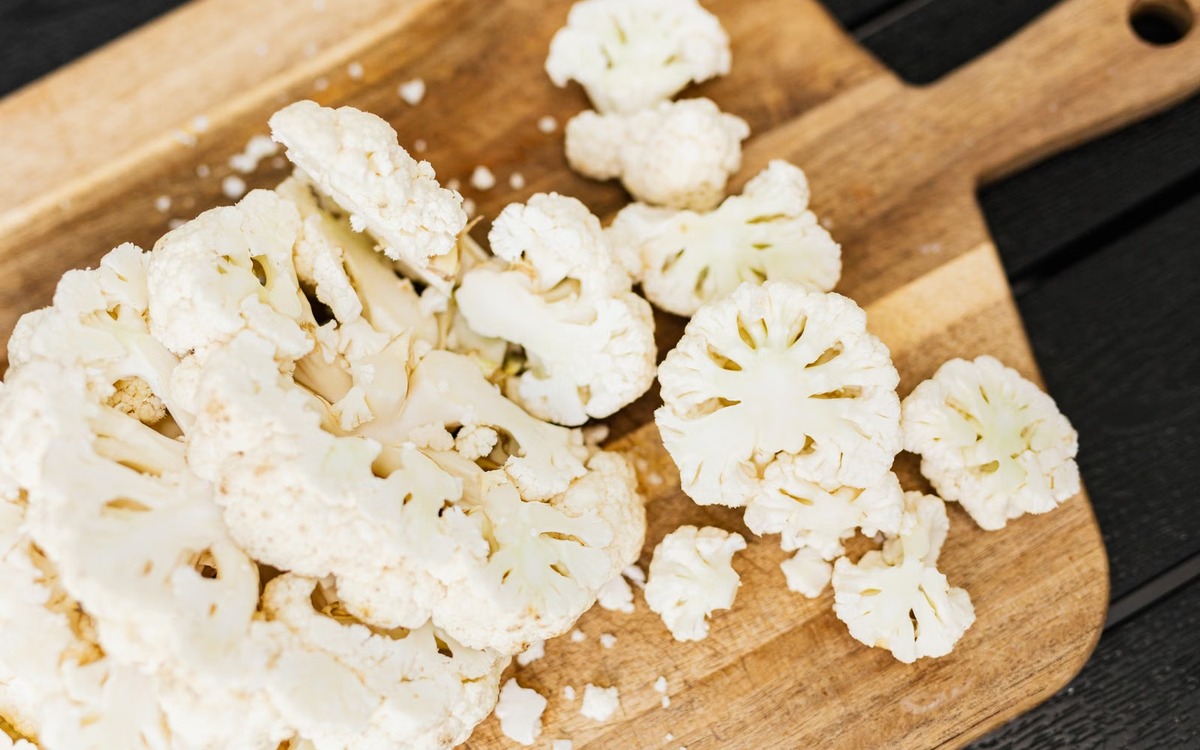
Freezing is useful when you have more cauliflower than you can eat fresh. The National Center for Home Food Preservation recommends separating the head into pieces about 1 inch across, treating them in salt water if needed to remove insects, then blanching the pieces in boiling water for 3 minutes.
Cool the cauliflower promptly after blanching, drain it thoroughly, package it in freezer-safe containers or bags, and freeze. The texture after thawing is best suited to cooked dishes. For another vegetable with its own blanching and freezer routine, see our carrots storage and freezing guide.
When should you throw cauliflower away?
Discard cauliflower that looks rotten, has visible mold, feels extensively slimy or mushy, develops widespread decay, or has a strong unpleasant odor. The FDA advises throwing away produce that looks rotten.
Small cosmetic blemishes do not automatically mean the whole head is unsafe, but use the overall condition of the cauliflower—appearance, texture, and smell—to decide whether it is still worth using.
Quick takeaways
- Choose a compact, firm head with white to creamy-white curds and fresh green wrapper leaves.
- Keep cauliflower refrigerated and mostly dry.
- Wash it under cool running water just before preparation; do not use soap.
- Store it away from strong ethylene-producing produce.
- Blanch roughly 1-inch pieces for 3 minutes before freezing.
- Discard cauliflower that is rotten, moldy, extensively slimy or mushy, or strongly off-smelling.
Sources
U.S. Food and Drug Administration: Selecting and Serving Produce Safely
UC Davis Postharvest Research and Extension Center: Cauliflower
National Center for Home Food Preservation: Freezing Cauliflower




No comments:
Post a Comment