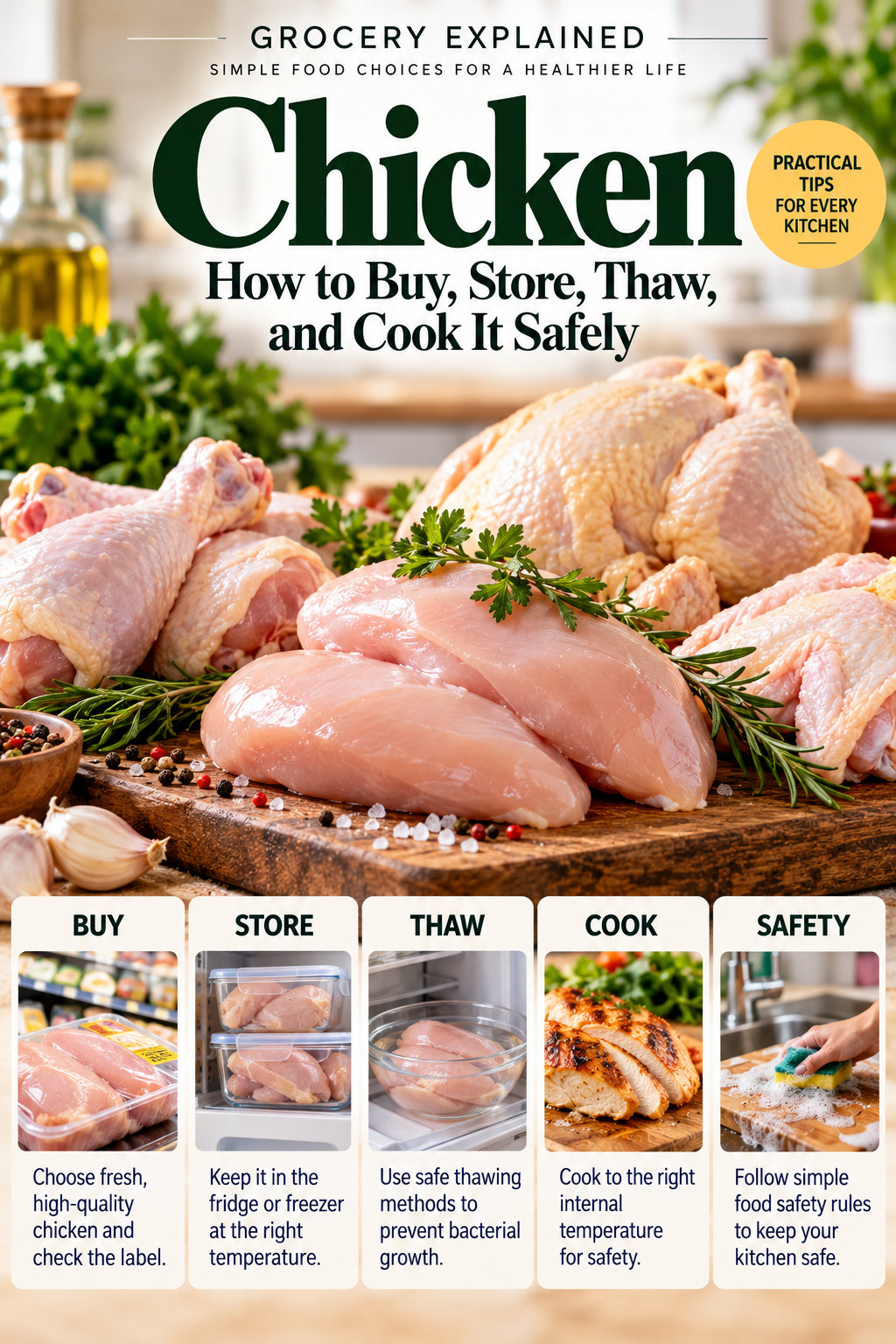
Chicken is one of those groceries that can turn into almost anything: a quick skillet dinner, soup, tacos, sandwiches, or tomorrow’s lunch. The part that deserves less improvisation is food safety. Raw poultry needs to stay cold, its juices need to stay away from ready-to-eat foods, and doneness is something to measure rather than guess from color.
Here is a practical routine you can use from the supermarket case to the dinner table.
Start with the package, not the recipe
Choose chicken from a refrigerated or frozen case and make it one of the last items you put in your cart. Skip packages that are torn, leaking, or damaged. A leak is not just inconvenient: raw poultry juices can contaminate produce, bread, and other foods that may never be cooked.
At checkout, keep raw chicken separate from ready-to-eat groceries. Once you get home, refrigerate or freeze it promptly. FDA guidance says perishable foods should be refrigerated or frozen within two hours of purchase, or within one hour when the surrounding temperature is above 90°F (32°C).
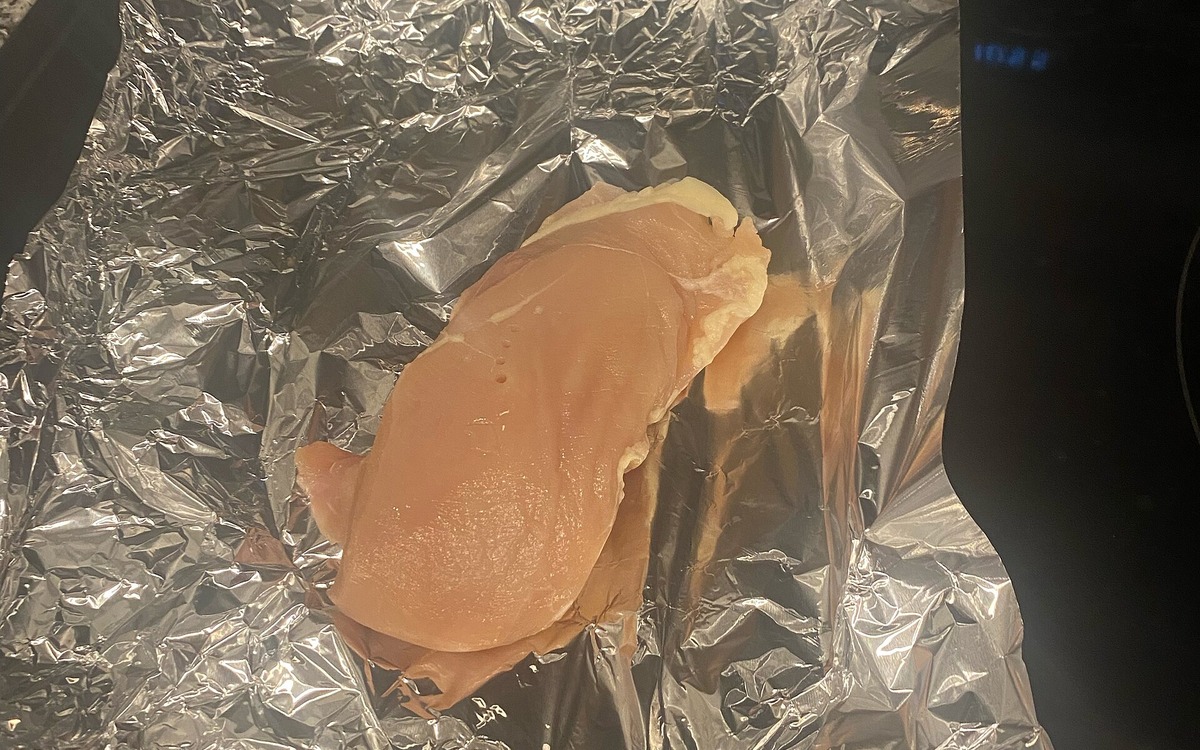
Give raw chicken a short refrigerator window
Keep the refrigerator at 40°F (4°C) or below. USDA recommends cooking or freezing raw chicken within one to two days. That short window is useful when planning your week: if Tuesday’s chicken is still only a vague idea on Sunday night, freezing it is usually the simpler choice.
Store raw poultry in a container or on a plate that can catch leaks. The same separation principle matters when you store raw ground beef safely, although storage times and cooking temperatures are different. The practical goal is to prevent raw juices from reaching foods you might eat without another cooking step. Do not crowd the refrigerator so tightly that cold air cannot circulate.
Cooked chicken has a longer but still limited refrigerator life. USDA’s guidance is three to four days for cooked poultry. Date the container if you know you will forget when dinner was made.
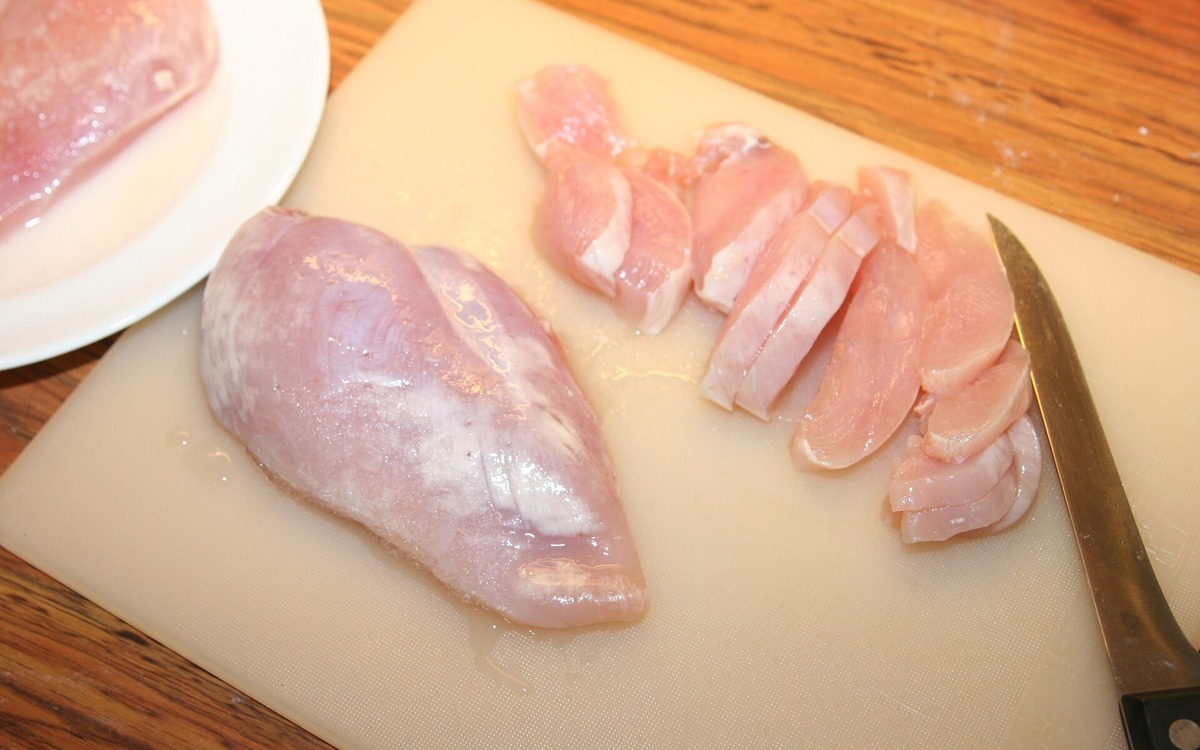
Do not wash raw chicken
Rinsing raw poultry under the faucet can splash contaminated droplets onto the sink, counter, utensils, and nearby food. Cooking is the step that makes chicken safe; washing it first does not replace proper cooking.
Instead, move the chicken from its package to the pan or prep surface with as little unnecessary handling as possible. Wash your hands with soap after touching raw poultry, and clean utensils, cutting boards, counters, and other surfaces that contacted it before using them for cooked food or fresh produce.
Thaw it without leaving it on the counter
There are three standard safe thawing methods: the refrigerator, cold water, and the microwave. For another protein with a similar cold-chain challenge, see our guide to buying, storing, thawing, and cooking salmon safely. Refrigerator thawing takes planning but requires the least attention. Put the chicken in a dish or container so any liquid stays contained.
For faster thawing, keep the chicken in a leak-proof package and use cold water, changing the water about every 30 minutes. If you use the microwave, cook the chicken immediately after thawing. FDA guidance specifically advises against thawing perishable food at room temperature.
Chicken thawed safely in the refrigerator can be refrozen without cooking, although its texture may lose some quality. USDA says poultry thawed in the refrigerator should generally be used or refrozen within one to two days.
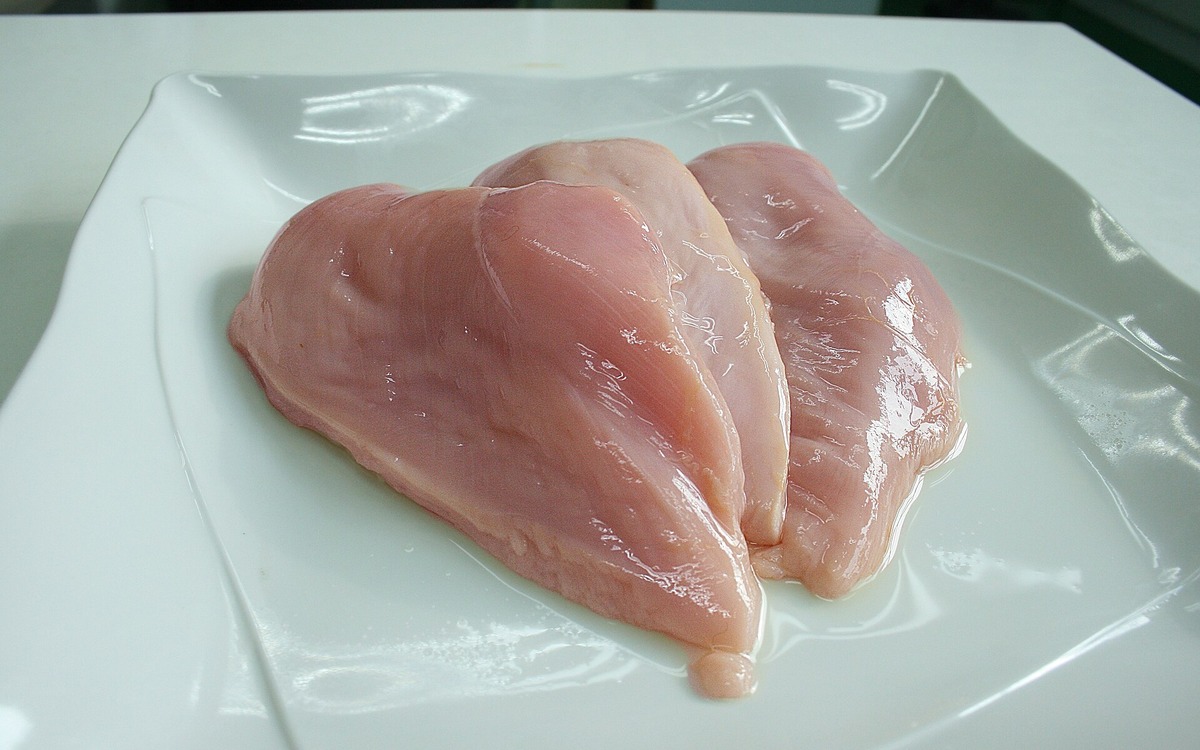
Cook to 165°F — do not use color as the safety test
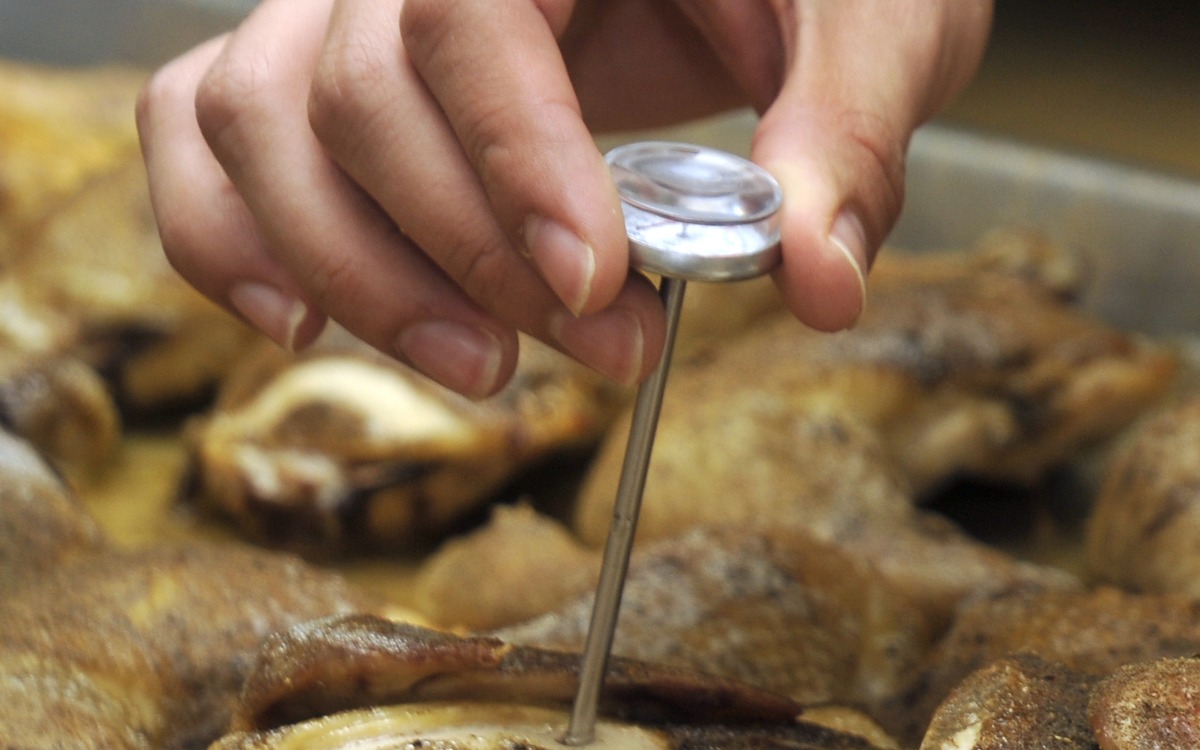
All poultry — whole birds, pieces, and ground poultry — should reach a safe minimum internal temperature of 165°F (74°C), measured with a food thermometer. Check the thickest part and avoid resting the thermometer tip against bone, which can give you a misleading reading.
Appearance is a poor substitute for a thermometer. Chicken can look done before the coldest part has reached the target temperature, and cooked poultry does not need to match a particular shade of white or brown to prove that it is safe.
A thermometer also helps with quality. Once you know the center has reached the safe target, you do not have to keep cooking simply because you are uncertain.
Handle leftovers with the same clock-and-temperature mindset
Refrigerate cooked chicken within two hours, or within one hour in temperatures above 90°F (32°C). Shallow containers help larger amounts cool more efficiently. Use refrigerated cooked chicken within three to four days.
If you reheat leftovers, USDA recommends heating them to 165°F (74°C). For microwave reheating, stir or rotate food when practical and check more than one spot, because microwaves can leave cold areas.
A simple chicken-safety routine
- Buy intact, properly chilled packages and keep raw poultry separate from ready-to-eat groceries.
- Keep your refrigerator at 40°F (4°C) or below.
- Cook or freeze raw chicken within one to two days.
- Do not rinse raw chicken in the sink.
- Thaw in the refrigerator, cold water, or microwave — not on the counter.
- Cook poultry to 165°F (74°C) and verify it with a food thermometer.
- Refrigerate cooked chicken promptly and use it within three to four days.
None of these steps is complicated on its own. The useful habit is making them automatic: keep chicken cold, contain raw juices, separate raw from ready-to-eat food, and let a thermometer settle the question of doneness.




No comments:
Post a Comment