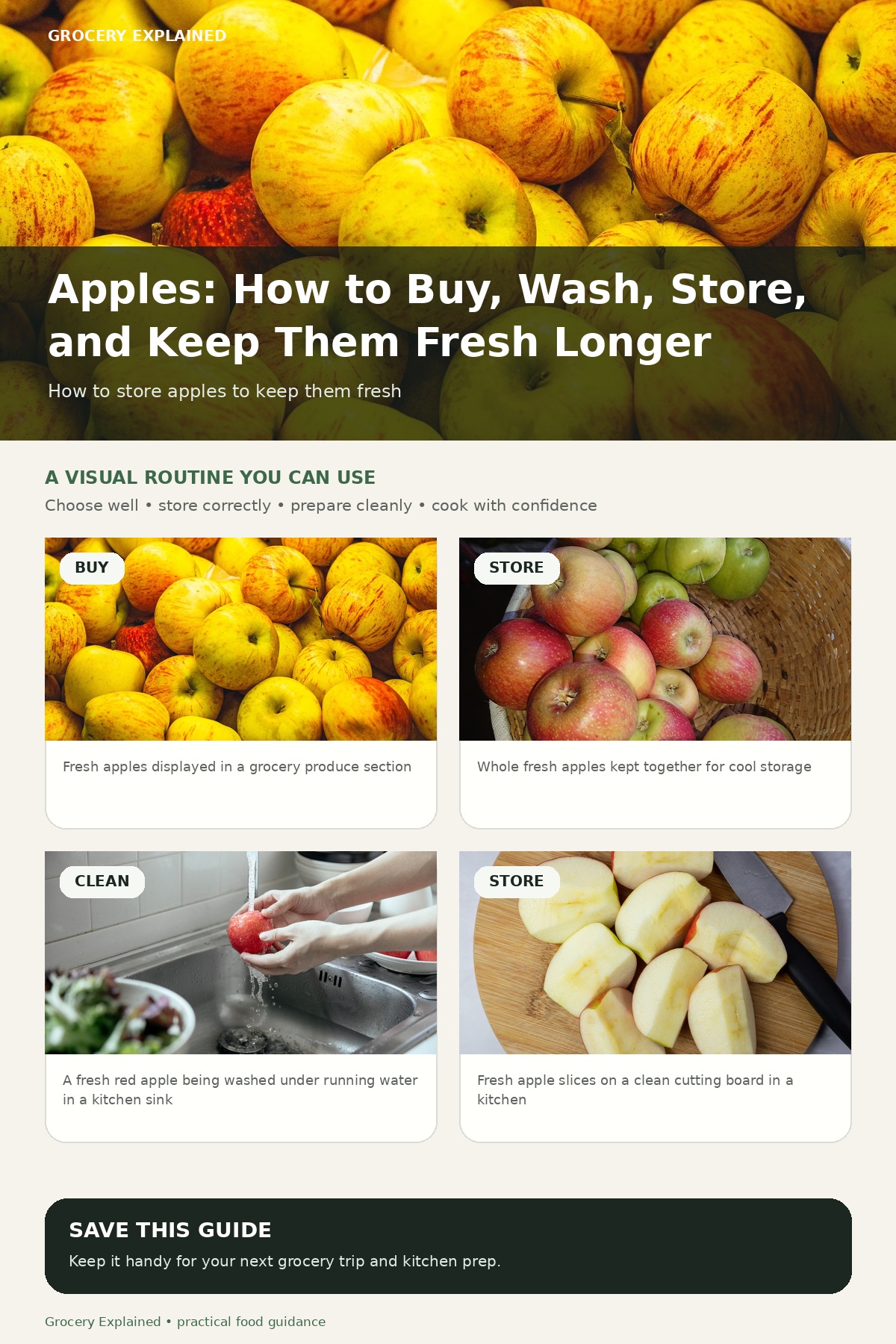
Apples are easy to buy in bulk, but how long they stay crisp depends on what you choose at the store and what you do after you bring them home. A simple routine helps: buy sound fruit, refrigerate apples you want to keep longer, wash them under running water before eating or cutting, and keep cut apples cold.
Choose firm apples without major damage
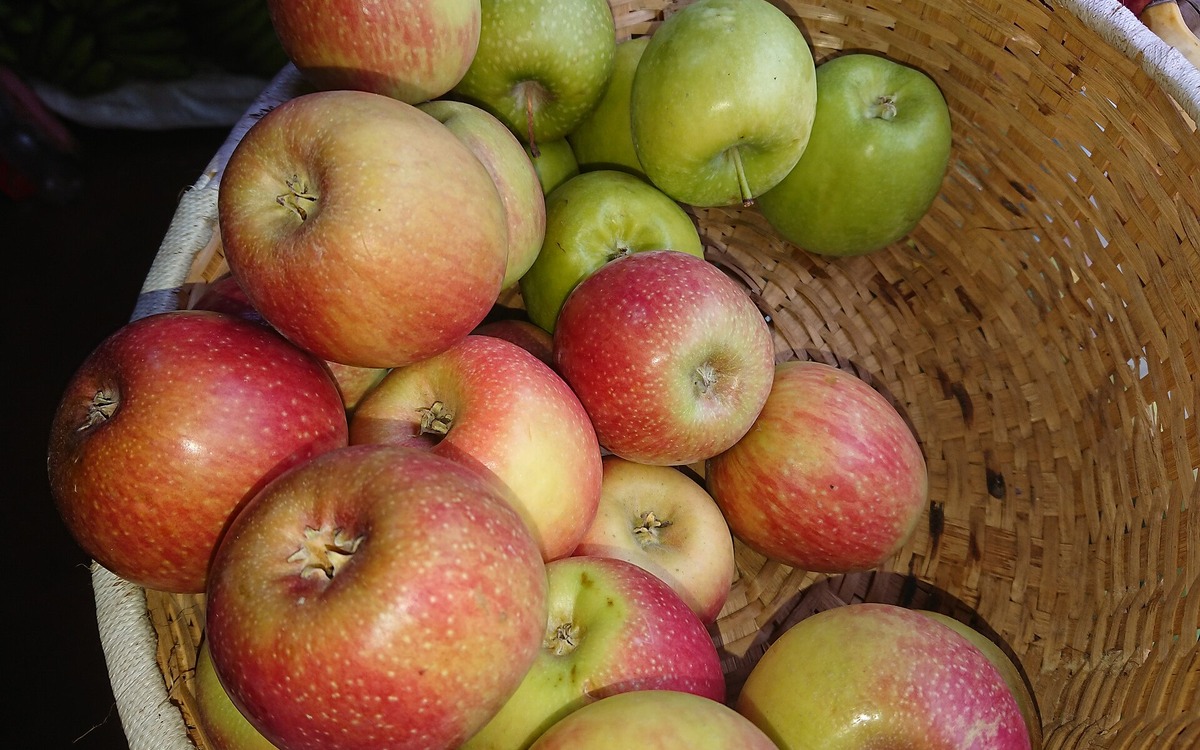
Start with condition. FDA produce guidance recommends choosing fruits and vegetables that are not bruised or damaged. For apples, look for fruit that feels firm for its variety and has intact skin without deep cuts, leaking areas, obvious mold, or large soft spots.
A small cosmetic mark is not automatically a reason to discard an apple, but heavily bruised or decayed fruit is a poor choice for storage because damaged tissue breaks down faster. Handle apples gently on the way home as well; bruising can happen after purchase if a heavy grocery bag is dropped or packed tightly.
Use the refrigerator when you want apples to last
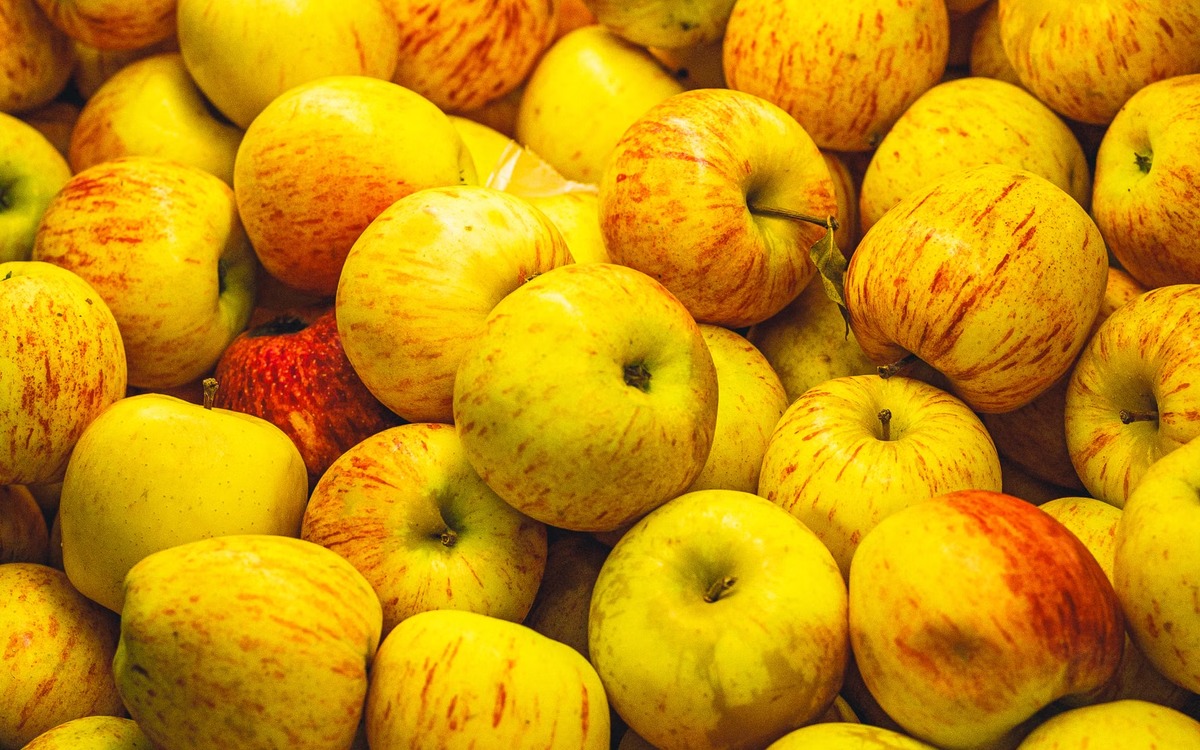
If you will eat your apples within a few days, room-temperature storage can be convenient. For a longer holding period, refrigeration is the better default. Oregon State University Extension notes that whole apples can be kept at room temperature for a few days and can stay in a refrigerator crisper drawer or open bag for up to about six weeks, depending on the fruit and storage conditions.
Cold storage slows the quality changes that make apples soften. Keep them in a clean crisper drawer or a loosely vented bag rather than trapping excess moisture around damaged fruit. Check the batch periodically and use any apple that is becoming soft or bruised before the rest.
Do not treat a storage time as a guarantee. Variety, ripeness when purchased, prior handling, and refrigerator conditions all affect quality. If an apple develops mold, leaking decay, or an unpleasant rotten odor, discard it.
Wash apples under running water before eating or cutting
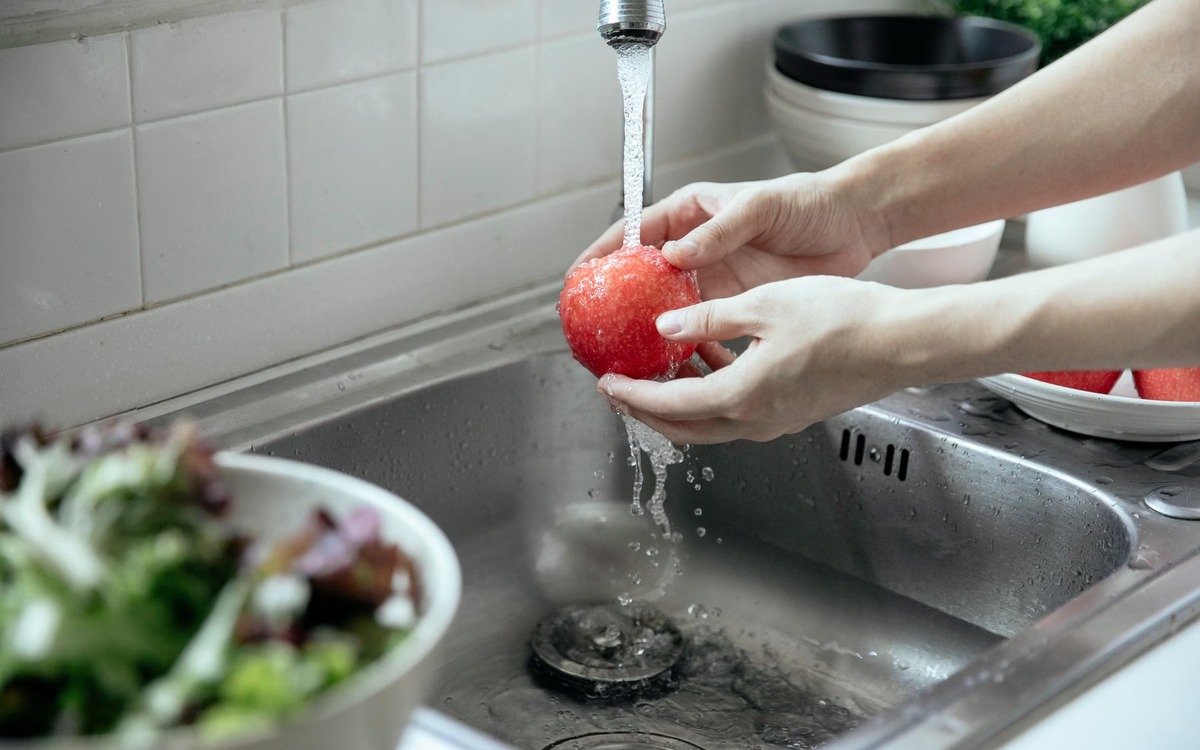
FDA guidance recommends washing fresh produce thoroughly under plain running water before preparing or eating it. Hold the apple under the tap and gently rub the surface with your hands. You do not need soap, detergent, bleach, or a commercial produce wash.
Wash the apple even if you plan to peel it. Dirt or bacteria on the peel can be transferred to the flesh by a knife or peeler. After rinsing, dry the apple with a clean cloth or paper towel.
For day-to-day quality, it is usually simpler to wash apples shortly before you use them rather than washing the entire bag and putting wet fruit back into storage. The important safety step is that the apple is properly rinsed before eating or cutting.
Refrigerate cut apples
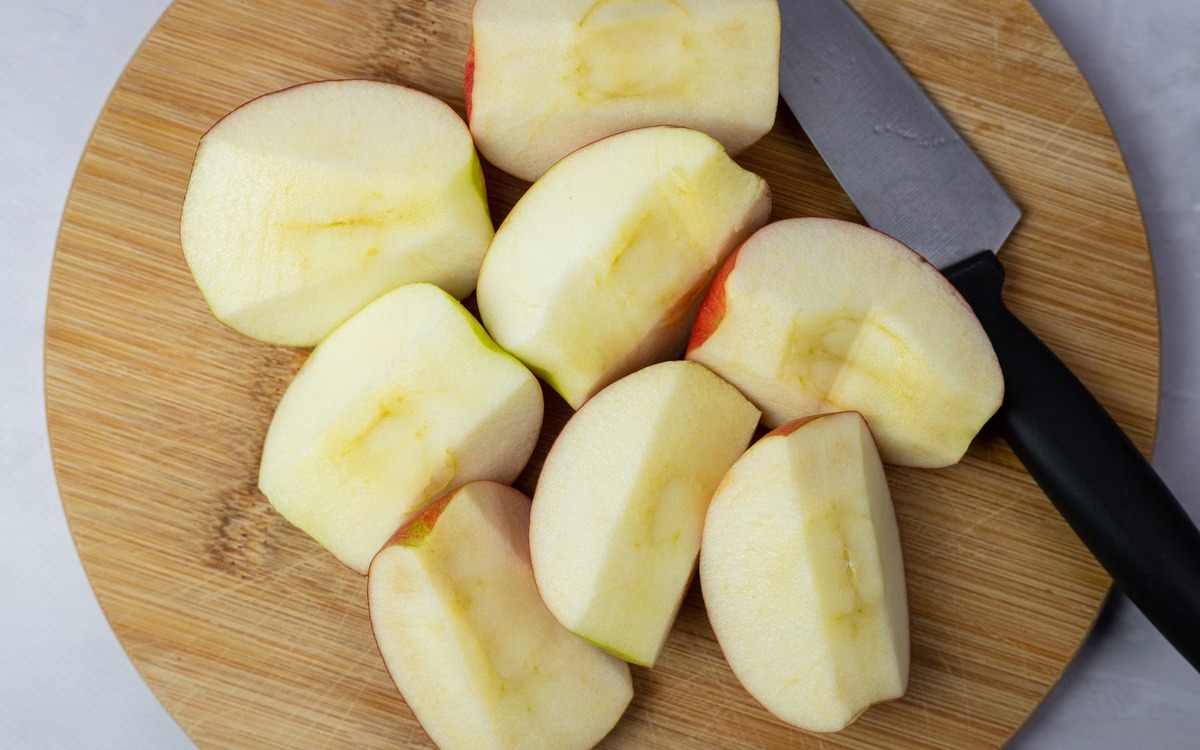
Once an apple is peeled or cut, refrigerate it in a clean covered container. FoodSafety.gov recommends refrigerating peeled or cut produce, and the same general safe-handling principle applies when sliced apples are prepared ahead for snacks, lunches, or recipes.
Cut apple surfaces turn brown because of oxidation. Browning by itself is a quality change rather than proof that the apple is unsafe. Oregon State University Extension suggests dipping cut pieces in lemon or orange juice and refrigerating them in a covered container when you want to slow visible browning for a few hours.
Use clean knives and cutting boards, especially if the same kitchen area is also used for raw meat, poultry, seafood, or eggs. FDA guidance recommends keeping produce separate from raw animal foods and washing utensils and surfaces between tasks.
Do not confuse softness with immediate spoilage
An apple that has lost some crispness is not automatically unusable. Slightly soft or shriveled apples can still work well in oatmeal, baked dishes, applesauce, or other cooked recipes as long as they do not show mold or active decay.
That is an easy way to reduce waste: keep the crispest apples for eating out of hand and move the softer ones into cooking. Check stored apples regularly rather than discovering the whole bag after one damaged fruit has deteriorated.
Keep apples away from contamination in the kitchen
Fresh apples are often eaten raw, so the cleanliness of hands, knives, cutting boards, and counters matters. Wash hands with soap and warm water before food preparation, and do not place washed or cut apples on a surface that has just held raw meat or poultry.
If you pack apple slices for later, use a clean container and keep them refrigerated until needed. The goal is not a complicated sanitation routine; it is simply to avoid moving contaminants from raw foods or dirty surfaces onto fruit that will be eaten without a cooking step.
A simple apple routine
At the store, choose firm apples with intact skin and minimal bruising. At home, leave only the amount you expect to eat soon at room temperature and refrigerate the rest if you want them to remain crisp longer. Wash apples under running water just before eating or cutting, and refrigerate sliced fruit in a clean covered container.
Those few habits solve most everyday apple-storage problems: less bruising, less waste, cleaner preparation, and more time to use the fruit while it still tastes the way you bought it.




No comments:
Post a Comment